
Every commercial airplane carries two black boxes that record flight data and cockpit audio. When a plane crashes, investigators recover those boxes and reconstruct what happened in forensic detail. The findings get published. Airlines, manufacturers, and regulators all change their procedures based on what the investigation reveals. Aviation’s fatal accident rate has dropped to nearly zero in the developed world, and this system is a major reason why.
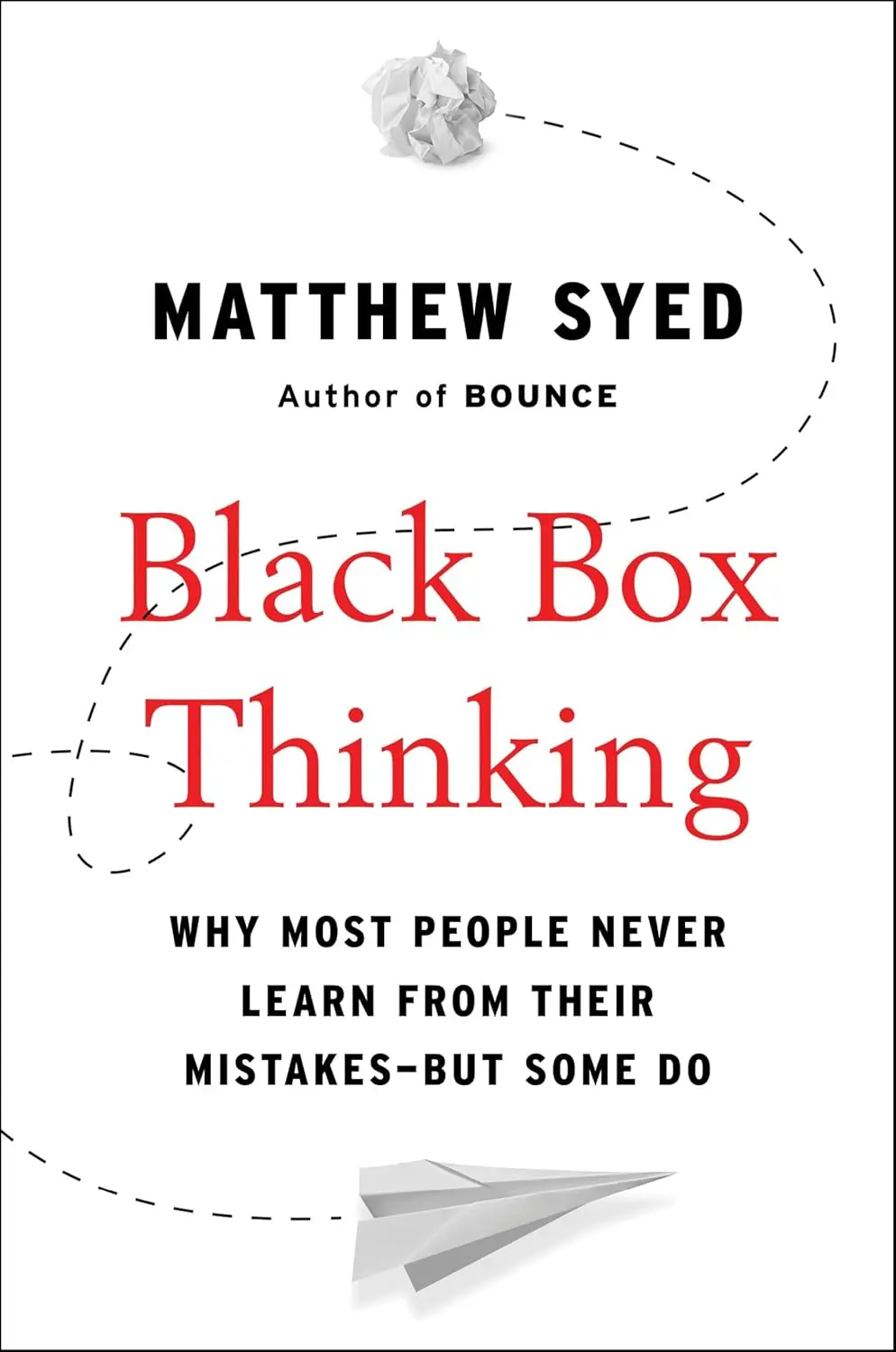
Matthew Syed uses that example as the backbone of an argument about failure and learning. His claim is straightforward: industries and organizations that treat failure as data get better over time. Industries that treat failure as something to be hidden, punished, or explained away stay stuck.
Healthcare is his primary counterexample. Syed documents cases where doctors and hospitals repeated the same errors for years because the culture around medical mistakes was built on blame and defensiveness rather than analysis. When a surgeon makes a fatal error, the instinct in most hospitals is to protect the institution and the surgeon’s reputation. The error gets buried. The same mistake happens again, to a different patient, in a different operating room. Syed puts hard numbers on this problem, drawing on studies that estimate hundreds of thousands of preventable deaths per year in hospitals across the US and UK.
The book moves beyond aviation and healthcare into criminal justice, sports, and business. Syed looks at how wrongful convictions persist because prosecutors resist re-examining closed cases. He examines how James Dyson built his vacuum cleaner company through thousands of failed prototypes, each one teaching him something the previous one could not. He covers the development of marginal gains thinking in British cycling, where small improvements to dozens of variables compounded into dominant Olympic performances.
Syed was a competitive table tennis player before becoming a journalist, and his earlier book, Bounce, dealt with the science of practice and talent. Black Box Thinking extends that work. Where Bounce asked how individuals get better, this book asks how systems and organizations get better. The answer, in almost every case, is the same: you have to look honestly at what went wrong, which turns out to be psychologically harder than it sounds.
The book does not sugarcoat the difficulty. Syed writes about cognitive dissonance, the mental discomfort people feel when evidence contradicts their beliefs. He argues that this dissonance, not stupidity or malice, is the primary reason people and organizations fail to learn. Admitting you were wrong threatens your identity, so your brain protects you by rationalizing the mistake away.
For founders and business operators, the practical takeaway is about building cultures where failure analysis is routine, not punitive. Teams that run postmortems, track errors systematically, and reward people for surfacing problems early will outperform teams that shoot the messenger.
