
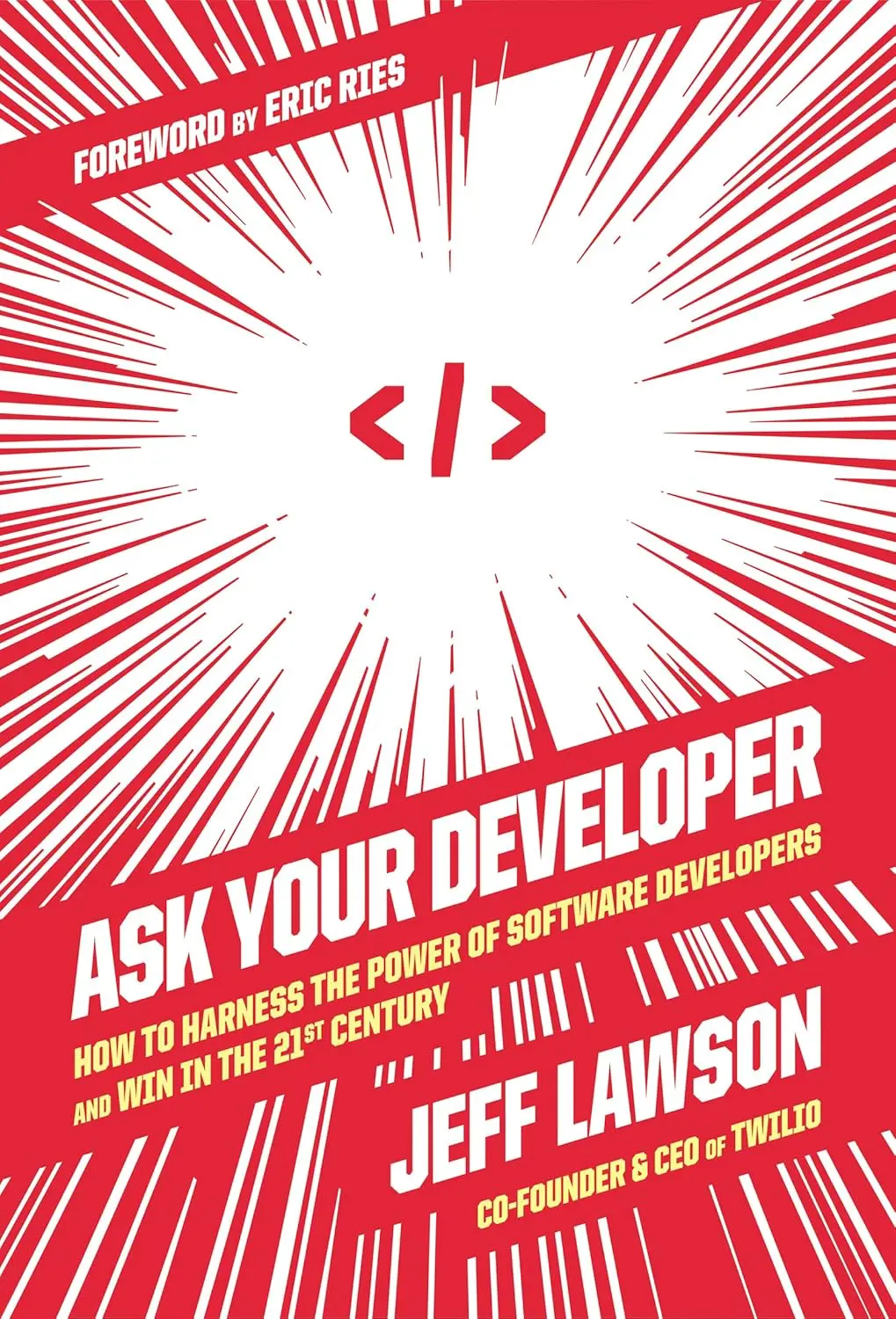
Jeff Lawson co-founded Twilio in 2008 with a simple premise: developers are the most undervalued people in most organizations, and the companies that figure out how to work with them will outperform everyone else. Twilio itself was built on this idea. It gave developers simple APIs for sending text messages, making phone calls, and handling video, and let them build whatever they wanted on top. The company grew to a multi-billion-dollar valuation largely through developer word of mouth.
Ask Your Developer is Lawson’s attempt to explain what he learned along the way. The book is aimed at executives, product leaders, and founders who know they need software but do not come from engineering backgrounds. Lawson’s argument is that most companies still treat developers like order-takers. A business team decides what to build, writes a spec, and hands it to engineering. This produces mediocre software, because the people closest to the technical possibilities had no say in defining the problem.
Lawson pushes for a different model. He argues that developers should be embedded in business decisions from the start. They should talk to customers. They should understand the revenue model. And they should have the autonomy to propose solutions, not just implement someone else’s vision. This is how Twilio operated internally, and Lawson walks through specific examples of how it played out in practice, from the early days of the company through its IPO and beyond.
The book also covers the “build versus buy” question that every growing company faces. Lawson’s take is more nuanced than you might expect from someone who sells developer tools. He acknowledges that not everything should be built in-house, but argues that the software that differentiates your business from competitors should never be outsourced. If your product depends on code, that code is your business. Farming it out means you have handed your competitive advantage to someone who does not care about your customers the way you do.
There are practical sections on hiring developers, structuring engineering teams, creating a culture that retains technical talent, and managing the tension between speed and quality. Lawson writes in a conversational style and breaks up the business arguments with stories from Twilio’s history, including several honest accounts of things that went wrong.
The book has been recommended by Eric Ries. For non-technical founders who find themselves leading teams of engineers, or for anyone trying to understand why their company’s software keeps disappointing, Lawson offers a straightforward framework. The core message is less about technology and more about organizational design: if you want good software, you need to change how your company relates to the people who write it.
