
Pema Chödrön was a schoolteacher in New Mexico when her second marriage ended. The divorce shattered her. She has described the experience in interviews as the catalyst that led her to Buddhism, specifically to the teachings of Chögyam Trungpa Rinpoche, under whom she eventually became one of the first American women to be ordained as a Buddhist nun. She went on to become the resident teacher at Gampo Abbey in Nova Scotia and one of the most widely read Buddhist authors in the West.
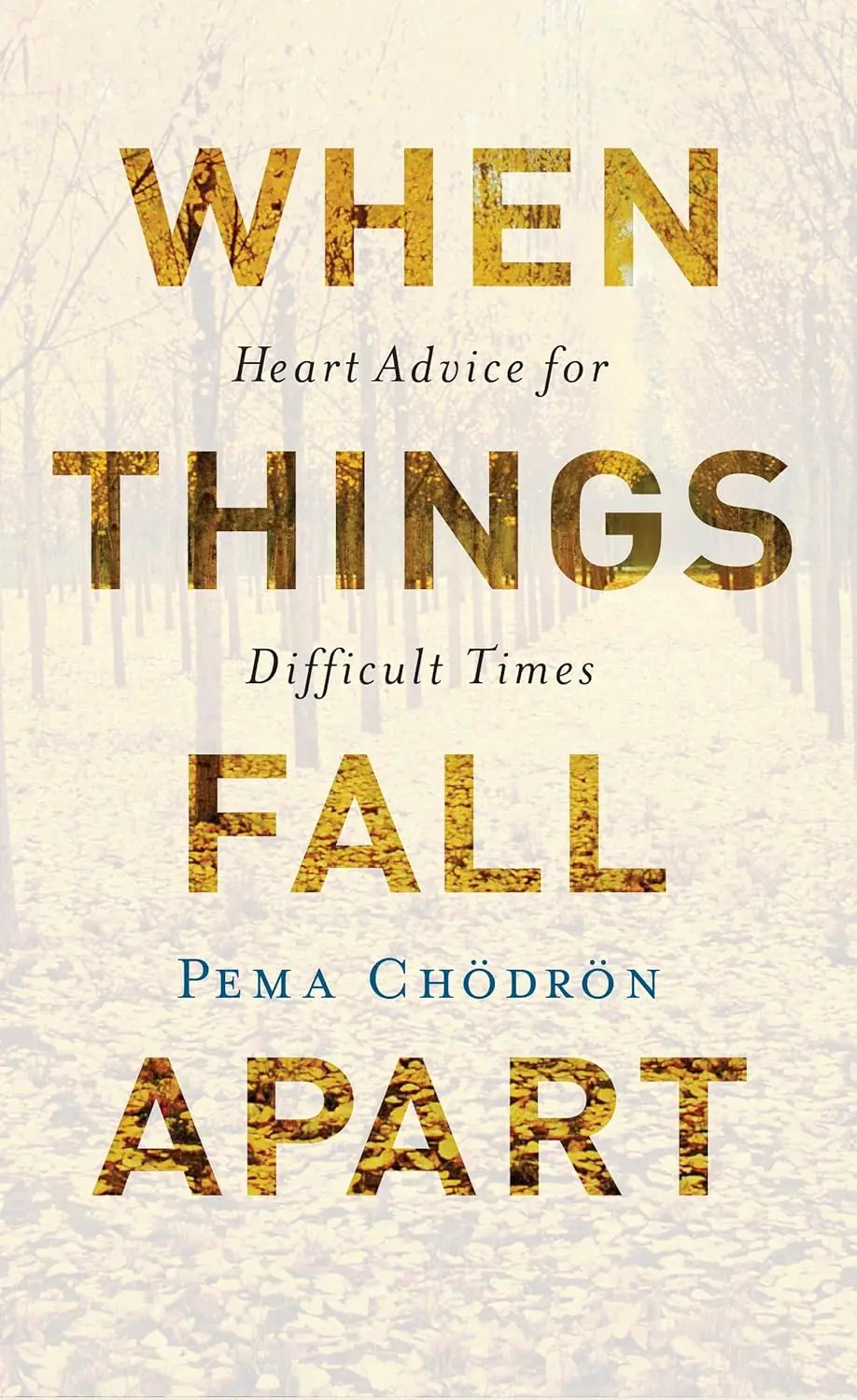
When Things Fall Apart, published in 1997, is a collection of talks and teachings organized around a single theme: how to work with painful situations instead of against them. The book’s core argument is counterintuitive. Most people, when they experience suffering, try to fix it, escape it, numb it, or explain it away. Chödrön says that the impulse to flee from pain is the problem, not the pain itself. When things fall apart, the ground you thought was solid turns out to have been an illusion. That is terrifying. It is also, she argues, the most honest moment you will ever have.
The teachings draw on a Tibetan Buddhist concept called shenpa, which Chödrön translates roughly as “the hook,” the moment when an uncomfortable feeling arises and you reach for something to make it go away: food, alcohol, distraction, blame, self-pity. Her advice is to notice the hook and not bite. To sit with the discomfort, breathe into it, and let it be what it is without trying to change it. Over time, this practice builds a tolerance for uncertainty that no amount of planning or control can provide.
The writing is simple and warm. Chödrön is not writing for scholars. She is writing for people who are hurting and looking for something that is not a platitude. She uses humor, personal stories, and plain language. The chapters are short, most of them adapted from talks, and they can be read independently.
The book has sold millions of copies and has been continuously in print since 1997. Ben Silbermann, co-founder of Pinterest, has recommended it. The book does not mention business or entrepreneurship, but its subject, how to function in the middle of uncertainty, how to make decisions when you do not have enough information, how to stay present when everything feels like it is collapsing, is the daily reality of anyone building something that has not been built before.
