
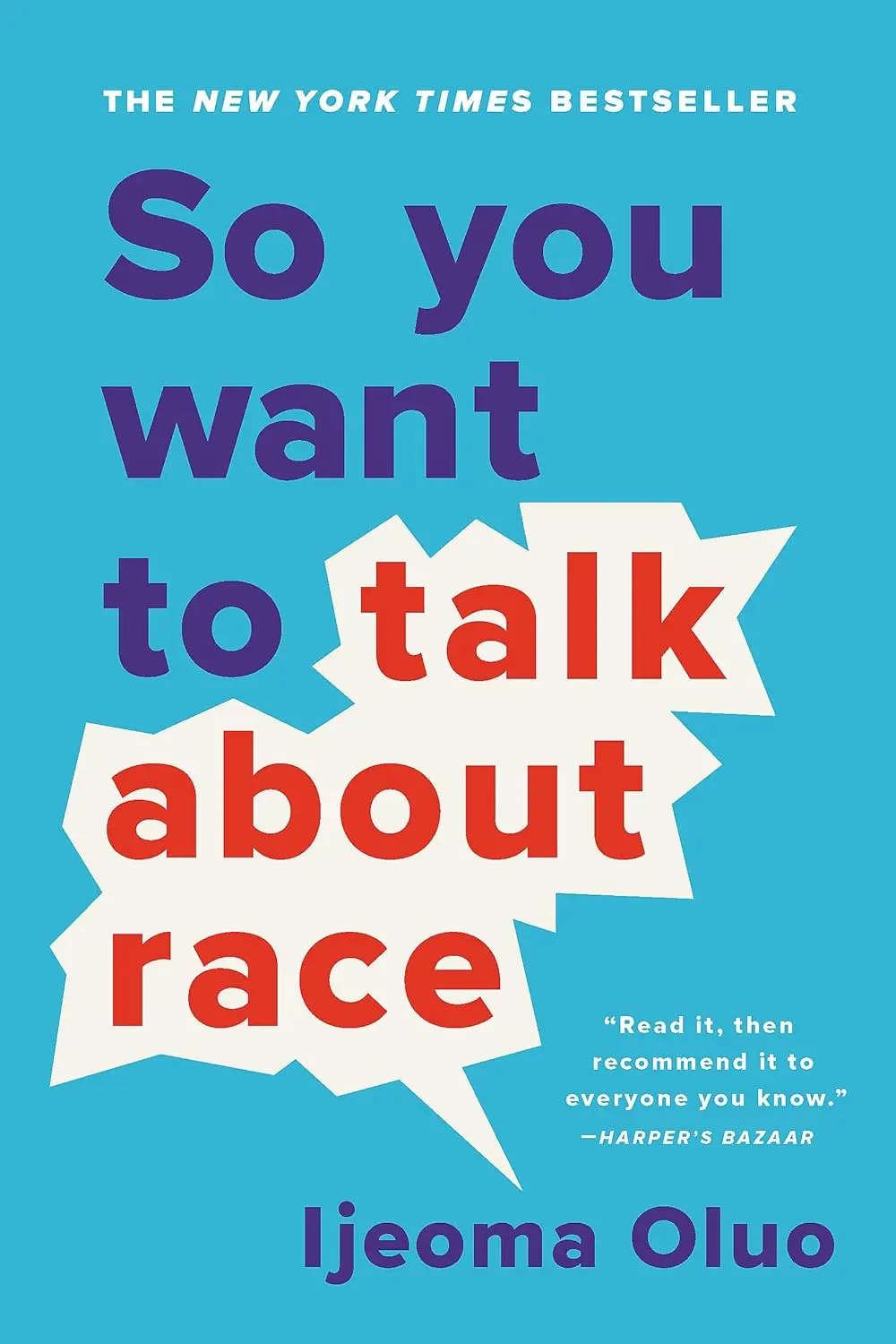
Each chapter of this book is titled with a question. “What is racism?” “What are microaggressions?” “Why can’t I touch your hair?” “What is the school-to-prison pipeline?” Ijeoma Oluo, a Seattle-based writer who was raised by a white single mother and grew up as one of the few Black kids in her neighborhood, takes these questions seriously and answers them without hedging.
The format works because it mirrors how most people actually encounter these topics: in fragments, through uncomfortable moments at work or at the dinner table, not through systematic study. Oluo meets readers where they are and walks them through the concepts one at a time. She explains privilege, intersectionality, cultural appropriation, affirmative action, police brutality, and the model minority myth with a directness that is unusual in writing about race. She does not assume readers already agree with her. She assumes they showed up willing to listen.
Oluo blends personal stories with data. She describes being followed by security in stores, having strangers touch her hair, and navigating a workplace where she was the only Black person in the room. She pairs these experiences with statistics on incarceration rates, wealth gaps, educational outcomes, and police use of force, building her arguments on evidence rather than relying solely on emotional appeal.
The book also includes practical guidance for having conversations about race that do not collapse into defensiveness. Oluo describes common patterns that derail these discussions: making the conversation about your feelings instead of the issue, asking people of color to educate you rather than doing the work yourself, and treating racial justice as an intellectual debate rather than a lived reality. She provides specific language and frameworks for staying in the conversation productively.
Published in 2018, the book re-entered the New York Times bestseller list in 2020. Scott Farquhar, co-founder of Atlassian, has recommended it. For founders and leaders who manage diverse teams, or who operate in markets where racial dynamics affect their customers and communities, this book provides a foundation for understanding the conversations that are already happening around them, whether they are participating or not.
