
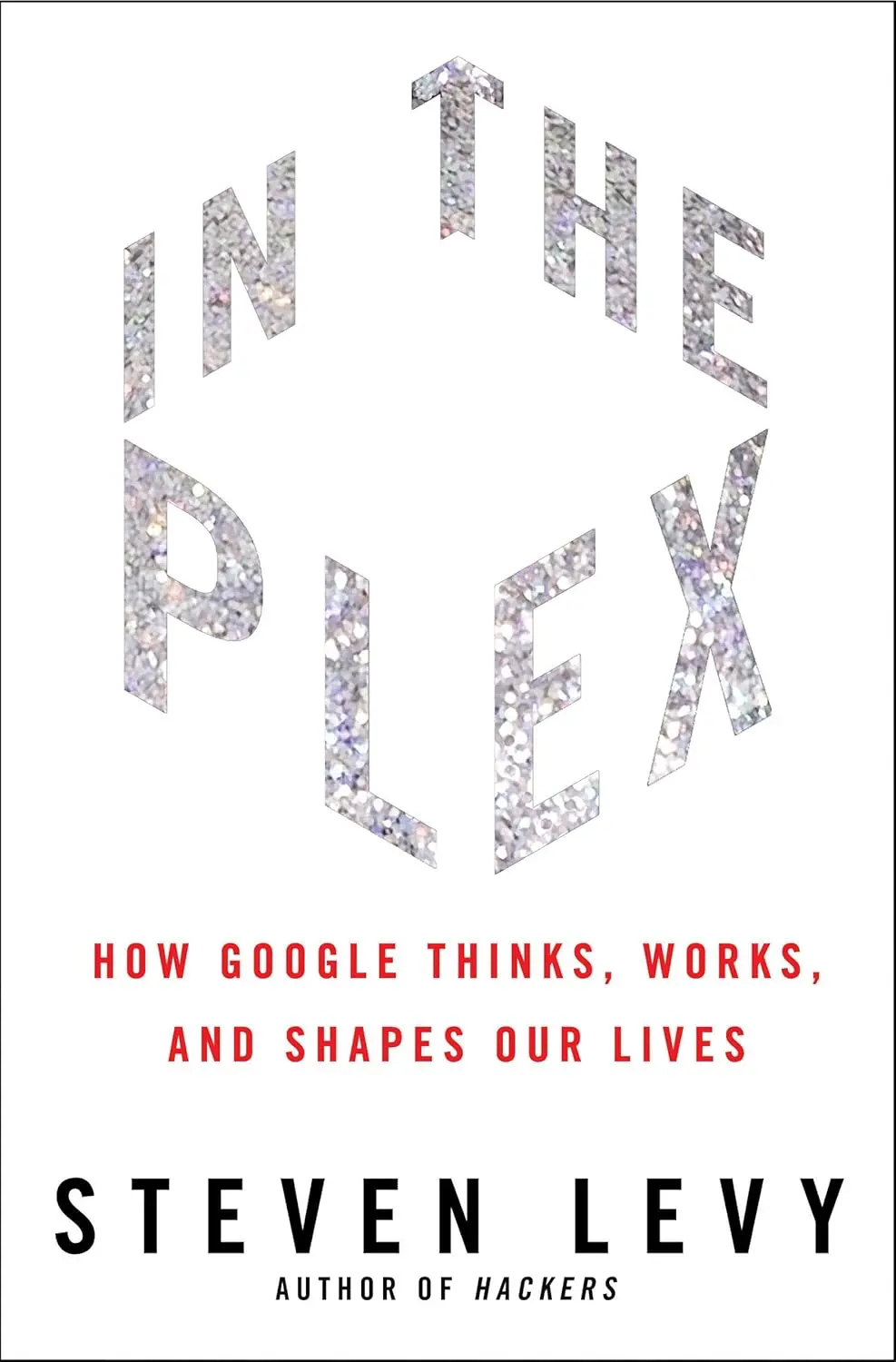
Steven Levy covered technology for Newsweek for decades before writing this book. He had the kind of access to Google that journalists rarely get: years of interviews with Larry Page, Sergey Brin, Eric Schmidt, and dozens of engineers and executives. In the Plex is the result of that access, and it reads like a reporter’s book in the best sense. It is detailed, specific, and more interested in how things actually work than in telling a hero story.
The book is organized around Google’s major products and business units. The chapters on search explain the engineering decisions behind PageRank and how Google’s approach to relevance differed from competitors. The chapters on advertising cover the development of AdWords and AdSense, the systems that generate almost all of Google’s revenue. There are sections on Gmail, Google Maps, Google Books, YouTube (after its acquisition), Android, and Google’s operations in China.
What makes the book more than a product history is Levy’s attention to Google’s culture and decision-making processes. He describes how the company hires (aggressively, with a bias toward algorithmic thinking), how it manages projects (loosely, with engineers given substantial freedom to choose what they work on), and how it thinks about data (obsessively, with a preference for quantitative evidence over intuition). The “20 percent time” policy, which allowed engineers to spend one day a week on personal projects, gets examined in practice rather than in mythology. Levy shows that it produced some important products (Gmail started as a 20 percent project) but was more complicated in practice than the press coverage suggested.
The China chapters are particularly strong. Levy traces Google’s decision to enter the Chinese market, the compromises it made around censorship, and the internal debates that eventually led to its partial withdrawal. These chapters reveal the tensions that arise when a company built on the principle of organizing the world’s information runs into a government that wants to control what information its citizens can access.
Jessica Livingston, co-founder of Y Combinator, has cited the book. Published in 2011, some details are dated, but the portrait of how Google built its culture and made its most consequential decisions remains the most thorough available. For anyone studying how large technology companies actually function, from engineering processes to business model development to political decision-making, In the Plex is essential reading.
