
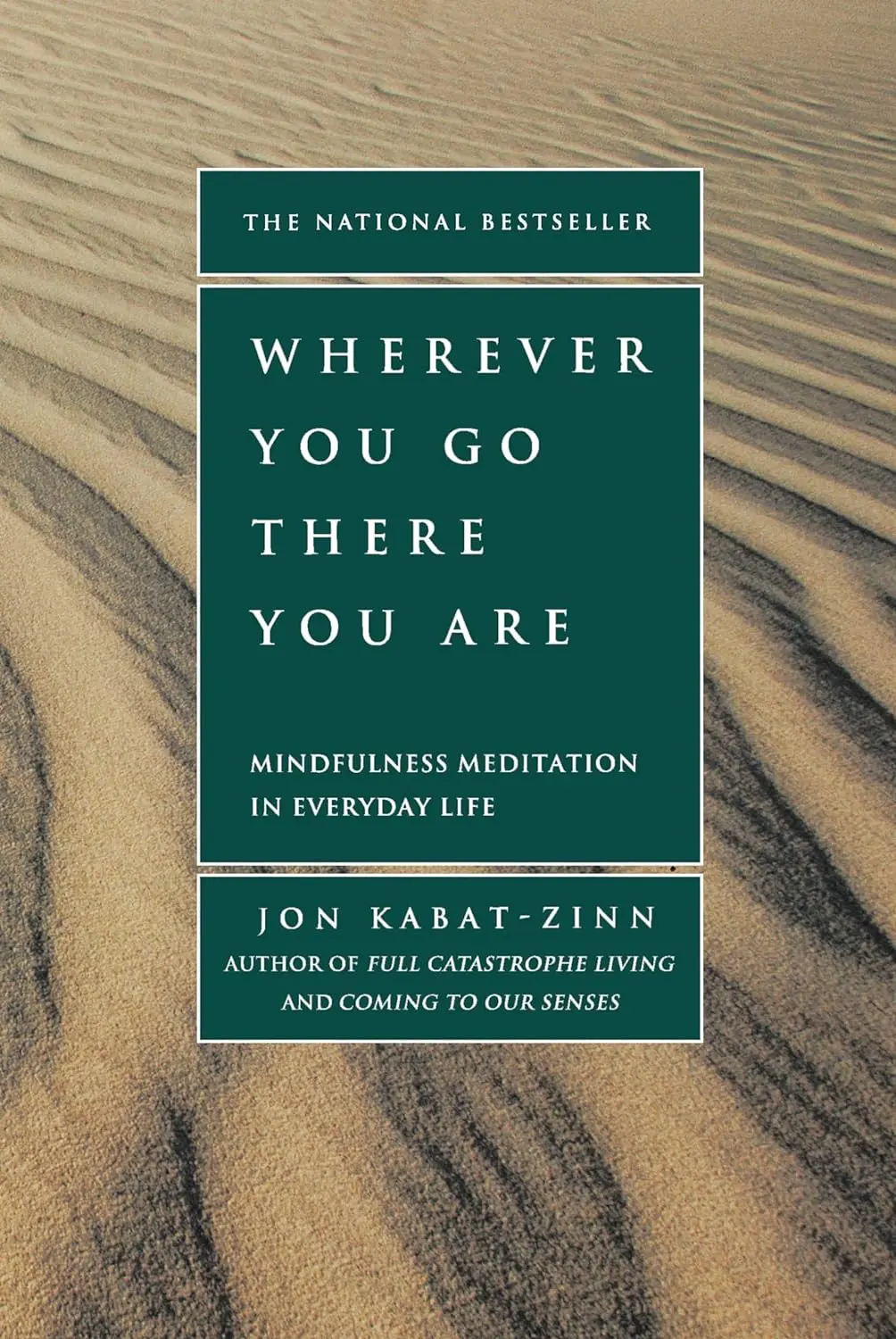
Jon Kabat-Zinn earned his PhD in molecular biology at MIT, then spent the rest of his career doing something most of his peers probably found baffling: teaching people to sit still and pay attention to their breathing. He founded the Stress Reduction Clinic at the University of Massachusetts Medical Center in 1979, where he developed Mindfulness-Based Stress Reduction (MBSR), a structured eight-week program that has since been adopted by hospitals, prisons, schools, and corporate wellness programs worldwide.
Wherever You Go, There You Are is not the clinical manual for that program. It is the companion piece, written for anyone curious about meditation but put off by the spiritual packaging it usually comes wrapped in. The book is organized into short chapters, many just two or three pages, each focused on a single idea or practice. Kabat-Zinn writes about sitting meditation, walking meditation, standing meditation, lying-down meditation. He writes about paying attention to your breathing, noticing the feeling of your feet on the floor, and the practice of doing nothing on purpose.
The central argument is simple: mindfulness is not a technique you practice for twenty minutes a day. It is a way of being present in each moment, whether you are sitting on a cushion or stuck in traffic or arguing with a colleague. The distinction matters because it turns meditation from a hobby into a skill with obvious applications. People who run companies, manage teams, or build products under pressure already know that their mental state affects their decisions. What Kabat-Zinn offers is a systematic method for noticing that state and, over time, getting better at choosing how to respond rather than simply reacting.
The writing is plain and direct. Kabat-Zinn avoids jargon and keeps the Buddhist references light. He draws on Thoreau, Lao Tzu, and his own experience running the stress clinic, mixing instruction with reflection. Some chapters are exercises. Others are meditations on ideas like non-doing, patience, or generosity. The effect is cumulative rather than linear, which makes the book better suited for reading a few pages at a time than for plowing through in a weekend.
Since its publication in 1994, the book has sold over a million copies and been translated into more than thirty languages. The research supporting mindfulness meditation has expanded enormously in that time. Studies from institutions including Harvard, Stanford, and Oxford have linked regular meditation practice to reduced anxiety, improved attention, lower blood pressure, and structural changes in the brain.
The book has been recommended by music producer Rick Rubin and former Google design ethicist Tristan Harris. For founders and builders dealing with constant noise, difficult decisions, and relentless pace, Wherever You Go, There You Are makes a practical case for the value of learning to be still.
