
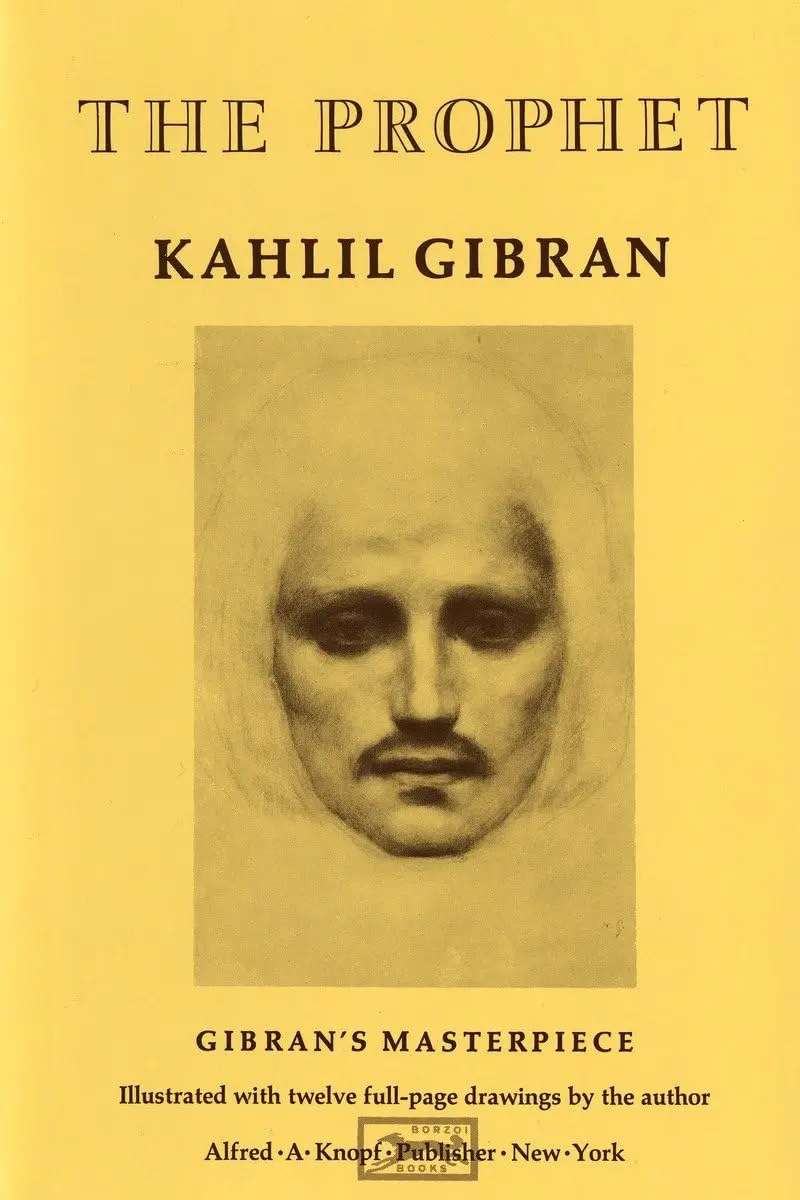
Almustafa has lived in the city of Orphalese for twelve years. A ship arrives to take him home. Before he boards, the people of the city ask him to speak on the subjects that matter most to them. He does. The book is his answers.
There are twenty-six sections, each addressed to a question. On Love. On Marriage. On Children. On Work. On Freedom. On Pain. On Self-Knowledge. On Teaching. On Friendship. On Pleasure. On Death. Each answer is a few pages of prose poetry, written in a biblical cadence that has made the book feel ancient even though it was published in 1923.
The section on children contains the book’s most quoted passage, which argues that children do not belong to their parents but to life itself. The section on work argues that work is love made visible. The section on marriage argues that partners should have space between them, like the columns of a temple that stand apart to hold the roof. These ideas are not original in philosophical terms. What Gibran does is express them with a simplicity and rhythm that makes them feel inevitable.
Gibran was born in Lebanon in 1883 and emigrated to Boston as a child. He wrote in both English and Arabic. The Prophet was his most ambitious English-language work, and he spent years revising it. The style blends Western Romantic poetry with Sufi and Christian mystical traditions. The result sounds like scripture without belonging to any particular scripture.
The book has sold over 100 million copies, making it one of the bestselling books in history. It was Elvis Presley’s favorite book. John Lennon quoted from it. It has been read at millions of weddings and funerals. Its cultural reach is almost impossible to overstate.
Critical opinion is divided. Literary scholars have generally treated Gibran with skepticism, viewing his work as sentimental and philosophically thin. Readers have consistently disagreed, which is why the book has never gone out of print for over a century. The gap between critical and popular reception is itself interesting. Gibran wrote for people who wanted wisdom delivered in beautiful sentences, and he delivered it. Whether that constitutes great literature or merely effective communication depends on what you think literature is for.
Gibran died in New York in 1931 at the age of forty-eight. He is buried in Lebanon. The Prophet is usually found in the poetry section of bookstores, though it is not exactly poetry, or in the philosophy section, though it is not exactly philosophy. It occupies a category that it essentially created.
