
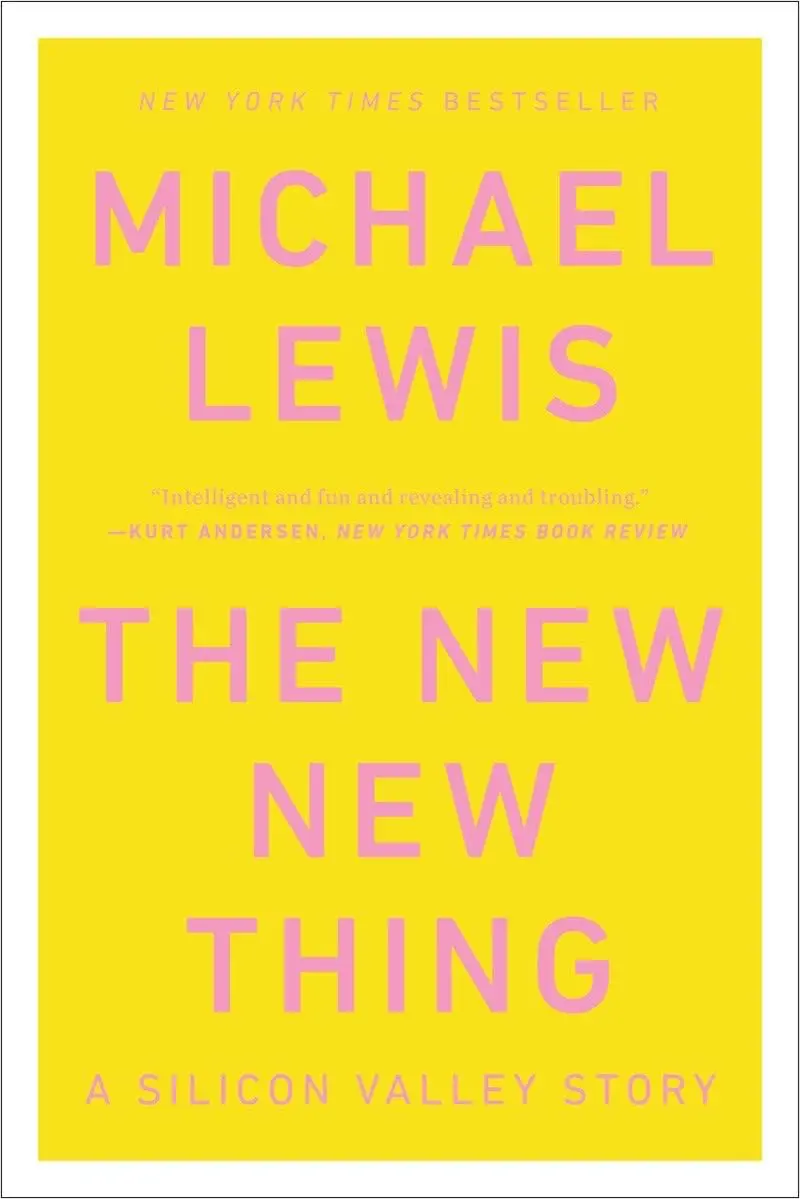
Jim Clark founded three separate billion-dollar companies. Silicon Graphics made the machines that rendered the dinosaurs in Jurassic Park. Netscape launched the commercial internet. Healtheon tried to put the entire healthcare system online. Most founders struggle to build one successful company. Clark kept doing it because he could not sit still.
Michael Lewis embedded himself in Clark’s world during the late 1990s, as Healtheon was going public and the dot-com bubble was inflating to absurd proportions. The book that resulted is less about any single company than about the psychology of someone who needs to build the next thing before the current thing is finished. Clark is brilliant, restless, perpetually dissatisfied, and constitutionally unable to enjoy what he has already achieved. Lewis watches this with the fascination of a novelist.
The title refers to the Silicon Valley concept that matters most: the new new thing, the next big idea, the product that will make everything before it obsolete. Clark lived for this. He made hundreds of millions from Silicon Graphics and left because he was bored. He made billions from Netscape and immediately started Healtheon. He was building a computerized sailing yacht at the same time, because even his hobbies had to involve pushing technology past its current limits.
Lewis is a gifted writer of character. The book’s best moments are not about business strategy but about the specific way Clark moves through the world: his impatience with people who cannot keep up, his conviction that the future he imagines is already real and the present is just dragging its feet, his willingness to bet everything on a hunch that he cannot fully articulate.
The book was published in 1999, just before the bubble burst. Some of the companies and ideas it describes no longer exist. Healtheon merged with WebMD. The dot-com era ended in a crash that wiped out trillions in paper wealth. But the book’s portrait of the entrepreneurial temperament has outlasted its era. Clark is a type: the person who starts companies not because they want to be rich (though they end up rich) but because they cannot stop imagining what comes next.
Lewis went on to write Moneyball, The Big Short, Flash Boys, and The Undoing Project. The New New Thing was his first foray into the world of technology and finance, and it contains the same qualities that make all his books readable: the ability to find a character whose obsession reveals something larger about the system they operate in.
