
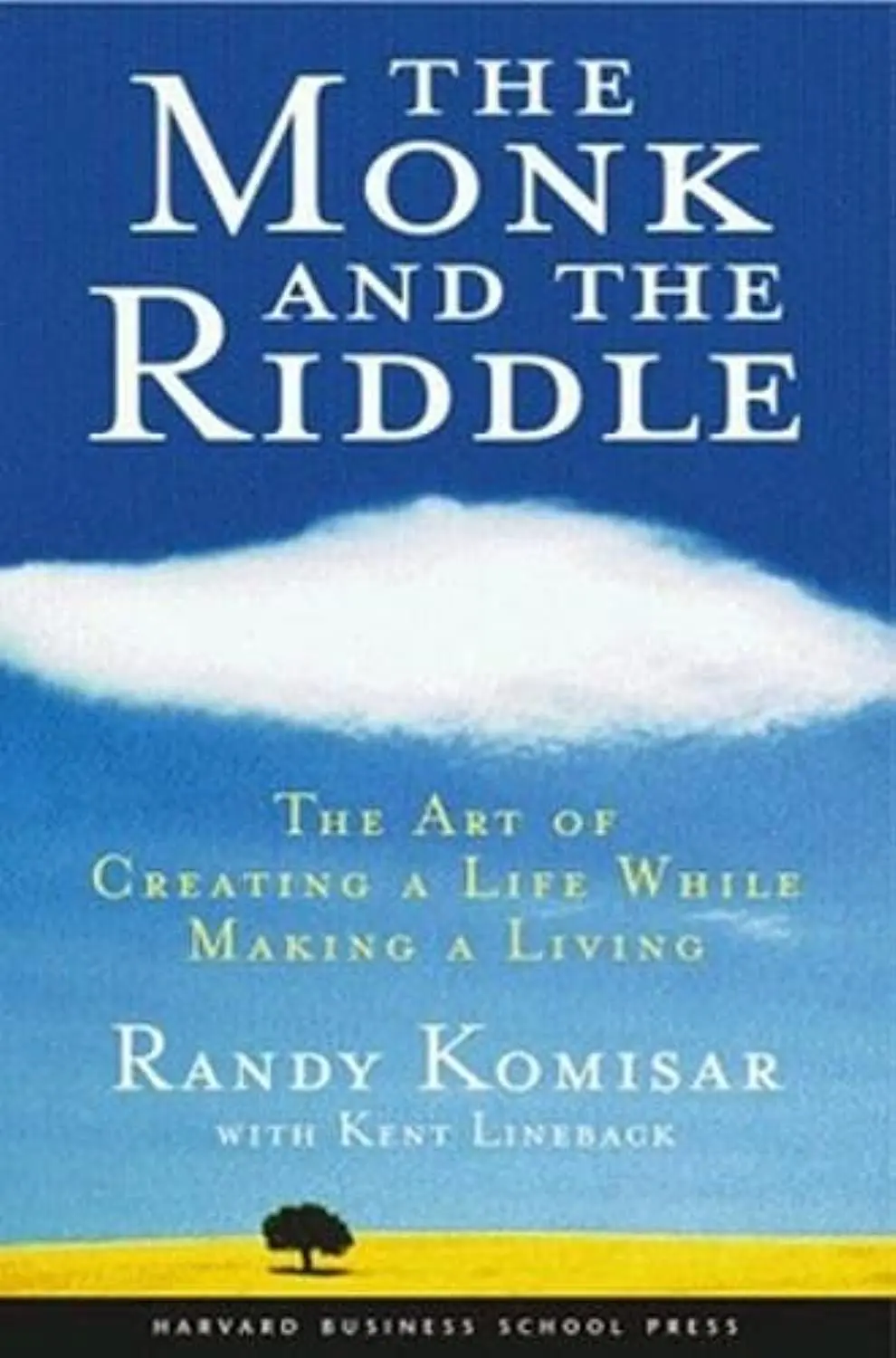
Lenny is a hypothetical entrepreneur with a business plan for online funeral services. He arrives at Randy Komisar’s office seeking advice, and what follows is a book-length conversation that stretches across a single day and covers the questions that matter more than market size or unit economics.
Komisar’s first question is not about the business plan. It is about Lenny himself. Why funerals? Because the market is large and inefficient, Lenny says. Komisar pushes: but do you care about funerals? Do you find them interesting? Would you still want to work on this problem if the financial outcome were uncertain? Lenny hesitates, and the book has its engine.
The Monk and the Riddle is built around a distinction Komisar makes between the Deferred Life Plan and what he calls the Whole Life Plan. The Deferred Life Plan is the standard Silicon Valley script: work on something you do not care about for a few years, get rich, and then do what you actually want. Komisar’s argument is that this plan almost never works. The “then” never arrives. Either the startup fails and you start over, or it succeeds and you are trapped by golden handcuffs. Either way, you spent years doing something you did not care about.
The alternative is to find work that is worth doing for its own sake, so that the process of building the business is itself the reward. This is the riddle: how do you create a life while making a living? The monk in the title refers to a story about a monk who is asked if he would change anything about his life if he knew he would die tomorrow. The monk says no. Komisar argues that the best entrepreneurs have a similar relationship to their work.
The book is short and reads quickly. It was published in 2001, during the first dot-com bubble, and its message about finding purpose was somewhat countercultural at a time when the dominant ethos was to get rich as fast as possible. The message has aged well. The entrepreneurs who survived the bubble’s collapse, and who survived every subsequent cycle, tend to be the ones who were building something they cared about rather than chasing exits.
Komisar writes in a conversational, narrative style. The book is structured as a story rather than a business guide, which makes it more engaging than most books in the genre. It is regularly recommended by investors and founders who believe that the “why” behind a company matters as much as the “what.”
