
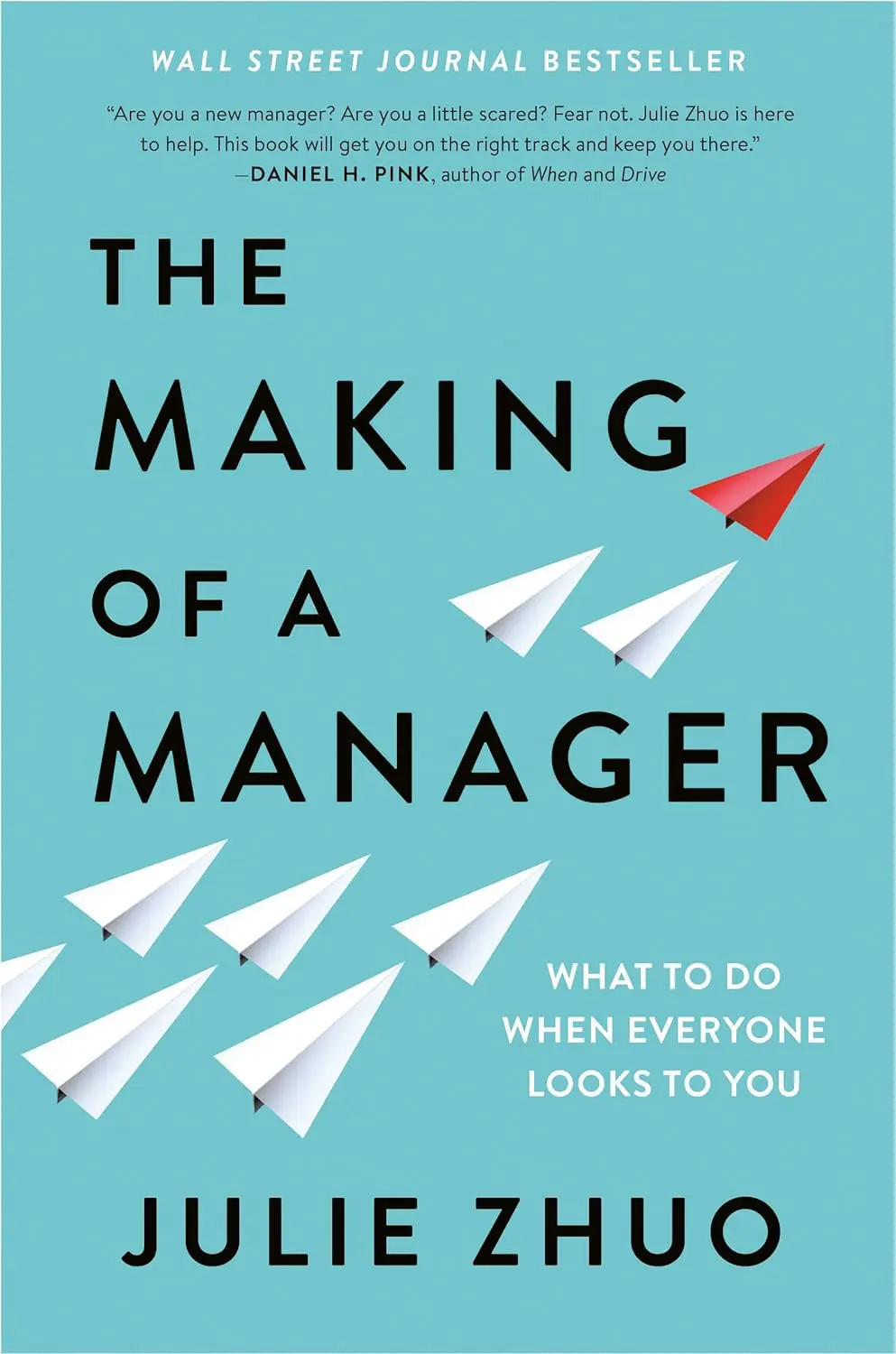
Julie Zhuo was a designer at Facebook. She was good at design. So they promoted her to managing designers. This is how most people become managers: they are good at their job, so they are given a different job that requires an entirely different set of skills. Nobody teaches them those skills. They figure it out by trial and error, mostly error.
Zhuo spent a decade figuring it out, eventually becoming VP of Product Design at Facebook (now Meta). The Making of a Manager is her attempt to compress that decade of learning into a book that a new manager can use immediately.
The advice is specific and grounded. How to run a one-on-one meeting (ask questions, listen more than you talk, make it about them, not about you). How to give feedback (be direct, focus on behavior rather than character, do it quickly rather than saving it up). How to hire (the best predictor of future performance is past performance in similar situations, not interview charisma). How to fire (do it when you know it is the right decision, not months later when the damage has accumulated).
Zhuo is honest about her own mistakes. She describes giving feedback that was so indirect the recipient did not realize it was feedback. She describes avoiding a difficult conversation until the situation became a crisis. She describes the specific moment she realized that being a good manager and being liked are sometimes in conflict, and that choosing to be liked is a form of cowardice.
The book is organized around the questions new managers actually ask. What does a manager do all day? How do I know if I am doing a good job? What do I do when someone on my team is underperforming? How do I get promoted without becoming political? Each chapter addresses one question with concrete answers rather than abstract principles.
Zhuo writes clearly, without jargon, and with the specific vocabulary of someone who managed at a fast-growing tech company. The examples skew toward product and design teams, which means some of the tactical advice may need translation for managers in other industries. But the core insights, about how to build trust, how to make decisions, and how to help people grow, are universal.
The book has been widely recommended in Silicon Valley and among first-time managers in tech. It reads in a few hours and repays keeping on a shelf for the moments when a management situation arises and you need practical guidance rather than inspiration.
