
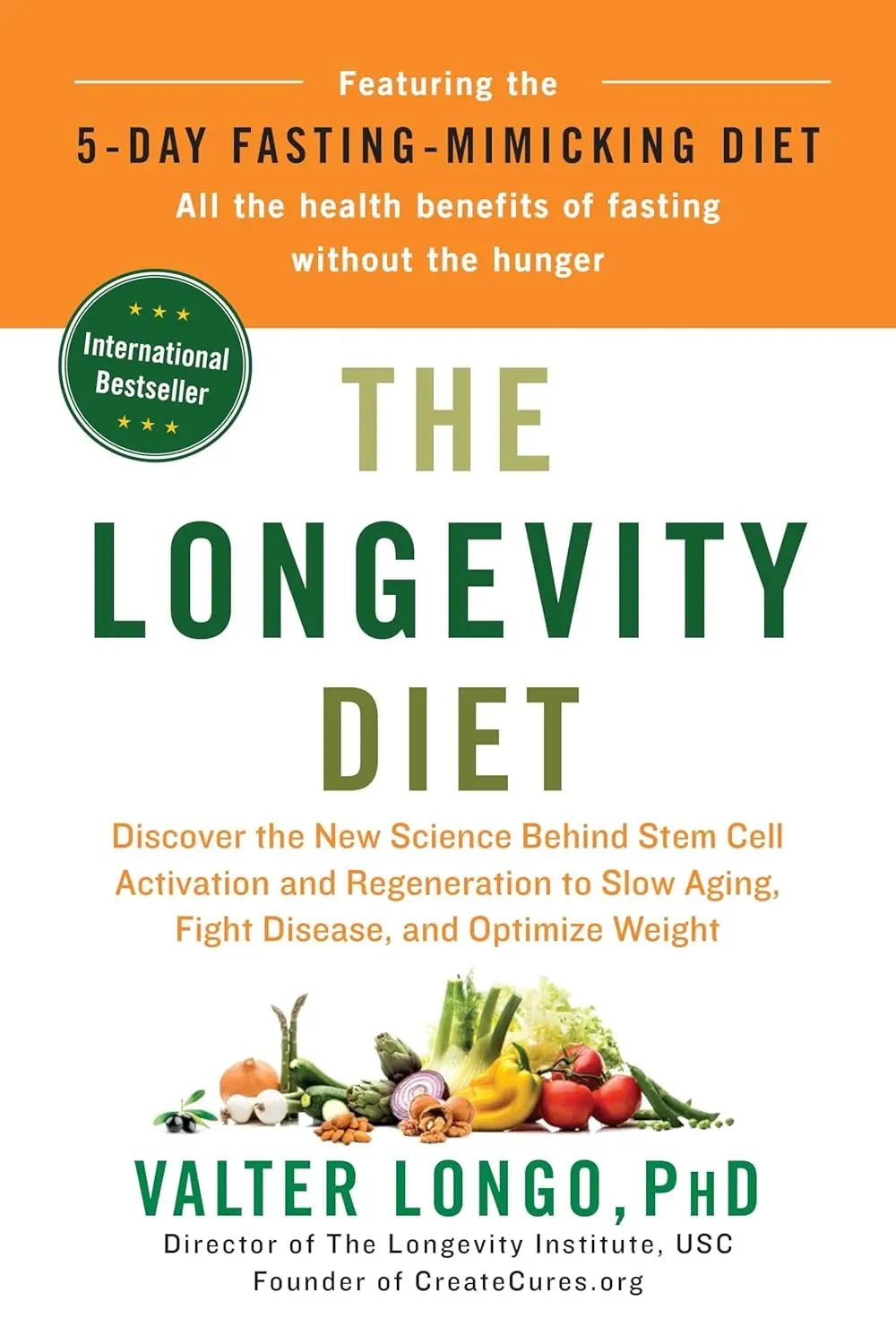
Valter Longo runs the Longevity Institute at the University of Southern California and a parallel research program at the IFOM cancer institute in Milan. He has studied aging in organisms ranging from yeast to humans for over three decades. His research focuses on how dietary patterns affect the cellular processes that drive aging, cancer, diabetes, and cardiovascular disease.
The book presents two main dietary interventions. The first is a daily eating pattern that Longo calls the Longevity Diet: largely plant-based, moderate in protein (especially low in animal protein until age sixty-five, then higher to prevent muscle loss), rich in complex carbohydrates and healthy fats, with eating confined to a twelve-hour daily window. The specific recommendations draw on studies of centenarian populations in Okinawa, Sardinia, Loma Linda, and other so-called Blue Zones, cross-referenced with Longo’s laboratory findings.
The second intervention is periodic fasting-mimicking diets (FMDs): five-day cycles of reduced calorie intake, done several times per year, that Longo’s research shows can trigger cellular regeneration processes similar to those activated by water-only fasting but without the risks and difficulty of complete food deprivation. His lab has published peer-reviewed studies showing that FMDs reduce biomarkers associated with aging, cancer, and metabolic disease in both animal models and human clinical trials.
Longo is careful to distinguish his recommendations from fad diets. He argues against both very low-carb diets (citing research linking high animal protein intake to increased cancer risk in people under sixty-five) and very low-fat diets (citing the importance of omega-3 fatty acids and olive oil). The sweet spot, he argues, is a pescatarian diet with moderate protein, high in legumes, whole grains, nuts, and vegetables.
The book includes meal plans and recipes, which makes it more practical than a pure research summary. Longo also addresses different life stages, noting that nutritional needs change significantly between youth, middle age, and old age, something that most diet books ignore.
Critics have noted that Longo has a financial interest in the fasting-mimicking diet through ProLon, a company that sells FMD meal kits he helped develop. Longo has stated that he donates his share of the profits to research. The conflict of interest is real but does not invalidate the underlying research, which has been published in peer-reviewed journals including Cell Metabolism and Science Translational Medicine.
The book is dense with scientific detail but accessible to readers without a biology background. Longo writes with the precision of a researcher and the patience of someone who has explained these concepts in hundreds of lectures.
