
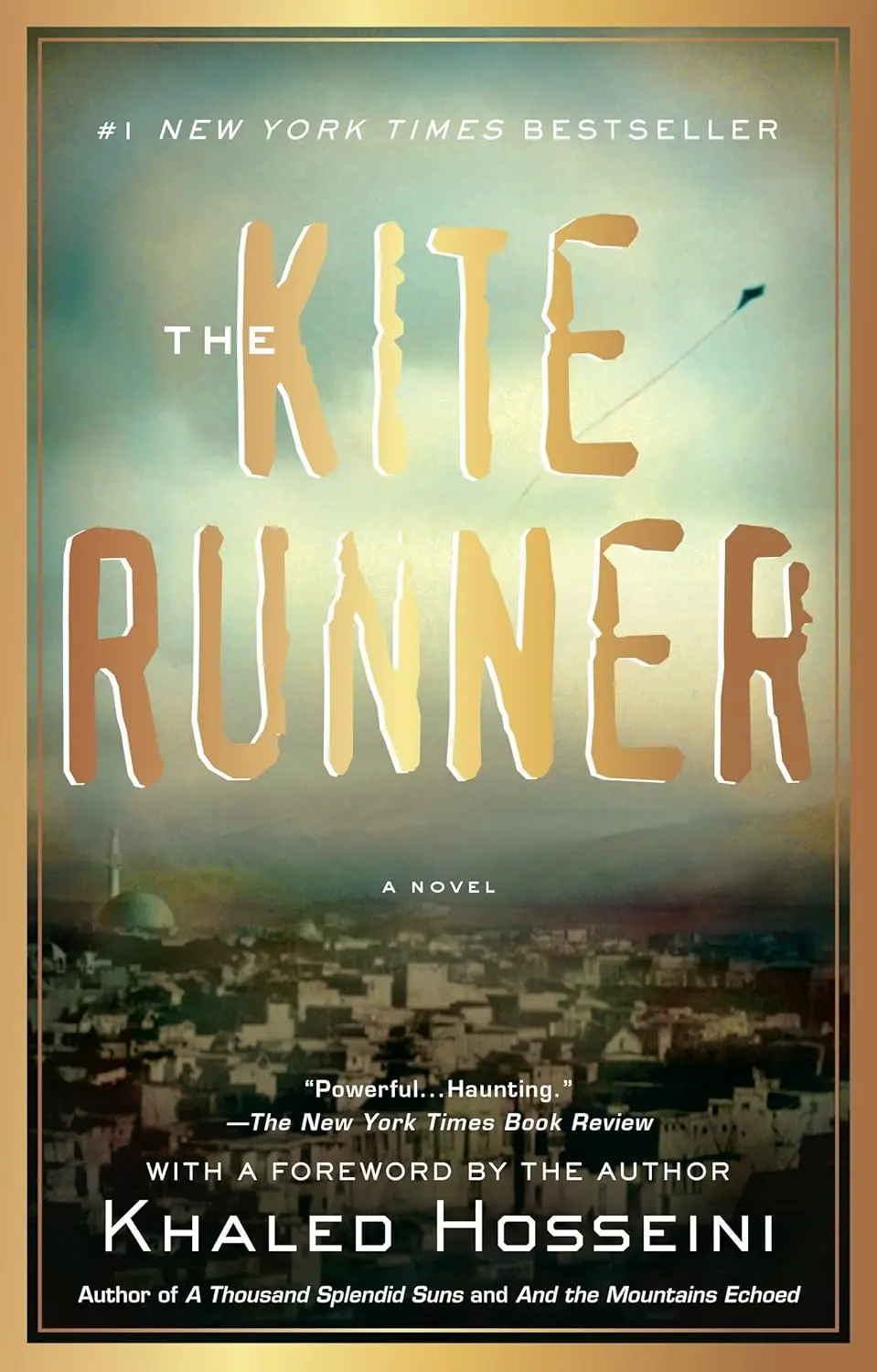
Amir and Hassan grow up together in Kabul in the 1970s. Amir is the son of a wealthy Pashtun businessman. Hassan is the son of Amir’s father’s Hazara servant. In Afghanistan’s ethnic hierarchy, Hazaras occupy the bottom. Amir knows this. Hassan does not care. He is loyal to Amir without reservation.
The novel turns on a kite-fighting tournament, a tradition in which competitors use glass-coated strings to cut each other’s kites from the sky. Hassan is the best kite runner in the neighborhood, the person who chases down the defeated kites as they fall. After winning the tournament, Hassan runs the last kite for Amir and is cornered in an alley by a group of older boys. What happens in that alley, and what Amir does about it, which is nothing, sets the rest of the novel in motion.
Amir spends the next twenty-five years running from that moment. He and his father flee to California after the Soviet invasion. Amir becomes a writer. He marries. He builds a comfortable life. But the guilt does not leave. When a call from Pakistan offers a chance at redemption, Amir returns to a Taliban-controlled Afghanistan to find Hassan’s son, who has been orphaned and is trapped in a situation that echoes the original crime.
Hosseini was born in Kabul and moved to the United States as a teenager. He wrote The Kite Runner while working as a doctor. The novel was published in 2003 and became one of the bestselling books of the decade, with over twelve million copies sold in the United States alone. It was translated into more than seventy languages.
The prose is straightforward and emotionally direct. Hosseini does not experiment with form or style. He tells a story, builds characters you care about, and then puts them through experiences that make you wish you did not care about them. The Afghanistan sections are vivid without being exotic. Hosseini writes about Kabul the way someone writes about their hometown: with specificity, affection, and grief for what has been lost.
The novel was adapted into a film in 2007 and generated controversy because the young actors who played the alley scene received threats in Afghanistan, eventually requiring evacuation to the United Arab Emirates. Hosseini went on to write A Thousand Splendid Suns and And the Mountains Echoed, both set in Afghanistan.
The Kite Runner works because the central question, whether you can go back and fix the worst thing you ever did, is one that almost everyone has asked themselves.
