
Benjamin Zander walks onto a stage and announces that everyone in the audience will love classical music by the time he finishes speaking. He then plays a Chopin piece and explains what is happening musically, measure by measure, in terms that a non-musician can follow. By the end, the audience is hearing something they could not hear before. Not because the music changed, but because their attention did.
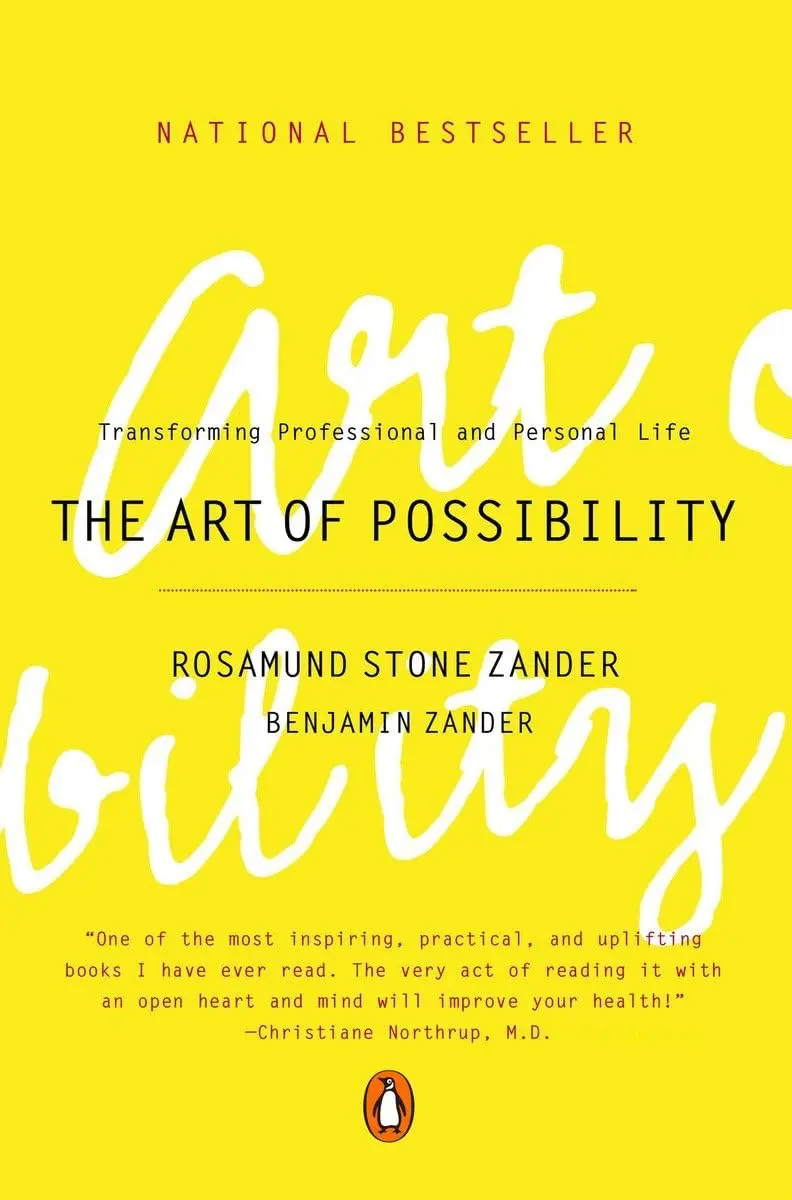
This is what The Art of Possibility tries to do for the rest of life. Rosamund Stone Zander, a family therapist trained at Harvard, and Benjamin Zander, her husband and the conductor of the Boston Philharmonic, present twelve practices for shifting from a scarcity mindset to a possibility mindset. The practices have names like “Giving an A” (treating everyone as if they have already earned the highest grade), “Being a Contribution” (measuring yourself by what you give rather than what you get), and “Rule Number 6” (do not take yourself so seriously, and yes, there is only one rule).
The book alternates between their two voices. Benjamin tells stories from rehearsals and performances. A cellist who cannot play a passage until Benjamin reframes the problem. A student who is paralyzed by fear until Benjamin tells her she already has an A and asks her to write a letter explaining what she did to earn it. Rosamund provides the psychological framework, drawing on family systems theory and her own therapeutic practice.
The tone is warm, generous, and occasionally too optimistic for readers who prefer their wisdom with an edge. The Zanders believe that most limitations are invented rather than real, and that the practice of looking for possibility in every situation produces better outcomes and better relationships. This is not a falsifiable claim, and the book does not pretend it is. It is a stance, an orientation, a way of holding the world.
The practices are simple to describe and difficult to sustain. “Giving an A” is easy when you are in a good mood and dealing with competent people. It is hard when someone has just made a costly mistake and you are angry. The book acknowledges this but maintains that the practice is worth the effort precisely because it is hardest when it matters most.
Benjamin Zander’s TED talk, which covers some of the same material, has been viewed millions of times and is frequently cited as one of the best TED talks ever given. The book has been widely adopted in corporate leadership programs and music education. It works best if you read it in the spirit it was written: not as a system to be evaluated but as an invitation to try something different.
