
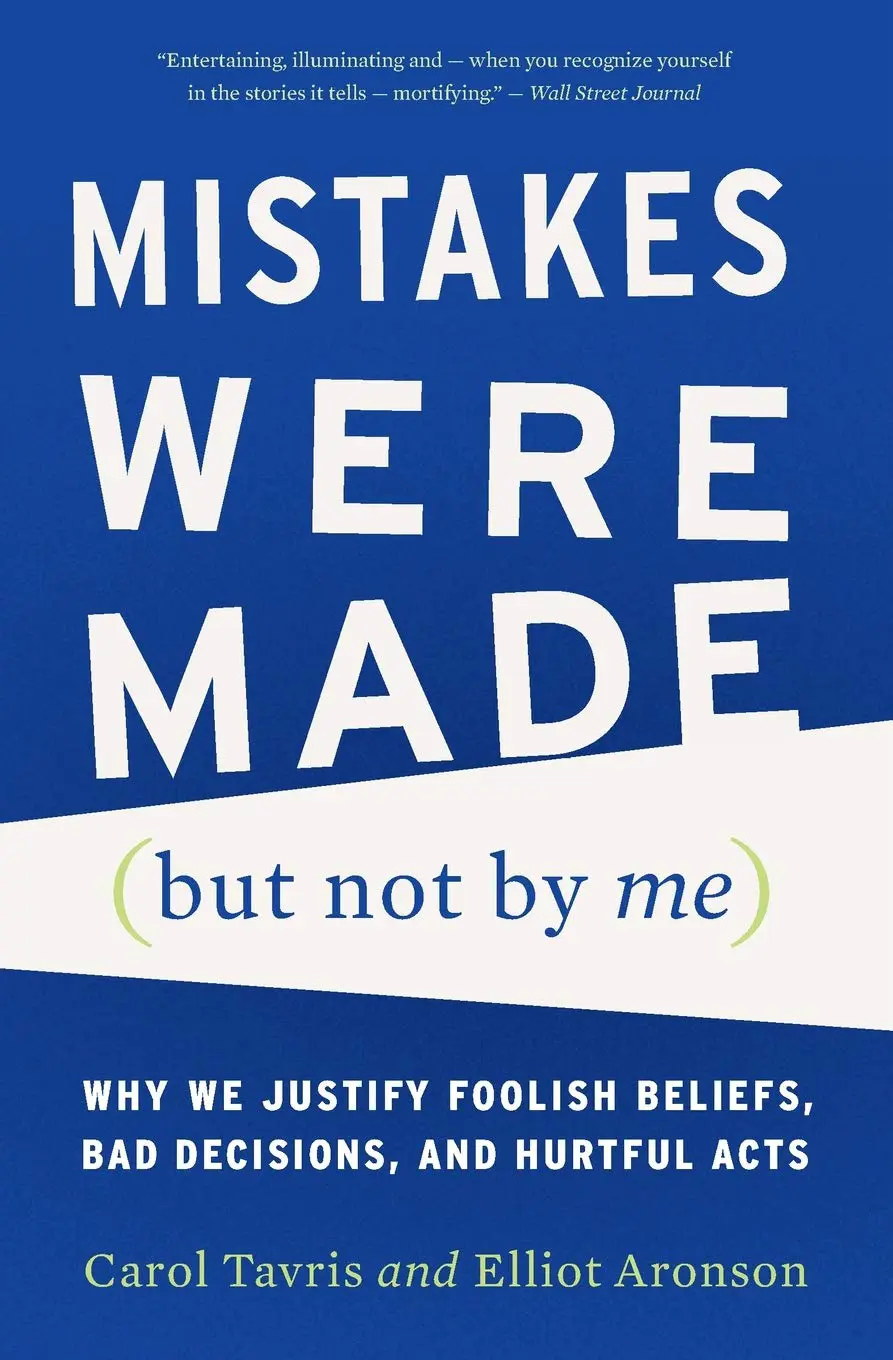
You make a decision. It turns out to be wrong. What do you do? If you are like most people, you do not admit it. You explain why it was actually the right decision given what you knew at the time. You find new evidence that supports the choice you already made. You blame the outcome on factors beyond your control. You do anything except say: I was wrong.
Carol Tavris and Elliot Aronson explain why. The mechanism is cognitive dissonance, the psychological discomfort that arises when you hold two contradictory beliefs. I am a smart person, and I just made a stupid decision. Those two ideas cannot coexist comfortably, so the brain resolves the tension by revising one of them. Since most people are not willing to revise their self-image, they revise their assessment of the decision.
The book traces this pattern across domains. Prosecutors who refuse to acknowledge wrongful convictions even when DNA evidence proves innocence. Therapists who implanted false memories of abuse in patients and then doubled down when challenged. Doctors who continued harmful treatments rather than admit the treatments did not work. Politicians who escalated wars rather than acknowledge that the initial decision to invade was wrong.
The most compelling chapters cover the criminal justice system. Tavris and Aronson describe specific cases where police officers, prosecutors, and judges ignored exculpating evidence because accepting it would have meant admitting they had put the wrong person in prison. The psychological cost of that admission was too high, so they rationalized. Meanwhile, innocent people served decades behind bars.
The writing is accessible and often funny, which is impressive given that the subject matter involves wrongful imprisonment and self-deception. Tavris and Aronson are experienced science communicators. They use vivid examples, avoid jargon, and build their argument step by step without repeating themselves.
The book was first published in 2007 and updated in 2015 with new examples from politics and media. The updated edition covers how cognitive dissonance operates in the age of social media, where public positions are harder to walk back because the internet preserves everything.
The title comes from the passive-voice formulation that people and institutions use when forced to acknowledge error without taking responsibility. Mistakes were made. But not by me.
