
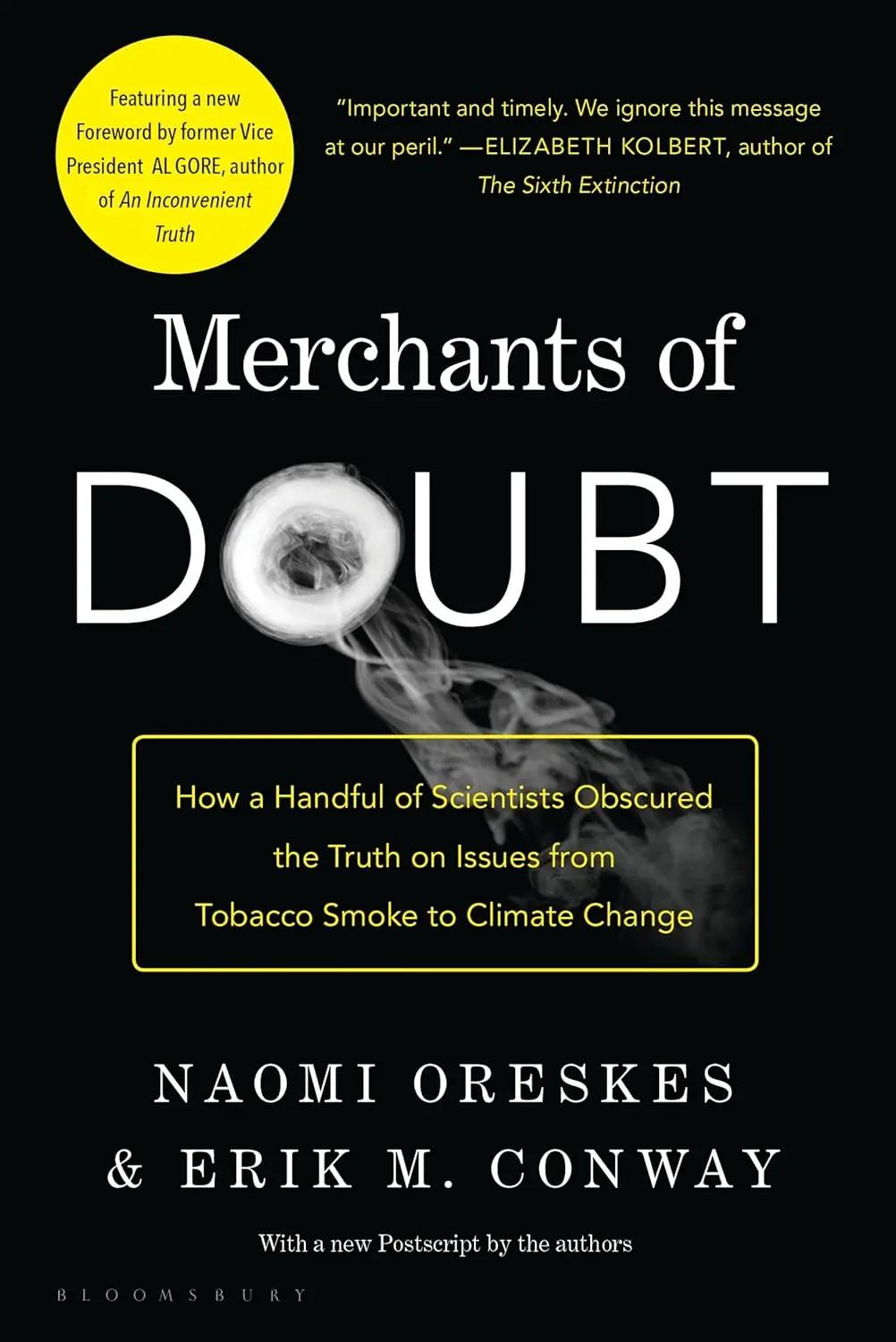
The tobacco industry figured it out first. If you cannot disprove the science linking cigarettes to cancer, you do not need to. You just need to create doubt. Fund a few contrarian researchers. Publicize their findings, however minor. Argue that the science is not settled. Demand more study before any regulation. The strategy bought the industry decades of continued sales while millions of people died.
Oreskes and Conway show that the same strategy, often involving the same people, was applied to a series of environmental and public health issues. Acid rain. The ozone hole. Secondhand smoke. And climate change. In each case, a small number of scientists with Cold War credentials and connections to conservative think tanks attacked the scientific consensus, not by producing better research but by producing confusion.
The cast of characters is disturbingly small. Fred Seitz, a former president of the National Academy of Sciences and a physicist who had worked on the Manhattan Project. Fred Singer, a rocket scientist who had designed the first satellite to observe weather patterns. Robert Jastrow, an astrophysicist who founded NASA’s Goddard Institute for Space Studies. These were real scientists with real accomplishments. They used their credentials to argue against scientific findings in fields they did not work in, creating the impression of legitimate scientific disagreement where little existed.
The mechanism is what Oreskes and Conway call the Tobacco Strategy. Step one: question the science. Step two: claim the evidence is inconclusive. Step three: argue that regulation would be economically catastrophic. Step four: accuse the scientists warning of danger of being politically motivated. The strategy works because the public and the media treat scientific disputes as two-sided debates, even when 97% of experts are on one side.
The book is meticulously documented. Oreskes and Conway trace specific campaigns, name specific organizations, and cite specific memos and internal documents. The research is dense enough that the reader comes away understanding not just that doubt was manufactured but exactly how it was manufactured, by whom, and with whose money.
The book was published in 2010 and adapted into a documentary film in 2014. Al Gore called it required reading. Elizabeth Kolbert said the science of climate change is settled, and this book shows how that fact was hidden. Whether or not you find the politics comfortable, the account of how doubt is manufactured as an industrial product is worth understanding. The techniques described in the book have only become more widespread since it was published.
