
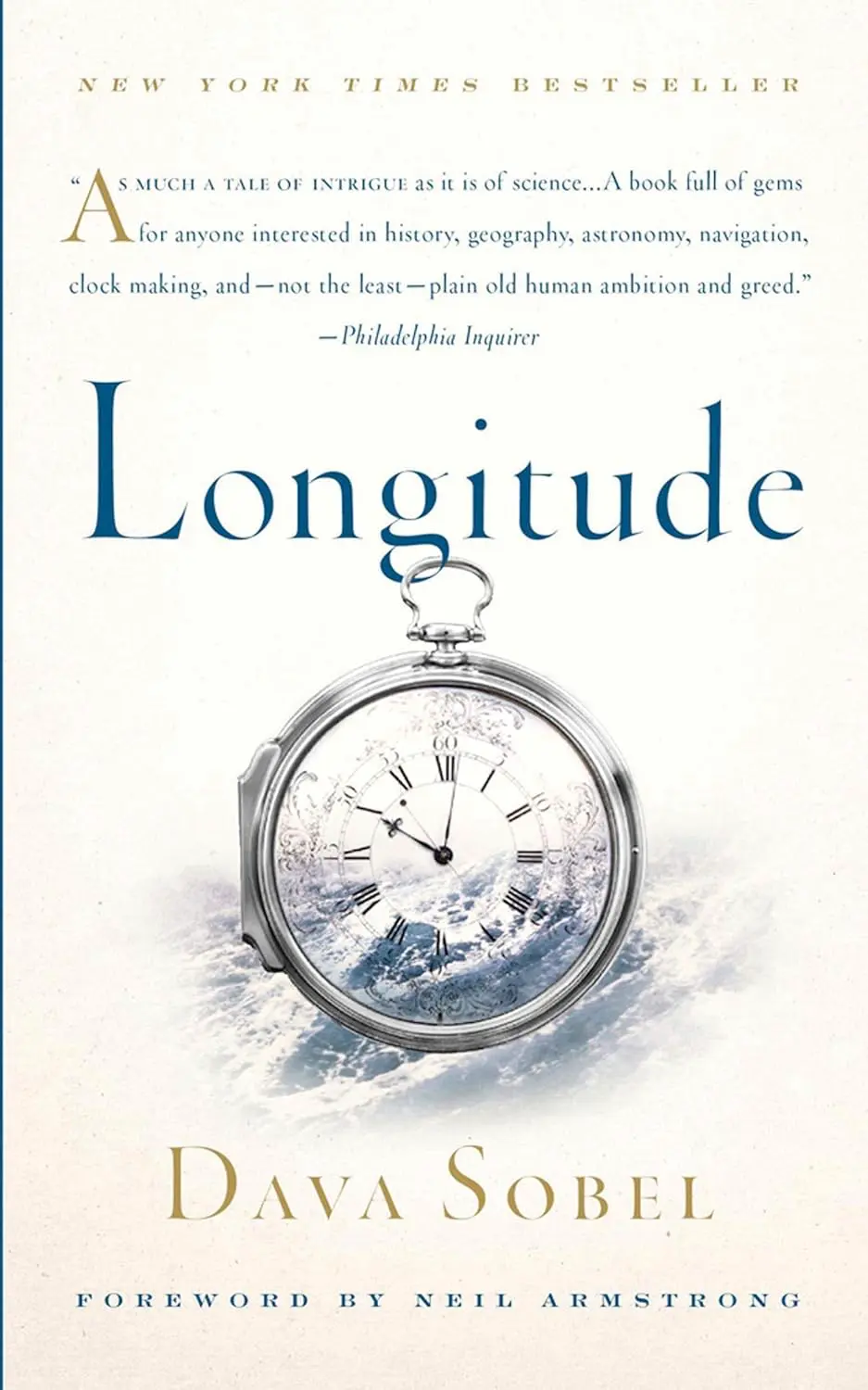
For centuries, sailors could calculate latitude easily by measuring the angle of the sun or stars above the horizon. Longitude was a different problem. There was no reliable way to determine how far east or west a ship had traveled. Ships ran aground on coasts they did not know were there. Entire fleets were lost. In 1714, the British Parliament offered a prize of 20,000 pounds, worth millions today, to anyone who could solve the problem.
The expected solution was astronomical. Scientists believed that by mapping the positions of the moon and stars precisely enough, navigators could use the sky as a clock. The Royal Observatory at Greenwich was built for this purpose. The greatest scientific minds of the era worked on it, including Isaac Newton and Edmond Halley.
John Harrison was not a scientist. He was a carpenter and self-taught clockmaker from Yorkshire with no formal education. He realized that the longitude problem was actually a timekeeping problem. If a ship carried a clock set to the time at its home port, a navigator could compare that time to local noon (determined by the sun’s position) and calculate the difference. Each hour of difference equals fifteen degrees of longitude.
The problem was that no clock could keep accurate time on a rolling, pitching, salt-sprayed, temperature-varying ship. Harrison spent the next forty years building a series of marine chronometers, each one more precise than the last. His fourth design, called H4, was the size of a large pocket watch and kept time to within a few seconds over a transatlantic voyage. It worked. It solved the problem.
But Harrison did not receive the prize. The Board of Longitude, dominated by astronomers who had spent their careers on the lunar-distance method, refused to accept that a clockmaker had beaten them. They moved the goalposts. They demanded additional trials. They withheld payment. Harrison spent the last decades of his life fighting for recognition and money he had earned.
Dava Sobel, a science journalist, tells this story in under 200 pages with a clarity that makes the technical problems feel personal. You do not need to understand clockwork or celestial navigation to follow the narrative. You need to understand stubbornness, because Harrison’s story is about a man who was right and spent forty years proving it to people who did not want to hear it.
Longitude was published in 1995 and became an unexpected bestseller, spending months on the New York Times list. It was adapted into a television film. The book helped launch a genre of short, narrative-driven science histories.
