
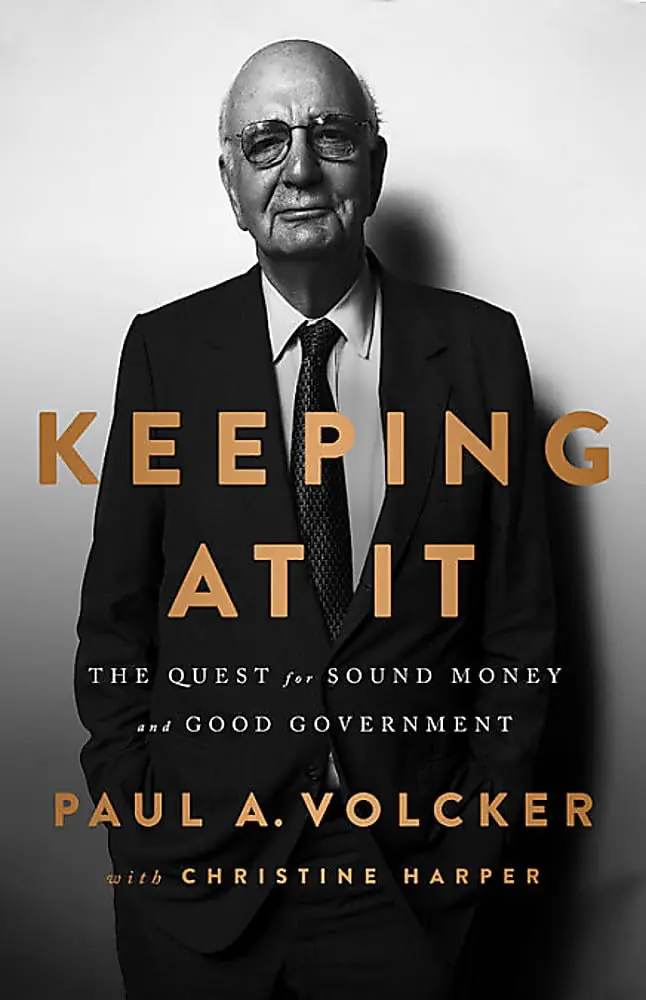
Paul Volcker is remembered for one decision. In 1979, as the newly appointed chairman of the Federal Reserve, he raised interest rates to levels that had never been seen before. The prime rate hit 21.5%. Unemployment surged. Businesses failed. The political pressure to reverse course was enormous. Volcker held. Inflation, which had been running above 13%, dropped to under 4% within a few years. The pain was real and concentrated among specific communities. The benefit, price stability that lasted decades, was diffuse and slow to arrive. It is the textbook example of a leader making an unpopular decision because it was the right one.
This memoir, written with Christine Harper, covers far more than that episode. Volcker spent over sixty years in public service. He worked at the Treasury Department under Presidents Kennedy, Johnson, and Nixon. He was present for the decision to take the dollar off the gold standard in 1971. After leaving the Fed, he chaired the investigation into dormant Swiss bank accounts belonging to Holocaust victims. After the 2008 crisis, he advised President Obama and proposed what became known as the Volcker Rule, which restricted banks from speculative trading with depositors’ money.
Volcker writes with the understated precision of someone who has spent a lifetime choosing words carefully in rooms where words have consequences. The prose is measured, occasionally dry, and free of the self-aggrandizement that characterizes many political memoirs. He describes the inflation fight without dramatizing it. He describes his disagreements with other officials without attacking them. The restraint is itself a statement about what he values.
The book is strongest when Volcker writes about the erosion of trust in public institutions. He is alarmed by the declining quality of government service, the revolving door between Washington and Wall Street, and the growing cynicism that treats all public servants as self-interested operators. His own career, which involved significant personal sacrifice including reduced income and strains on his family, stands as a counterexample.
Volcker died in December 2019, a year after the book was published. He was ninety-two. The memoir reads as a final statement from someone who believed that sound money, honest government, and public service were worth defending, and who worried that fewer people shared that belief than when he started.
