
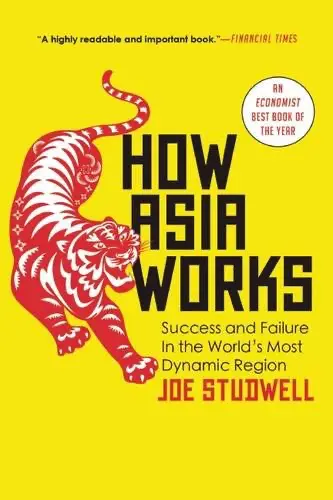
Bill Gates called this one of the most illuminating books he had read about Asia. That endorsement alone has kept it on reading lists for a decade, but the book deserves attention on its own merits.
Studwell spent twenty years reporting from Asia and noticed a pattern that mainstream economics could not explain. After World War II, most Asian countries were poor, primarily agricultural, and starting from roughly similar positions. By 2010, some of them were wealthy and others were still poor. The standard economic explanations, free markets, foreign investment, good institutions, did not track. The countries that had followed free-market prescriptions most closely, like the Philippines, had performed worst. The countries that had intervened most aggressively, like South Korea and Taiwan, had performed best.
Studwell identifies a three-step development recipe that the successful countries followed. Step one: radical land reform, breaking up large estates and distributing land to small farmers, which maximizes agricultural output per acre and creates a rural surplus that can be taxed to fund industrialization. Step two: directed industrial policy, where the government picks specific industries, provides financing and protection, but demands export performance in return, killing companies that fail to compete internationally. Step three: tight control of the financial sector, keeping banks focused on funding the government’s industrial priorities rather than speculating.
The argument is unfashionable because it contradicts the free-market orthodoxy that dominated development economics for decades. The International Monetary Fund and the World Bank spent years advising developing countries to open their markets, reduce tariffs, and attract foreign investment. Studwell argues that this advice was exactly wrong for countries at an early stage of development, and that the evidence from Asia proves it.
The book is organized by sector: agriculture, manufacturing, and finance. Each section compares the approaches of successful and unsuccessful countries in detail. The manufacturing chapter, which traces how South Korea built Hyundai and Samsung from nothing through brutal government discipline, is particularly compelling.
Studwell writes with journalistic clarity and occasional exasperation. He finds it baffling that the evidence has been available for decades and that development institutions continue to recommend policies that have repeatedly failed. The book does not answer every question. It does not explain, for instance, why some countries adopted the successful recipe and others did not, which is itself a political question. But as a diagnosis of what works in economic development, it is hard to argue with the evidence Studwell presents.
