
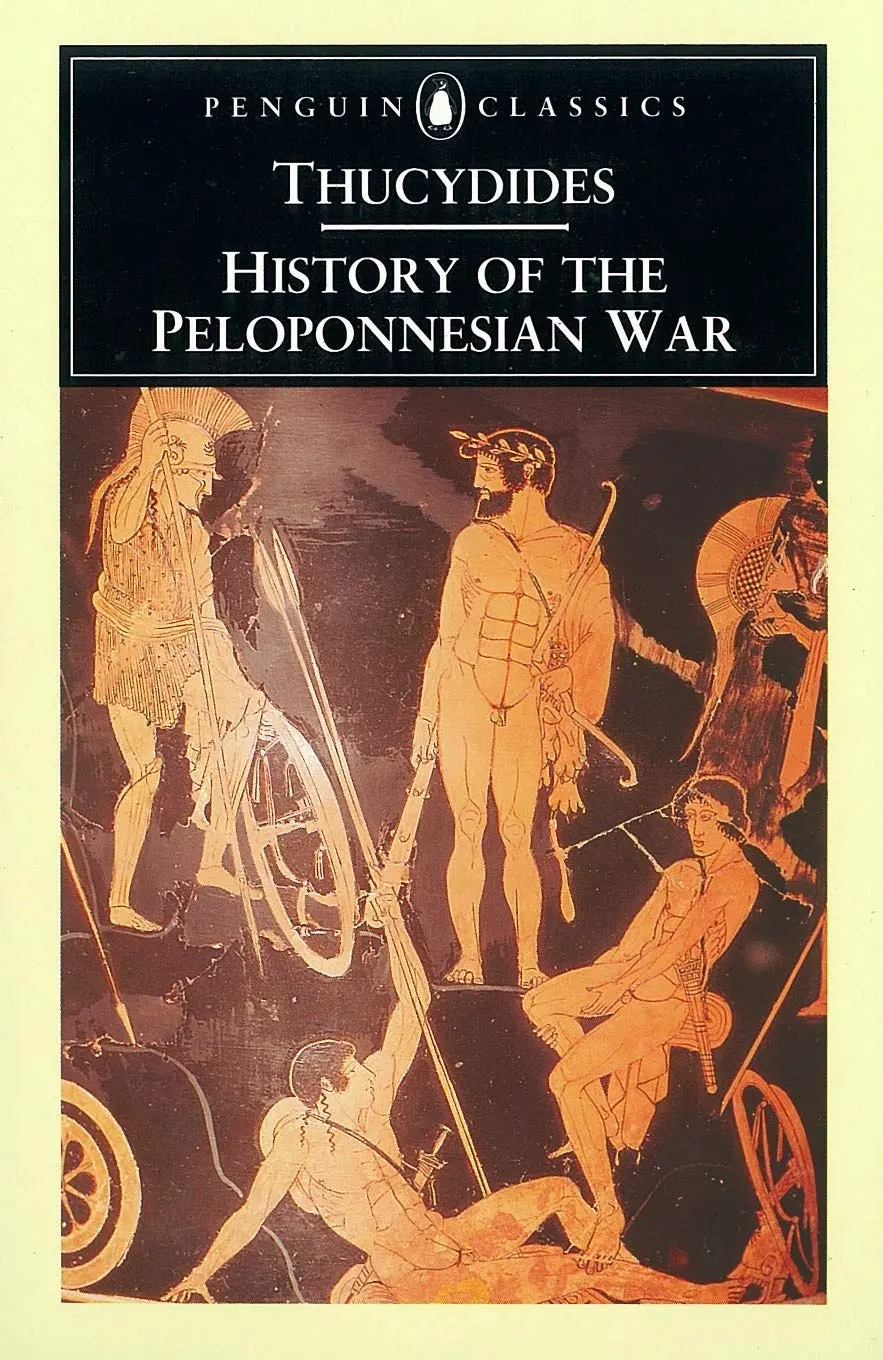
Thucydides was a general in the Athenian navy during the war between Athens and Sparta. After he failed to prevent the Spartans from capturing the city of Amphipolis in 424 BC, he was exiled. He spent the next twenty years interviewing participants on both sides and writing an account of the conflict that would become the founding text of Western historical writing.
The war lasted twenty-seven years and ended with the destruction of Athenian democracy. Thucydides believed the underlying cause was Sparta’s fear of Athens’s growing power, a dynamic that has since been called the Thucydides Trap: when a rising power threatens a dominant one, war is the likely result. The concept has been applied to everything from World War I to the current tension between the United States and China.
What makes the book unusual for its era is what Thucydides leaves out. He does not attribute events to the gods. He does not moralize. He does not write to entertain. He writes to explain, and his explanations are grounded in human nature: fear, honor, interest. The Melian Dialogue, where Athenian envoys tell the leaders of the neutral island of Melos that the strong do what they can and the weak suffer what they must, is one of the most quoted passages in political philosophy. It is also one of the most disturbing.
The Pericles funeral oration, delivered early in the war, makes the case for Athenian democracy with a clarity and beauty that still resonates. Pericles describes a society that values openness, debate, and individual merit. Within a few years of his speech, that society was making decisions that Thucydides presents as catastrophic: the disastrous invasion of Sicily, the execution of the entire male population of Melos, the internal political convulsions that eventually weakened Athens from within.
The Penguin Classics translation by Rex Warner is the most widely read modern English version. The text is dense and requires concentration. Military campaigns, diplomatic negotiations, and speeches are mixed together, and keeping track of the Greek city-states and their shifting alliances can be challenging without a map.
Thucydides died before finishing the work. The narrative breaks off abruptly in 411 BC, seven years before the war ended. What survives is roughly eight books covering about twenty years of the conflict. The unfinished state has not prevented the work from being treated as one of the most important books ever written about politics, power, and war. It is read at West Point, at the Naval War College, and in international relations programs worldwide.
