
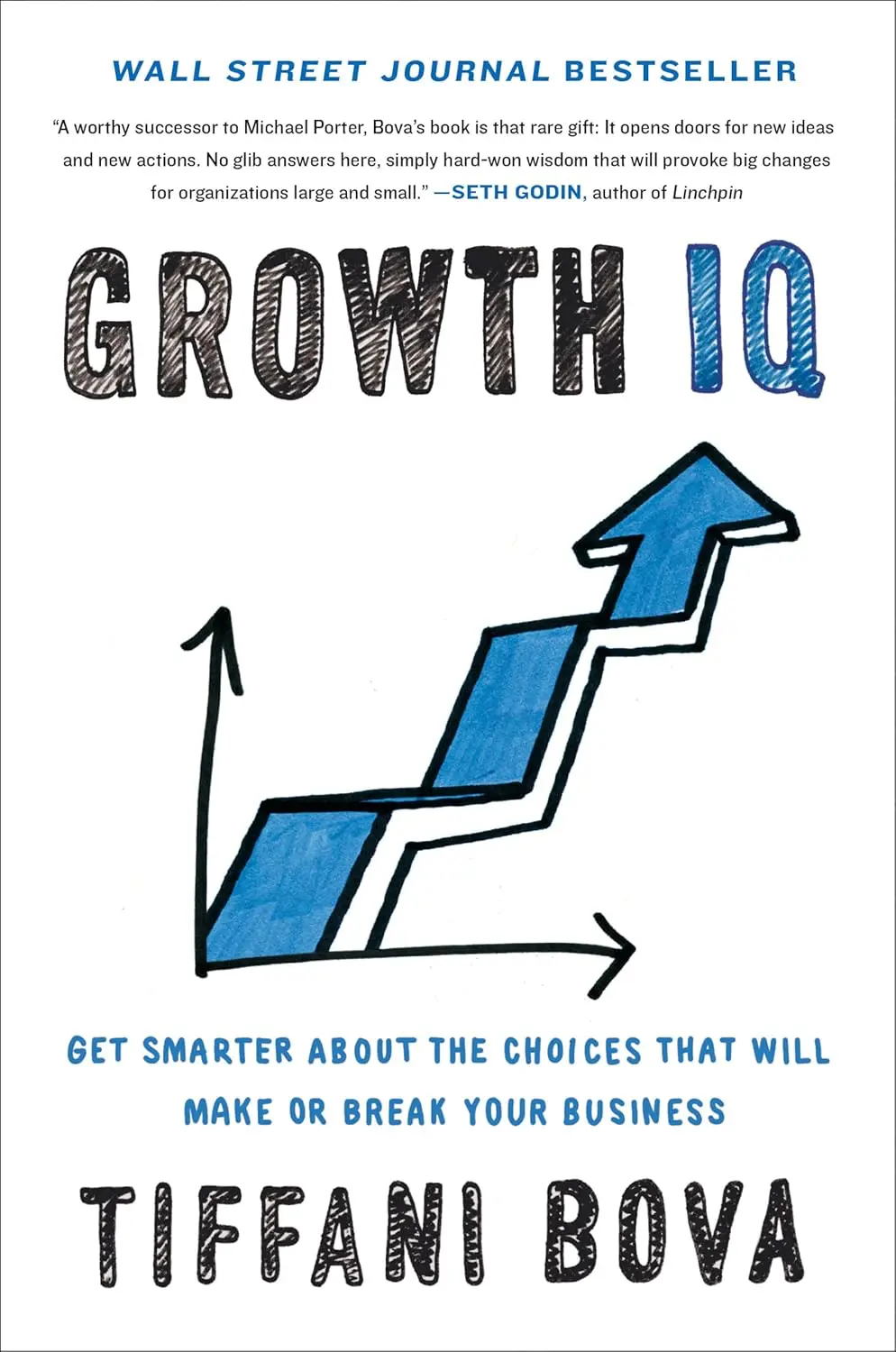
Growth is not one thing. That is the central argument Tiffani Bova makes, and it is more useful than it sounds. Most business books about growth focus on a single strategy, whether it is customer acquisition, product innovation, market expansion, or pricing optimization. Bova argues that growth has at least ten distinct paths, and the mistake most companies make is pursuing the wrong path at the wrong time.
The ten paths include customer experience, market acceleration, product expansion, customer and product diversification, optimizing sales, partnerships, co-opetition (competing and collaborating with the same company simultaneously), unconventional strategies, churn reduction, and customer base penetration. Each gets its own chapter with detailed case studies.
The Marvel case study is one of the strongest. Bova traces how Marvel went from bankruptcy in 1996 to a $4 billion acquisition by Disney in 2009 by systematically moving through multiple growth paths. They licensed their characters for films, built their own studio, expanded into adjacent product categories, and used partnerships. No single strategy saved them. The sequence of strategies, each one opening the way for the next, is what produced the turnaround.
Bova draws on her experience at Salesforce, where she advises enterprise clients on growth strategy, and her earlier career at Gartner. The advice is practical and grounded in real companies rather than in theory. She is specific about which paths tend to work in which contexts. A company with high churn should fix retention before investing in customer acquisition. A company with a strong product but weak distribution should pursue partnerships before building a sales team.
The writing is clear and business-oriented. Bova does not waste time on personal stories or motivational padding. Each chapter follows a consistent structure: introduce the growth path, explain when it applies, walk through the case study, and extract the applicable principles. This is the kind of book you can open to the chapter that matches your current problem and get useful guidance in thirty minutes.
The framework’s limitation is that it can make growth sound more systematic than it actually is. Choosing the right path requires judgment, timing, and luck, none of which a framework can fully capture. But as a way of organizing your thinking about where to focus, the ten-path model is more useful than the vague directive to just grow faster.
