
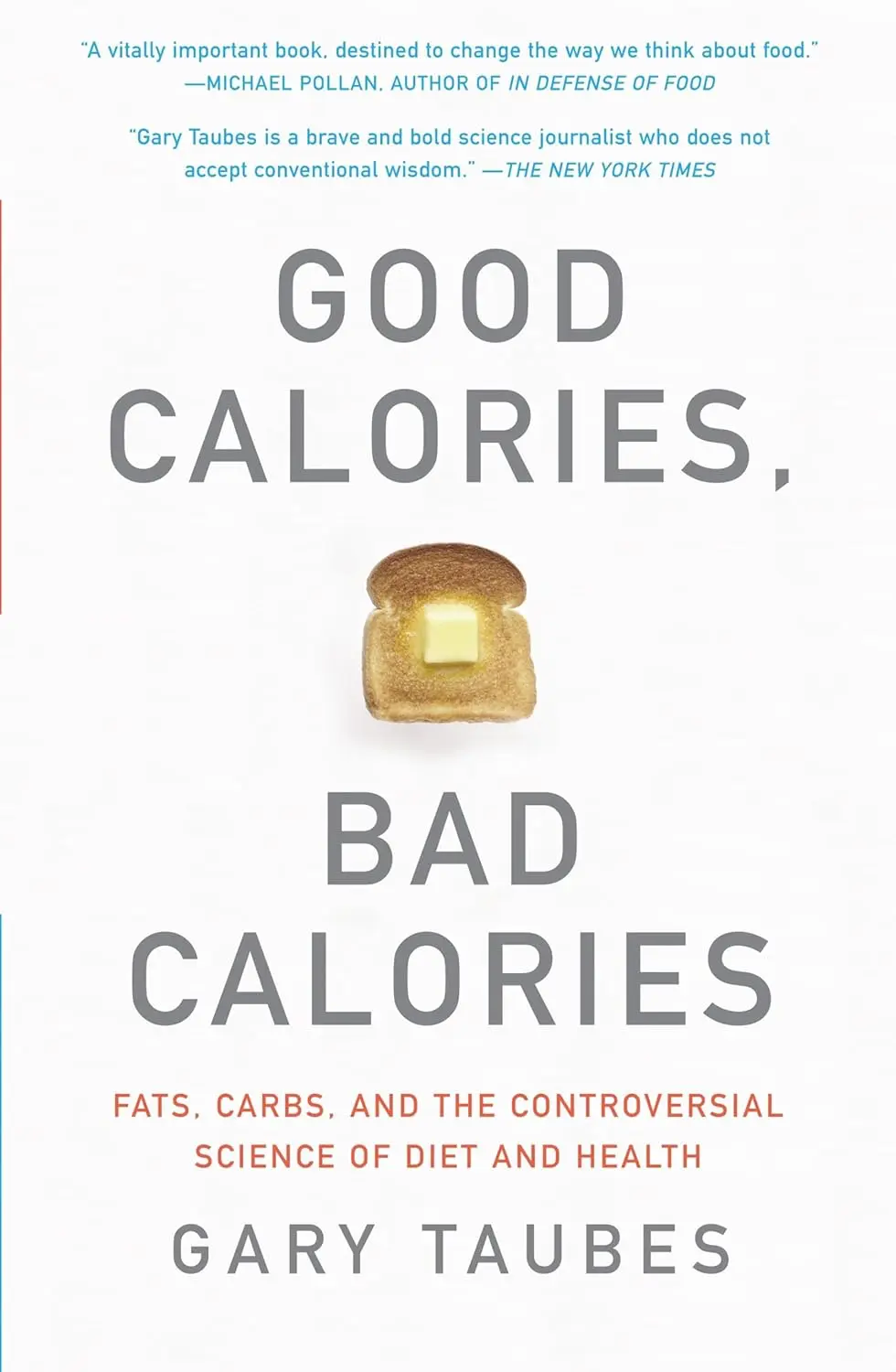
For decades, the official dietary advice in the United States has been: eat less fat, eat more carbohydrates, exercise more. Gary Taubes read the research behind this advice and found it shockingly thin. Study after study was poorly designed, the conclusions did not follow from the data, and dissenting researchers were sidelined by a scientific establishment that had committed to a hypothesis before the evidence was in.
Good Calories, Bad Calories is his 600-page prosecution of the low-fat diet orthodoxy. Taubes traces the history from the 1950s, when physiologist Ancel Keys first proposed that dietary fat caused heart disease, through the decades of policy that followed. Keys’s hypothesis became government policy, dietary guidelines were rewritten, and Americans were told to replace fat with carbohydrates. Obesity and diabetes rates rose in tandem. Taubes argues this was not a coincidence.
His alternative hypothesis: insulin, not calories, is the primary regulator of fat storage. Refined carbohydrates and sugars spike insulin levels, which causes the body to store fat. Dietary fat does not spike insulin. Therefore, replacing fat with carbohydrates, which is exactly what the official guidelines recommended, predictably made people fatter and sicker.
Taubes is a meticulous reporter. He reads the original studies rather than the summaries. He interviews the researchers who conducted them. He tracks how results were interpreted, misinterpreted, and sometimes ignored. The level of detail is both the book’s strength and its weakness. Some sections read like a graduate seminar in epidemiology, which is clarifying if you want to understand the science and exhausting if you do not.
The book generated heated debate when it was published in 2007. Michael Pollan called it destined to change how we think about food. Andrew Weil called it very important. Some nutrition researchers pushed back hard, arguing that Taubes oversimplifies the science and underestimates the role of total calorie intake. The debate continues and has been complicated by the more recent rise of GLP-1 drugs like Ozempic, which affect appetite and weight through mechanisms that do not fit neatly into either camp.
Taubes later wrote Why We Get Fat (2010) and The Case for Keto (2020), both shorter and more accessible versions of the same argument. Good Calories, Bad Calories remains the comprehensive case, the one where every citation is tracked and every counter-argument addressed. It is not a diet book. It is an investigation into how science went wrong on one of the most basic questions about human health.
