
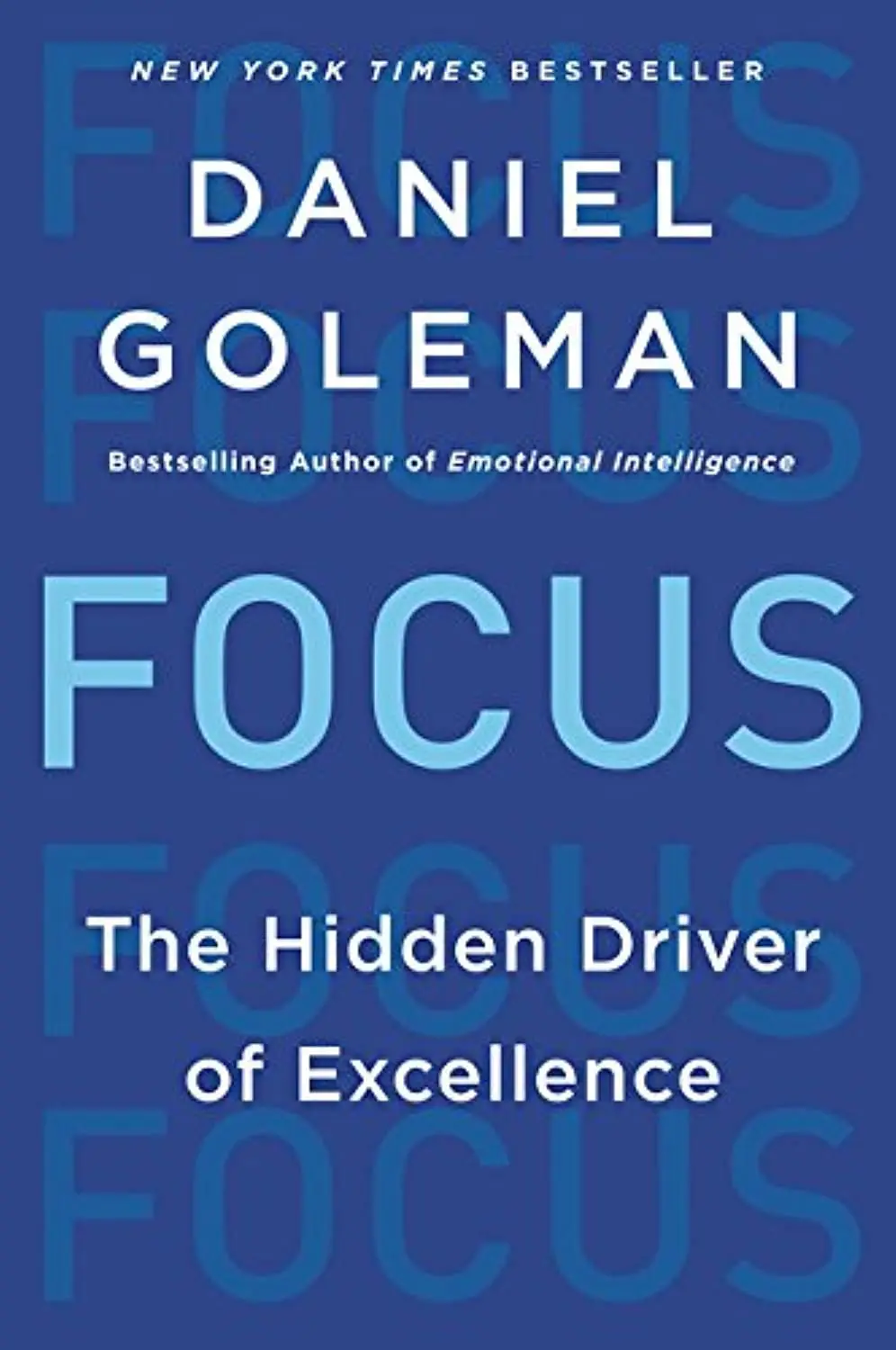
Daniel Goleman made his reputation with Emotional Intelligence, which argued that EQ matters as much as IQ. Focus extends that argument into the territory of attention. His thesis: the ability to direct and sustain attention is the hidden skill behind almost every kind of excellence, and it is being systematically degraded by the way we live now.
Goleman identifies three types of attention. Inner focus is awareness of your own thoughts, feelings, and physical states. It is what allows a leader to notice that they are making a decision out of fear rather than reason, or that they are tired and should stop working before they make a mistake. Other focus is attention to other people: reading their emotions, understanding their perspectives, sensing when a conversation has shifted. It is the basis of empathy and social skill. Outer focus is attention to the larger systems you operate within: market trends, organizational dynamics, ecological patterns. It is what lets a strategist see a shift before competitors do.
The neuroscience sections explain how attention works in the brain. The prefrontal cortex manages voluntary attention, the kind that lets you concentrate on a task despite distractions. The amygdala and other subcortical structures drive involuntary attention, the kind that makes you look up when someone shouts. Modern life, with its constant stream of notifications, emails, and social media, creates a state Goleman calls continuous partial attention, where the voluntary system is constantly being overridden by the involuntary one.
Goleman is at his best when connecting the science to practical situations. A surgeon who loses focus for a few seconds during an operation. A CEO who is so absorbed in internal politics that they miss a market shift. A teacher who cannot read the mood of the classroom. In each case, the failure is not a lack of intelligence or effort. It is a failure of attention.
The book covers meditation and mindfulness training, which Goleman presents as attention exercises rather than spiritual practices. Research from the labs of Richard Davidson and others shows measurable changes in brain structure and function after sustained meditation practice, particularly in the circuits that support sustained attention and emotional regulation.
Goleman writes accessibly. The book covers a lot of territory without becoming scattered. Some readers may find the sections on systems thinking less compelling than the sections on personal attention, because the connection between individual focus and understanding complex systems is harder to make concrete. But the argument holds: in a world designed to fragment your attention, the ability to direct it where it matters is becoming rarer and more valuable.
