
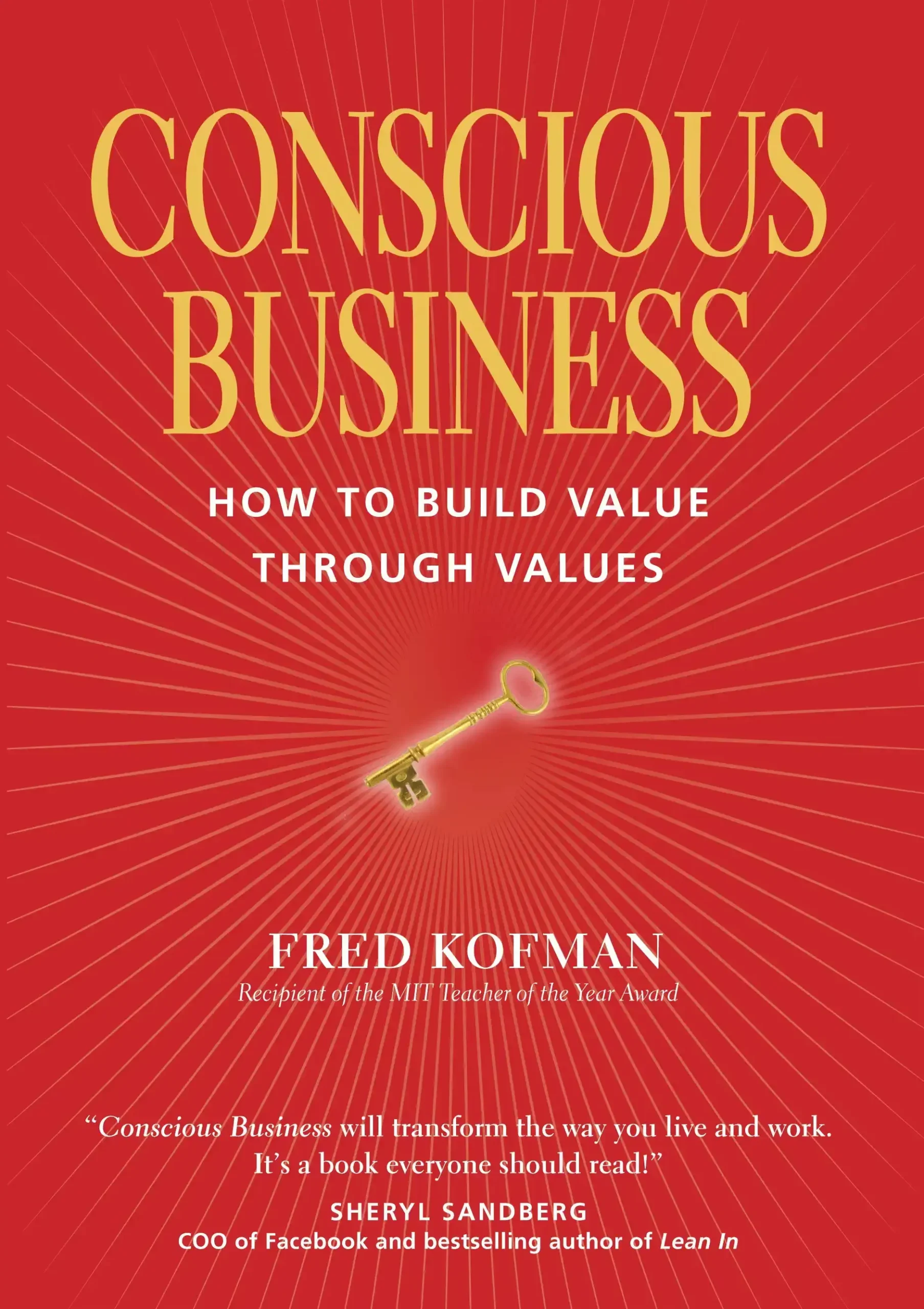
Fred Kofman has an unusual resume. He was a professor at MIT’s Sloan School of Management, then became a leadership coach, then joined LinkedIn as VP of leadership development, and later advised Google. Sheryl Sandberg wrote the foreword to the updated edition. Jeff Weiner, LinkedIn’s former CEO, has called Kofman’s framework the foundation of his management philosophy.
The book’s premise is that most business dysfunction comes not from bad strategy or bad systems but from unconscious behavior. People react instead of responding. They defend their egos instead of pursuing the truth. They avoid difficult conversations and then deal with the consequences of having avoided them. Kofman argues that fixing these patterns requires a shift from unconscious to conscious engagement with work, relationships, and decisions.
The content is organized around specific skills. Unconditional responsibility: the practice of looking at what you can control rather than blaming circumstances. Essential integrity: aligning what you say, what you do, and what you value. Ontological humility: recognizing that your perspective is always partial and that other people may see things you cannot. Authentic communication: saying what you actually think, including the uncomfortable parts, while maintaining respect. Constructive negotiation: resolving conflicts in ways that address everyone’s underlying needs rather than their stated positions.
Kofman illustrates each skill with extended examples, usually drawn from corporate coaching sessions. A manager who avoids giving honest feedback and then fires the employee for problems that were never discussed. A team that reaches a false consensus because nobody is willing to dissent. An executive who takes responsibility publicly but deflects blame privately. The scenarios are specific enough to be recognizable and general enough to apply across industries.
The writing is clear but dense. Kofman packs a lot of conceptual material into each chapter. He draws on philosophy (particularly Ken Wilber’s integral theory), psychology, and economics. The book demands active reading. You will not skim it.
Conscious Business sits in the space between management handbooks and personal development books. It does not offer quick fixes or three-step frameworks. It offers a way of thinking about work that treats every interaction as a choice between awareness and autopilot. That distinction, simple as it sounds, turns out to be harder and more useful than most business advice.
