
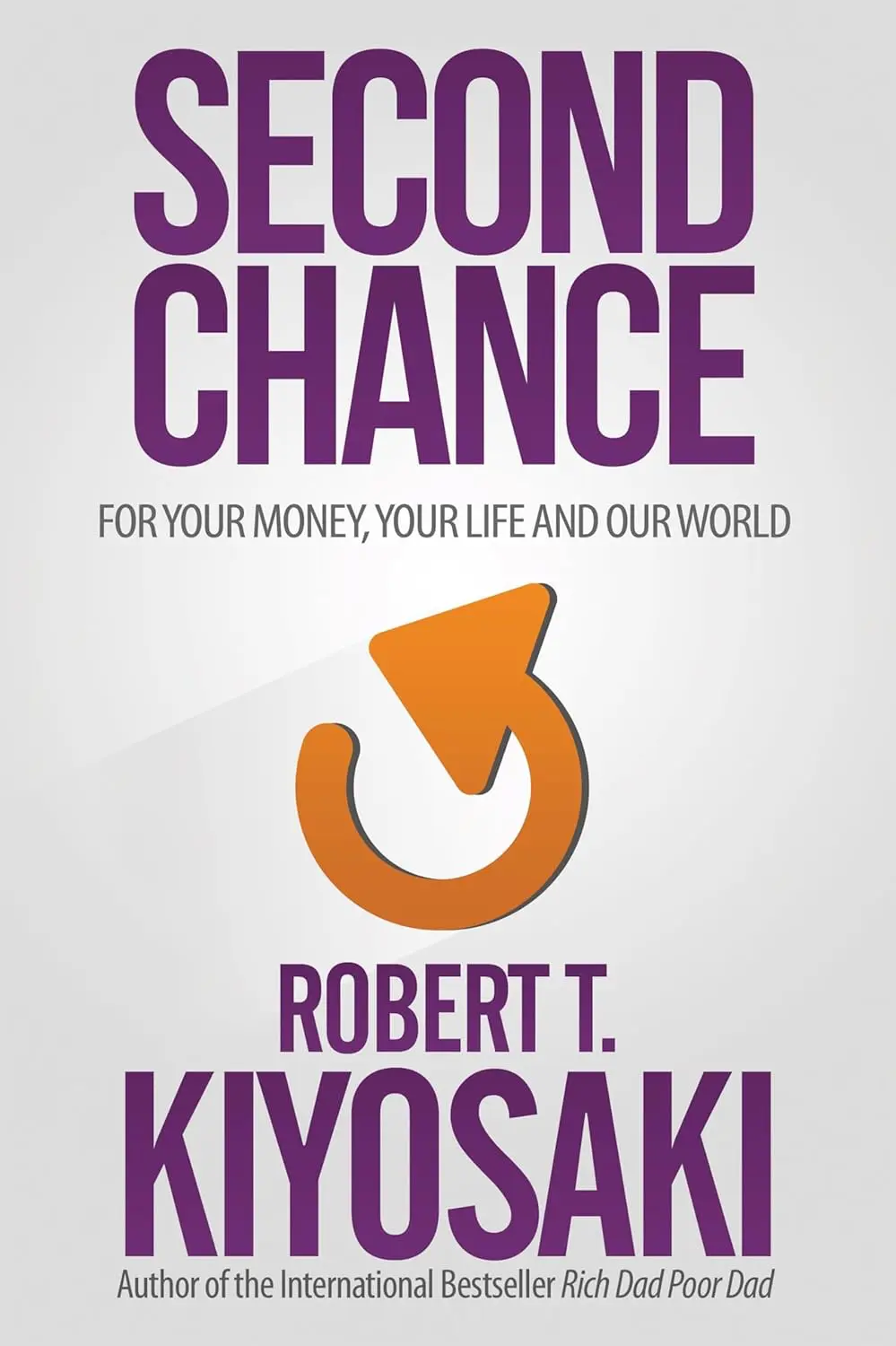
If you have read Rich Dad Poor Dad, you know Robert Kiyosaki’s central message: the financial education most people receive, from schools and from their families, prepares them to be employees and consumers rather than investors and entrepreneurs. Second Chance extends that argument into a broader claim about where the global economy is heading.
Kiyosaki’s framework leans heavily on the work of R. Buckminster Fuller, the architect, inventor, and futurist who died in 1983. Fuller predicted that technology would make it possible to do more with less, eventually rendering traditional economic models obsolete. Kiyosaki uses Fuller’s ideas to argue that we are living through a period of transition comparable to the shift from agriculture to industry, and that people who cling to Industrial Age assumptions about money, saving, and retirement will be left behind.
The practical advice falls along familiar Kiyosaki lines. Assets generate income; liabilities consume it. Most people confuse the two. Real estate, businesses, and financial instruments that produce cash flow are assets. A house you live in, a car, a degree that leads to a salaried job but no ownership, these are not assets in the way Kiyosaki defines the term. The book pushes readers toward financial self-education, entrepreneurship, and investing in income-producing assets rather than depending on employers or government programs.
Kiyosaki writes in a repetitive, conversational style. He returns to the same points from different angles across chapters, which some readers find reinforcing and others find circular. Charts and diagrams appear throughout. The tone is direct and occasionally provocative. He is not shy about criticizing the education system, the Federal Reserve, or the assumptions that most financial advisors operate on.
The book’s weakness is the same as the weakness in most Kiyosaki books: the advice stays at the level of mindset and categories rather than drilling into specific steps. He will tell you that you need to acquire assets, but he will not walk you through the mechanics of evaluating a specific rental property or structuring a specific deal. For that level of detail, you need other resources.
Second Chance was published in 2015 and sits within the broader Rich Dad series, which has sold tens of millions of copies worldwide. It is most useful as a framework for thinking about personal finance differently than the conventional save-and-invest-in-your-401(k) approach, with the caveat that the framework is more persuasive as philosophy than as a step-by-step guide.
