
In 1870, most Americans lived without running water, indoor toilets, electricity, or central heating. By 1970, all of those things were standard. Cars had replaced horses. Airplanes crossed oceans. Antibiotics existed. Television existed. Air conditioning existed. The average American in 1970 lived a life that would have been unrecognizable, in virtually every physical dimension, to the average American of 1870.
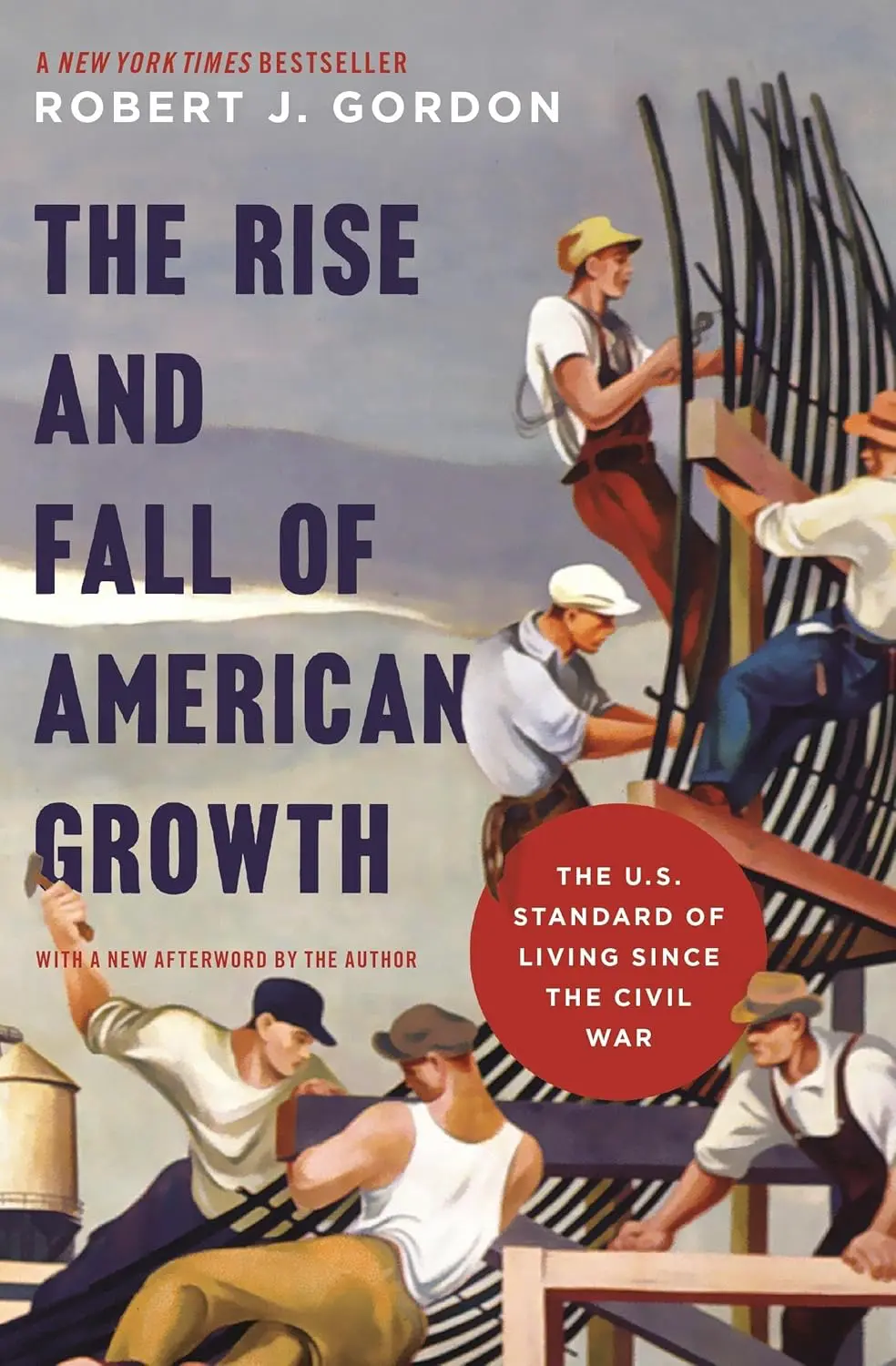
Robert Gordon, an economics professor at Northwestern, calls this the Special Century. His argument, which takes 762 pages to lay out in full, is that the innovations of this period were qualitatively different from anything that came before or after. Indoor plumbing changed daily life more than the smartphone ever will. The automobile changed geography more than the internet changed commerce. Refrigeration changed diet more than food delivery apps changed convenience. These were one-time transformations. You can only go from no electricity to electricity once.
The book is divided roughly in half. The first part is a detailed social history of how American life changed between 1870 and 1970. Gordon writes about food, clothing, housing, transportation, health, working conditions, entertainment, and communication. The detail is often surprising. He traces how long it took for inventions to reach ordinary households, how unevenly benefits were distributed by race and region, and how profoundly the two World Wars accelerated adoption of technologies that had been developing for decades.
The second half makes the controversial argument. Since 1970, productivity growth has slowed dramatically. Gordon attributes this to what he calls headwinds: rising inequality, stagnating education, an aging population, and growing government debt. He argues that recent innovations, while impressive on their own terms, have not produced gains in living standards comparable to what came before. Your great-grandparents’ lives changed more between 1920 and 1950 than your life has changed since 2000.
The book was published in 2016, before the current explosion in AI capabilities. Gordon’s skeptics, who include many tech optimists, argue that AI may prove to be exactly the kind of general-purpose technology that produces another Special Century. Gordon has maintained his skepticism, noting that previous predictions of technology-driven acceleration have mostly not materialized in the productivity data.
Paul Krugman called it one of the most important economics books in years. Peter Thiel said anyone concerned with economic futures should read it. Lawrence Summers called it unsettling. The Financial Times named it a masterpiece. Whether you agree with Gordon’s conclusions or find them depressingly wrong, the historical narrative alone is worth the commitment.
