
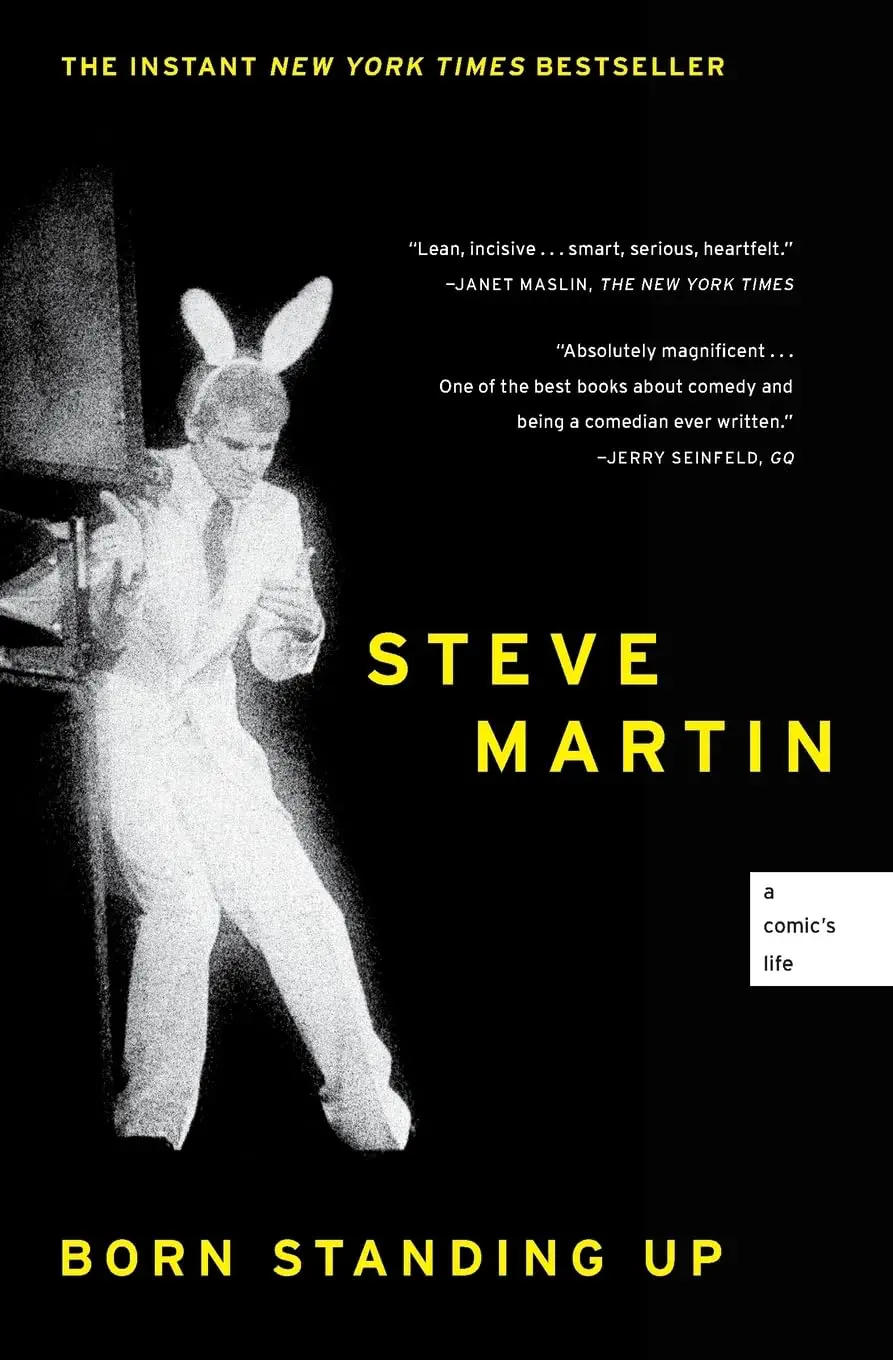
Steve Martin started performing magic tricks at the Disneyland magic shop when he was ten. He spent the next eighteen years figuring out how to be funny. Born Standing Up covers that period and stops. The movies, the writing, the banjo playing, Saturday Night Live, all of it falls outside the book’s scope. This is purely about the craft of standup and the long, slow process of learning it.
Martin is honest about how long it took. He performed in tiny clubs and empty coffeehouses for years. He refined bits that did not work, dropped them, brought them back, dropped them again. He moved from straight jokes to anti-comedy, developing a persona that was deliberately absurd. He put an arrow through his head. He played the banjo in the middle of sets. He told the audience he was going to perform his act and then simply stood there. Some nights nobody laughed.
The book is at its best when Martin describes the technical side of comedy. How he learned to read a room. How he figured out that the transition between jokes matters as much as the jokes themselves. How he discovered that committing fully to a bad premise is funnier than half-committing to a good one. He writes about these things with the analytical clarity of someone who has spent decades thinking about why people laugh.
Then, in the late 1970s, everything broke open at once. He started filling stadiums. His albums went platinum. He hosted Saturday Night Live. Audiences of 45,000 people came to see him perform live comedy. He describes this period with visible ambivalence. The scale of the fame was disorienting. When you are performing for 45,000 people, you are not really doing standup anymore. You are doing something else, something closer to a rock concert, and the intimate connection that made the comedy work in small rooms disappears.
He quit standup in 1981 and never went back. The book ends there.
Martin writes tight, uncluttered prose. The memoir is short, under 200 pages, and it does not waste space on celebrity gossip or Hollywood stories. The focus stays on the work: what it took to get good at something, how success changed the thing he was good at, and why he stopped.
If you have ever spent years getting better at something nobody seemed to care about, and then suddenly had everyone care about it all at once, the whiplash Martin describes will feel familiar.
