
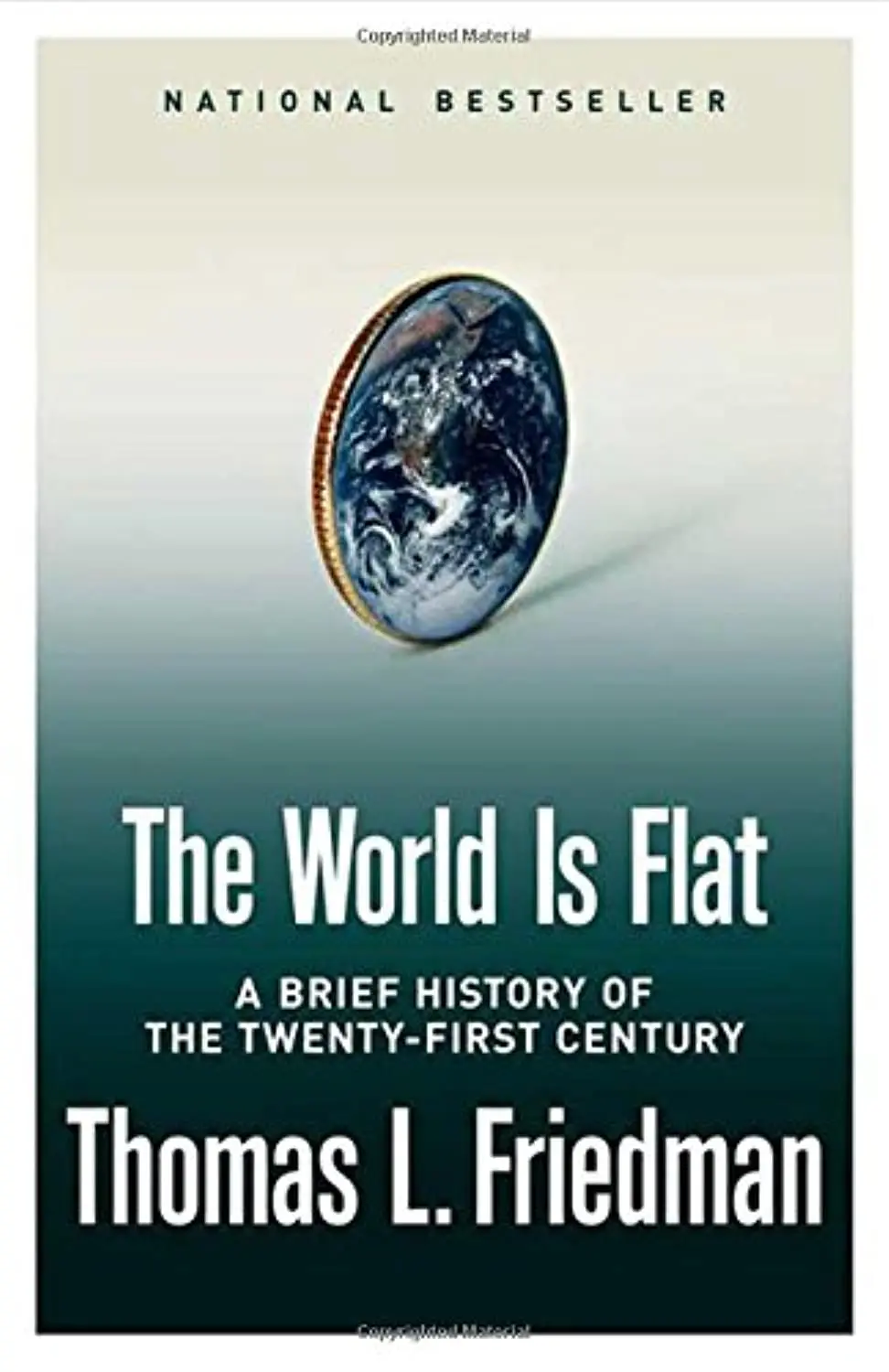
Thomas Friedman is a New York Times columnist who has won three Pulitzer Prizes. In 2004, he visited a tech campus in Bangalore, India, and noticed that the Indian engineers working there had the same tools, the same internet connections, and access to the same information as their counterparts in Silicon Valley. He concluded that the competitive playing field between developed and developing nations was leveling. The world was getting flat.
The book identifies ten “flatteners” that Friedman argues have changed the structure of global commerce. Some are technological: the internet, search engines, workflow software. Others are organizational: outsourcing, offshoring, supply-chain management. Some are political: the fall of the Berlin Wall, China’s entry into the World Trade Organization. Friedman traces how these forces interact and compound, creating a world where a company in Bangalore or Beijing can compete with one in Boston on nearly equal terms.
Friedman writes with a journalist’s energy and a tendency toward big declarations. His style is anecdotal: he visits factories, interviews CEOs, talks to call-center workers, and weaves their stories into a larger argument. The book moves fast, sometimes so fast that complexity gets flattened along with the world. Critics have pointed out that Friedman underestimates the barriers that still exist, including language, regulation, cultural difference, corruption, and unequal access to infrastructure. The world, these critics argue, is spiked as much as it is flat.
The book was published in 2005 and updated twice, in 2006 and 2007. Some of the specific examples are dated. Friedman spends time on companies and technologies that have since disappeared or been surpassed. The sections on outsourcing reflect a 2005 anxiety about jobs moving overseas that has been partially overtaken by newer concerns about automation and AI.
But the core argument holds up better than you might expect. The forces Friedman described, global connectivity, remote collaboration, digital tools that lower barriers to entry, have only accelerated since 2005. The book anticipated remote work, the gig economy, and the rise of global freelancing platforms more clearly than most business writing from that era.
The World Is Flat spent years on the New York Times bestseller list and has been translated into more than thirty languages. It remains one of the most widely read books on globalization, even if reading it now requires adjusting for a world that has changed in ways Friedman did not fully predict.
