
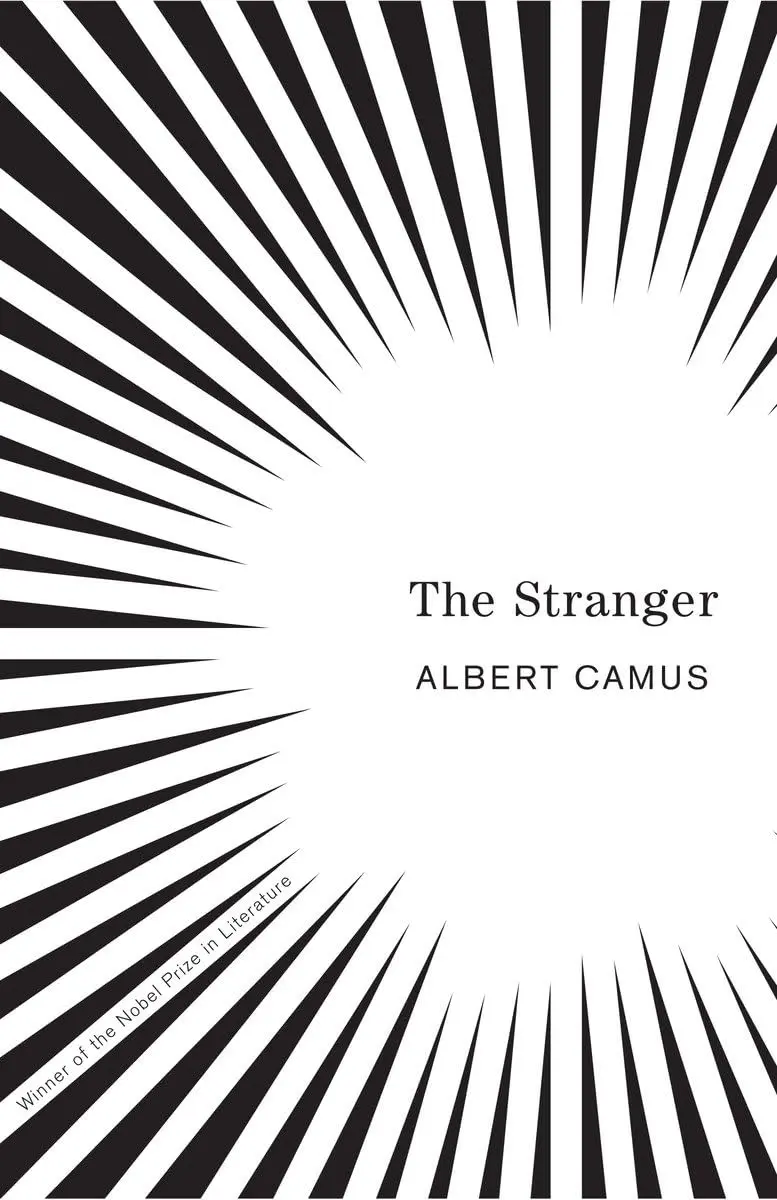
Meursault’s mother dies. He attends the funeral. He does not cry. The next day he goes to the beach, meets a woman, and starts a casual affair. He gets drawn into a conflict that belongs to his neighbor. He kills a man on a beach, for no clear reason, under a blinding sun. He is arrested, tried, and sentenced to death.
That is the plot. It takes about a hundred pages. What Camus does with those hundred pages is what made this one of the most discussed novels of the twentieth century.
Meursault is not a psychopath. He is not callous. He simply does not perform the emotions that society expects. When his mother dies, he feels something, but it is not the loud, visible grief that people around him want to see. When he is asked if he loved his mother, he says yes, the same way he loves anyone. When his girlfriend asks if he wants to marry her, he says it does not really matter. He is honest to a degree that the world finds intolerable.
At his trial, the prosecution’s case is built less on the crime itself than on Meursault’s character. He did not cry at his mother’s funeral. He went to a comedy film the day after she died. He drank coffee during the wake. The jury convicts him not for murder but for failing to be a proper human being. Camus is making a point about a society that punishes people for being different more harshly than it punishes them for being violent.
The novel is written in a flat, affectless style that mirrors Meursault’s consciousness. Sentences are short. Descriptions are physical rather than emotional. The sun, the heat, the glare of light on water. Camus strips out the psychological commentary that most novels provide, leaving the reader to interpret Meursault’s behavior without guidance.
Camus was twenty-eight when he published The Stranger. He went on to win the Nobel Prize in Literature in 1957 and died in a car crash in 1960 at the age of forty-six. The novel has been translated into dozens of languages and remains one of the most widely read works of twentieth-century fiction. It is often taught alongside his philosophical essay The Myth of Sisyphus, which explores the same questions in a different form: if life has no inherent meaning, what do you do with it?
The Stranger is short enough to read in an afternoon and strange enough to stay with you for much longer.
