
The standard narrative goes like this: men are naturally promiscuous because spreading their genes is advantageous, women are naturally selective because pregnancy is costly, and monogamy emerged as a compromise that served both sexes’ interests. This story, rooted in evolutionary psychology, has been repeated so often that most people accept it as settled science.
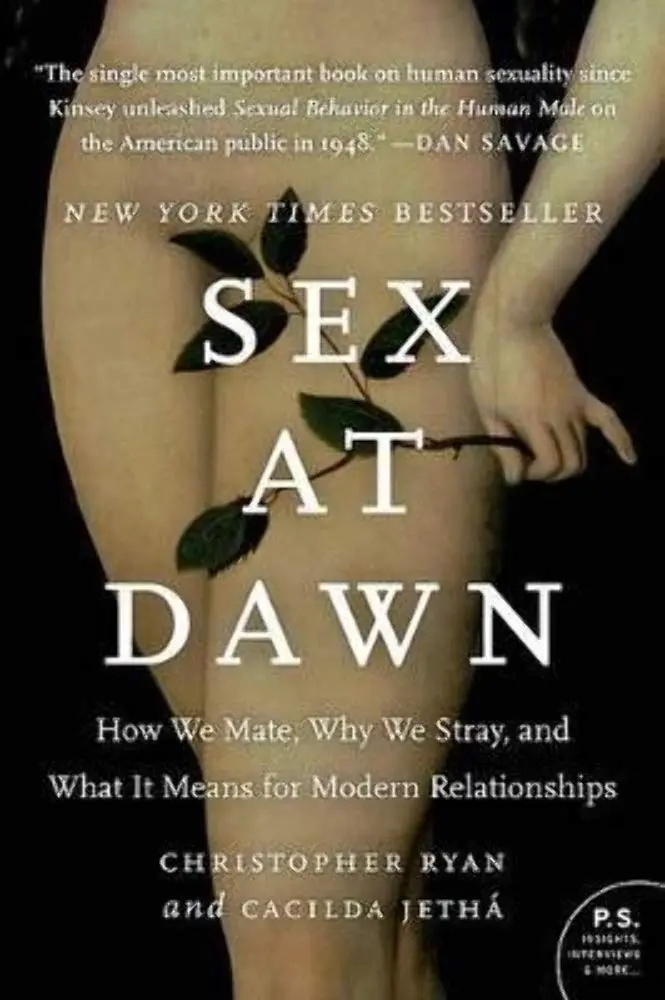
Christopher Ryan, a psychologist, and Cacilda Jetha, a psychiatrist, wrote Sex at Dawn to argue that the standard narrative is wrong. Their counter-thesis: for most of human history, our ancestors lived in small, egalitarian groups where sexual relationships were communal rather than exclusive. Monogamy, they argue, is a relatively recent development that emerged alongside agriculture, private property, and the concept of paternity.
The evidence they present comes from several directions. They look at the sexual behavior of our closest primate relatives, particularly bonobos, who use sex for social bonding and conflict resolution as much as for reproduction. They examine the anatomy of human reproductive systems and argue that certain features, like testicular size and sperm competition mechanisms, are consistent with a promiscuous mating history rather than a monogamous one. They review anthropological accounts of foraging societies where sexual exclusivity was not the norm.
The book is entertaining to read. Ryan has a dry, irreverent style, and the chapters are peppered with observations that range from the genuinely surprising to the deliberately provocative. The argument moves fast, sometimes too fast. Critics, including evolutionary biologist Lynn Saxon, have accused the authors of cherry-picking evidence and overstating their case. The book presents one side of a legitimate scientific debate as though it were the definitive answer.
That caveat aside, Sex at Dawn is worth reading because it forces you to question assumptions about human nature that most people never examine. Whether or not Ryan and Jetha are right about the details, their larger point stands: the story we tell about what is “natural” in human relationships shapes what we expect from ourselves and from each other, and that story deserves scrutiny.
The book became a New York Times bestseller and generated significant debate in both academic and popular circles. Ryan later hosted a podcast called Tangentially Speaking, where he continued exploring related themes.
