
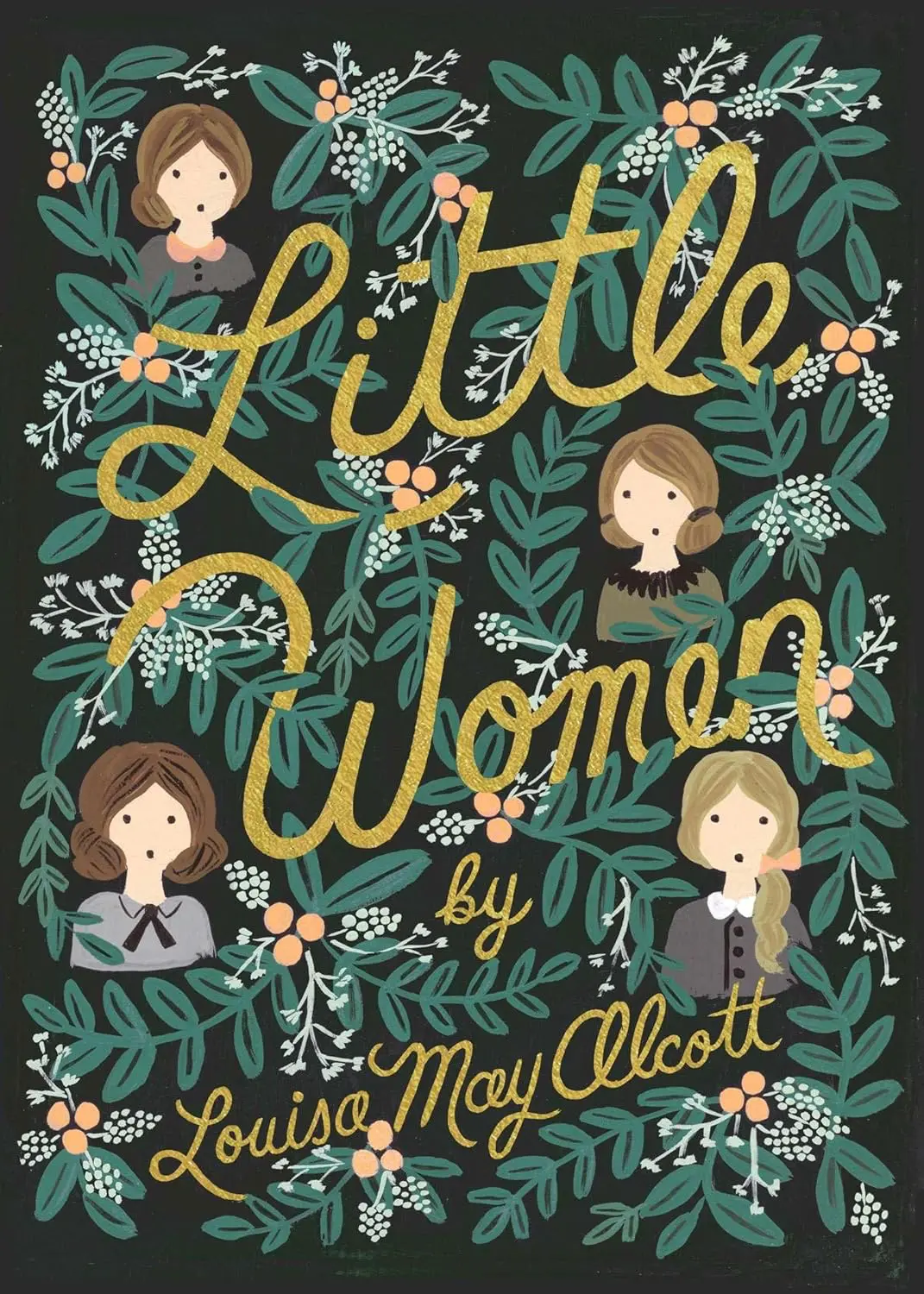
Little Women was published in 1868 and has never gone out of print. It follows the four March sisters, Meg, Jo, Beth, and Amy, through adolescence and into adulthood while their father serves as a chaplain in the Civil War. Their mother, Marmee, holds the family together on limited income in a small house in Concord, Massachusetts.
The most interesting character is Jo. She is hot-tempered, ambitious, and determined to become a writer. She sells stories to magazines, cuts her hair to raise money for her family, and fights against the expectation that she will settle into a conventional marriage. Alcott based Jo on herself, and the character’s restlessness feels modern in a way that the book’s reputation as a gentle domestic novel does not prepare you for.
Alcott was under pressure from her publisher to marry Jo off to the wealthy boy next door, Laurie. She refused. She wrote to a friend that she would not write a “stupid” marriage to please anyone. Instead, she gave Jo an unconventional partnership with an older professor, a choice that has divided readers for over a century.
The novel is often read as a cozy period piece, and it can be enjoyed that way. But the financial anxiety that runs through the book is real. The March family is poor. They worry about money constantly. The sisters take jobs, sell their work, and make sacrifices that are driven by economic necessity, not romance. Alcott herself wrote Little Women not out of inspiration but out of debt. Her family needed the income.
What makes the book relevant to founders and ambitious readers is Jo’s struggle with a question that has not changed in 150 years: how do you build a life on your own terms when the world has a specific role in mind for you? Jo wants to write serious fiction. The market wants sensation stories. She needs money now but wants to produce work she can be proud of later. The tension between commerce and craft, between financial survival and creative integrity, is as alive in this novel as it is in any modern startup story.
The book has been adapted into films multiple times, most recently by Greta Gerwig in 2019. It has been translated into dozens of languages and sold tens of millions of copies worldwide.
