
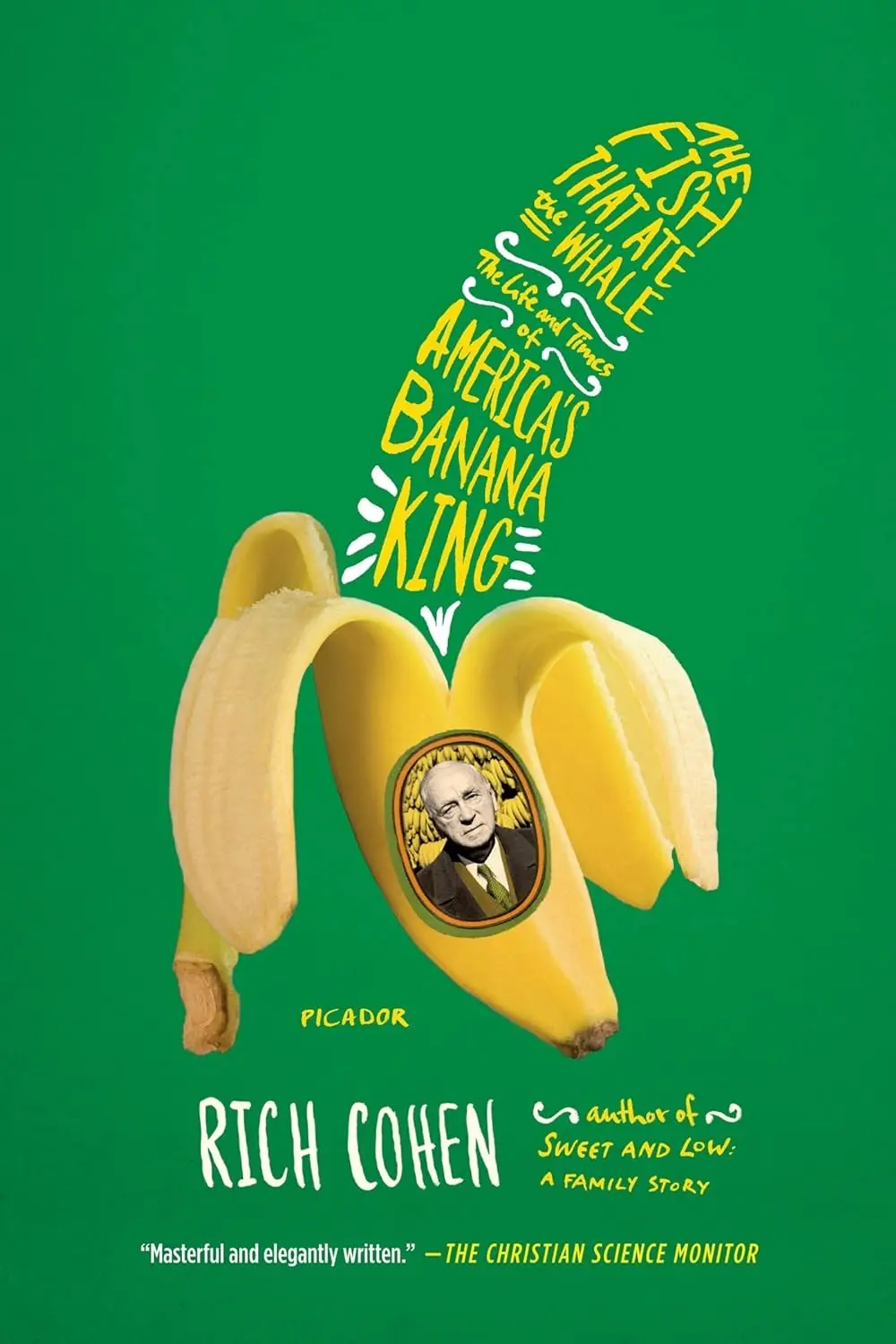
Samuel Zemurray arrived in America in 1891 as a penniless teenager from Bessarabia, a region now split between Moldova and Ukraine. By the time he was done, he controlled United Fruit Company, the most powerful corporation in Central America, and had toppled at least one government to protect his business interests.
Rich Cohen tells this story with the pacing of a thriller. Zemurray started by buying ripe bananas that the big fruit companies considered too far gone to ship. He sold them cheap from the back of a rail car in small Southern towns. He saved his money, bought land in Honduras, and started growing his own bananas. Within a few decades, his Cuyamel Fruit Company was large enough to challenge United Fruit, the entrenched monopoly that controlled the banana trade across Latin America.
The business tactics are the kind that no MBA program would teach. When the Honduran government threatened to tax his exports, Zemurray helped finance a coup. When United Fruit tried to buy him out, he sold his company for stock, then used the stock to take over United Fruit from the inside, becoming its president. He was an operator in the old sense of the word: someone who understood that business, at a certain scale, becomes indistinguishable from politics.
Cohen does not shy away from the moral costs. United Fruit’s operations in Guatemala, Honduras, and other Central American countries created a system of exploitation that the term “banana republic” was coined to describe. Zemurray was complicit in this. He was also, by many accounts, a genuinely generous philanthropist who funded Tulane University, supported refugee resettlement, and gave away enormous sums. The contradiction is the point. Cohen presents both sides without resolving the tension.
The book works as a business biography, a history of American empire in Latin America, and a character study of a specific type of entrepreneur: the kind who starts with nothing, cannot be stopped, and leaves a legacy that is impossible to reduce to good or bad.
For founders, the story of Zemurray’s rise from ripe-banana peddler to the head of a multinational corporation is both inspiring and cautionary. It shows what relentless execution looks like, and it shows where relentless execution leads when nobody asks whether the game is worth playing.
