
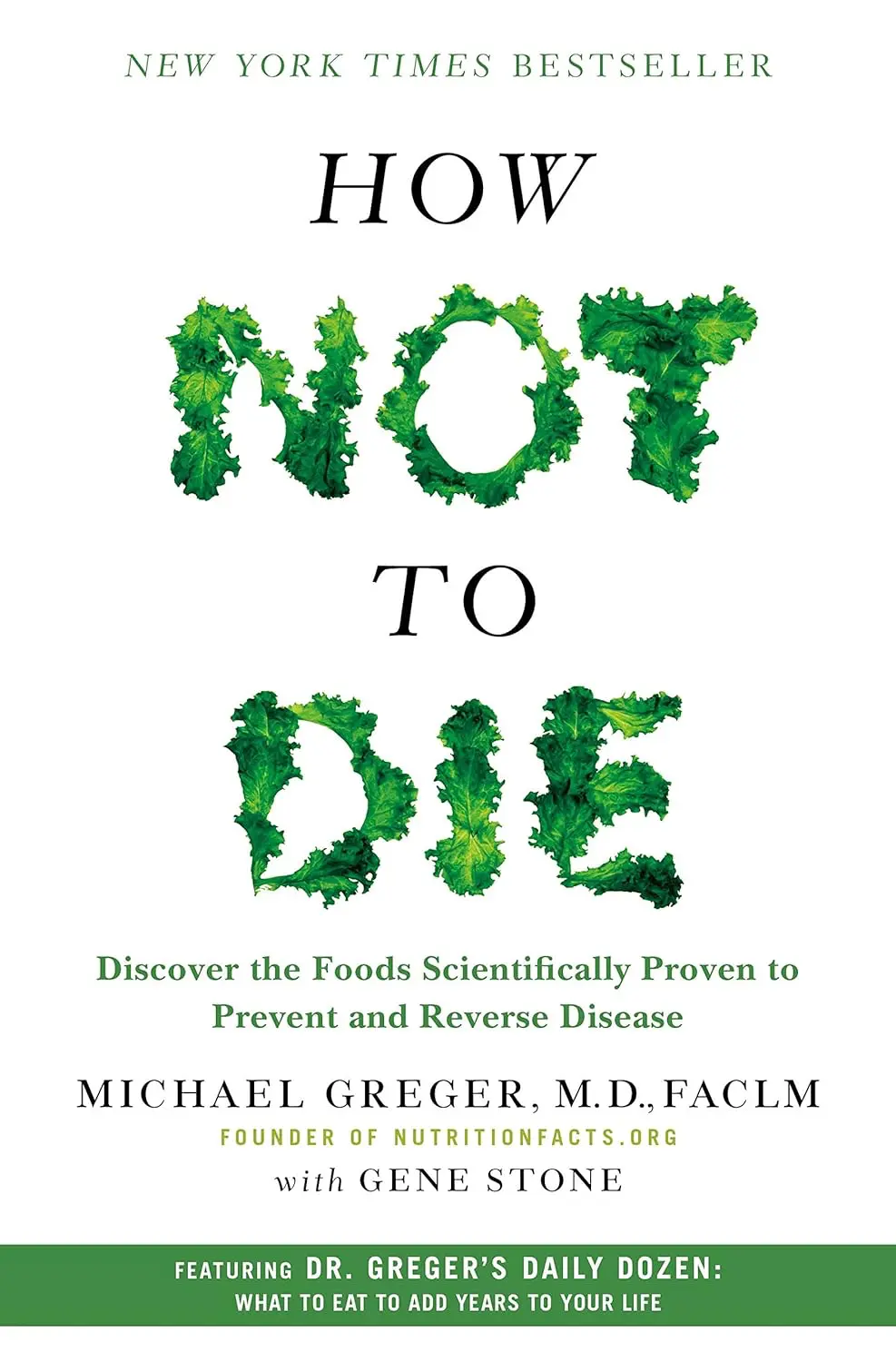
Michael Greger is a physician who runs NutritionFacts.org, a nonprofit that reviews nutrition research. How Not to Die is his attempt to make that research accessible to a general audience, and it is divided into two halves that function almost as separate books.
The first half works through the fifteen leading causes of premature death in the United States: heart disease, lung disease, brain disease, digestive cancers, infections, diabetes, high blood pressure, liver disease, blood cancers, kidney disease, breast cancer, suicidal depression, prostate cancer, Parkinson’s disease, and iatrogenic causes. For each one, Greger reviews the published research on how diet affects risk. The evidence he cites is specific: particular studies, particular foods, particular quantities.
His conclusions lean heavily toward a whole-food, plant-based diet. He is open about this position and builds his case study by study rather than from ideology. For heart disease, for instance, he cites research showing that a plant-based diet can not only prevent but actually reverse arterial plaque buildup. For type 2 diabetes, he reviews trials showing that dietary changes can be more effective than medication for some patients.
The second half of the book is a practical guide called the “Daily Dozen,” a checklist of foods Greger recommends eating every day: beans, berries, other fruits, cruciferous vegetables, greens, other vegetables, flaxseeds, nuts, spices, whole grains, water, and exercise. Each item gets its own section with specific recommendations.
The writing is accessible and often funny. Greger has a dry wit and does not take himself too seriously, which helps when the subject matter is disease and mortality. He does have a clear perspective, and readers who eat primarily animal products may find his conclusions challenging.
For founders and high-performers, the book addresses something that often gets ignored in the hustle of building a company: physical health. The research Greger presents suggests that the standard American diet, heavy on processed food and low on plants, carries measurable risks that compound over years. Many of the people who recommend this book in founder circles do so because it changed how they eat on a daily basis.
The book was a New York Times bestseller and has sold millions of copies worldwide. Greger followed it with How Not to Diet, which focuses specifically on weight management.
