
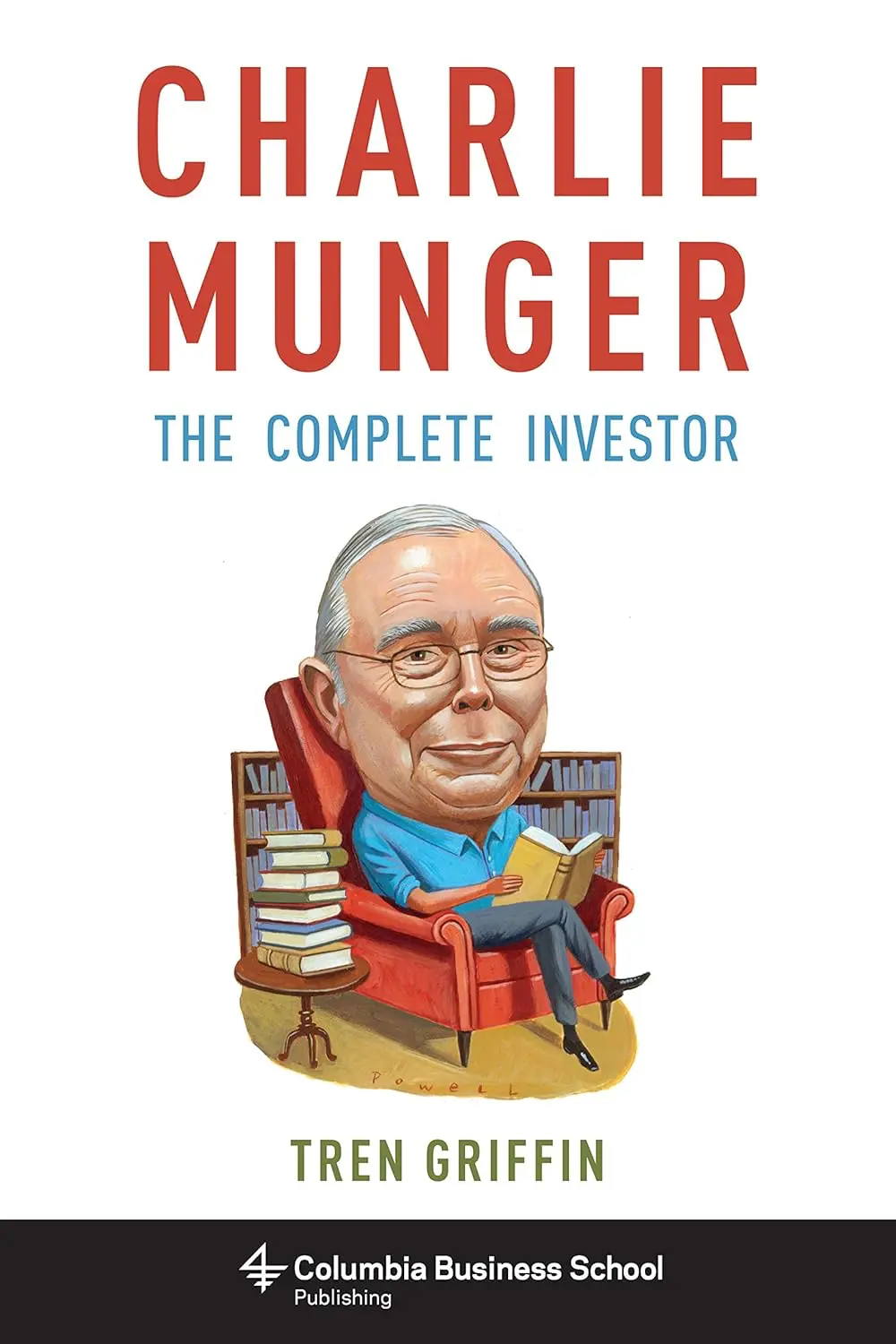
Charlie Munger spent over fifty years as Warren Buffett’s partner at Berkshire Hathaway. While Buffett became the public face of value investing, Munger was the intellectual engine behind many of their best decisions. He died in November 2023 at age ninety-nine, a month short of his hundredth birthday.
Tren Griffin, a tech industry veteran who spent years at Microsoft, wrote this book to organize Munger’s thinking into a usable framework. The challenge was that Munger never wrote a book himself. His ideas are scattered across decades of speeches, letters, interviews, and the annual Berkshire Hathaway shareholder meetings. Griffin pulled them together.
The book is structured around Munger’s core principles. The most important is the idea of a “latticework of mental models.” Munger argued that most people think using only the tools from their own field. An economist sees every problem as an economics problem. A psychologist sees psychology everywhere. Munger’s approach was to build a broad base of models from many disciplines, including psychology, physics, biology, statistics, and engineering, and apply whichever ones best fit the situation.
His investing principles follow from this. Munger advocated for concentrated bets on businesses with durable competitive advantages, what he called “moats.” He had no patience for diversification for its own sake. He would rather own a few great businesses than many mediocre ones. He was willing to wait years for the right opportunity and do nothing in the meantime.
The book covers his views on common psychological biases, including incentive-caused bias (people do what they are paid to do, not what is right), commitment and consistency bias (once people take a position, they defend it regardless of new evidence), and social proof (people follow the crowd even when the crowd is wrong). Munger was blunt about these tendencies because he believed they were the primary source of bad decisions in both investing and business.
For founders, the value of this book is less about stock picking and more about decision-making frameworks. Munger’s mental models, particularly his emphasis on inversion (thinking about what to avoid rather than what to pursue) and his respect for incentive structures, are directly applicable to running a business.
Griffin writes clearly and stays out of the way. The book is Munger’s thinking, organized and annotated rather than reinterpreted.
