
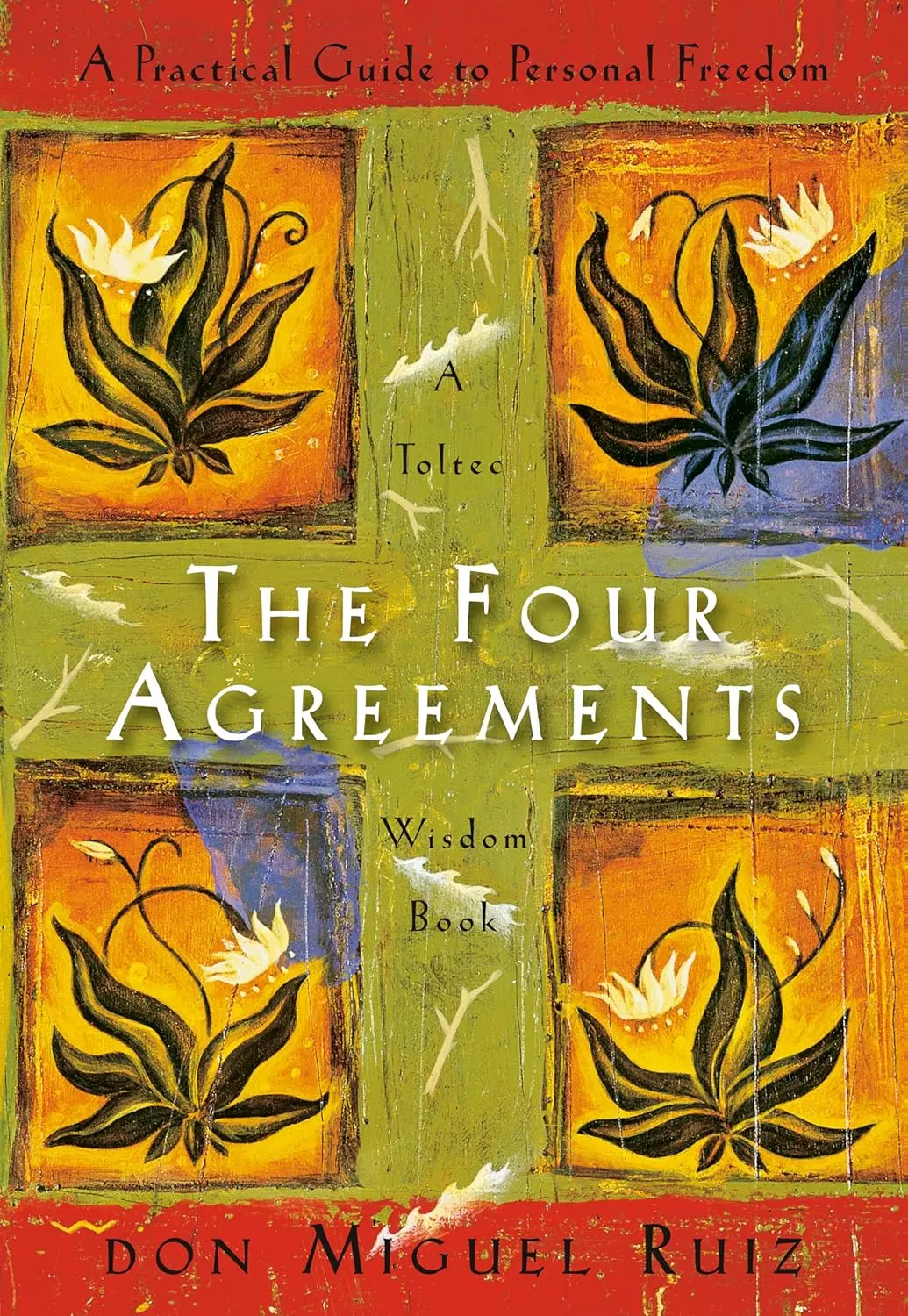
Don Miguel Ruiz grew up in rural Mexico in a family of healers and practitioners of ancient Toltec traditions. He trained as a neurosurgeon, practiced medicine, and then nearly died in a car crash. That experience pushed him away from medicine and toward the spiritual practices of his childhood. The Four Agreements is what came out of that turn.
The premise is simple. Most of our suffering comes from agreements we made with ourselves and the world when we were too young to know better. We absorbed beliefs about who we are, what we deserve, and how the world works from our families, schools, religions, and cultures. Most of these agreements are unconscious, and many of them are harmful. They tell us we are not good enough, that we need approval, that certain things are shameful.
Ruiz proposes replacing these unconscious agreements with four deliberate ones.
Be impeccable with your word. Say what you mean. Do not use language to gossip, complain, or tear yourself down. Words shape reality more than most people appreciate, and careless speech poisons relationships and self-image.
Don’t take anything personally. What other people say and do is a reflection of their own world, not yours. If someone insults you, that says something about them, not about you. This sounds like a platitude until you try to practice it consistently, which is when you realize how much of your daily emotional energy goes toward reacting to other people’s opinions.
Don’t make assumptions. Ask questions. Communicate clearly. Most interpersonal conflict comes from assuming you know what someone else is thinking or feeling, and then reacting to your assumption rather than to reality.
Always do your best. Not someone else’s best. Not yesterday’s best. Your best today, which will vary depending on your energy, health, and circumstances. This agreement prevents self-judgment on days when your capacity is lower.
The book is short. You can read it in an afternoon. The writing is plain and direct, rooted in Toltec mythology but accessible to readers who have no background in indigenous spiritual traditions. The ideas are not complex. Applying them consistently, however, is another matter entirely. Most readers who connect with this book report returning to it multiple times over years.
Among founders and builders, the book circulates for a practical reason: the four agreements map directly onto the emotional challenges of running a business. Careless communication, taking rejection personally, making assumptions about customers or partners, and beating yourself up after a bad day are patterns that burn people out. Ruiz offers a framework for catching those patterns before they take over.
