
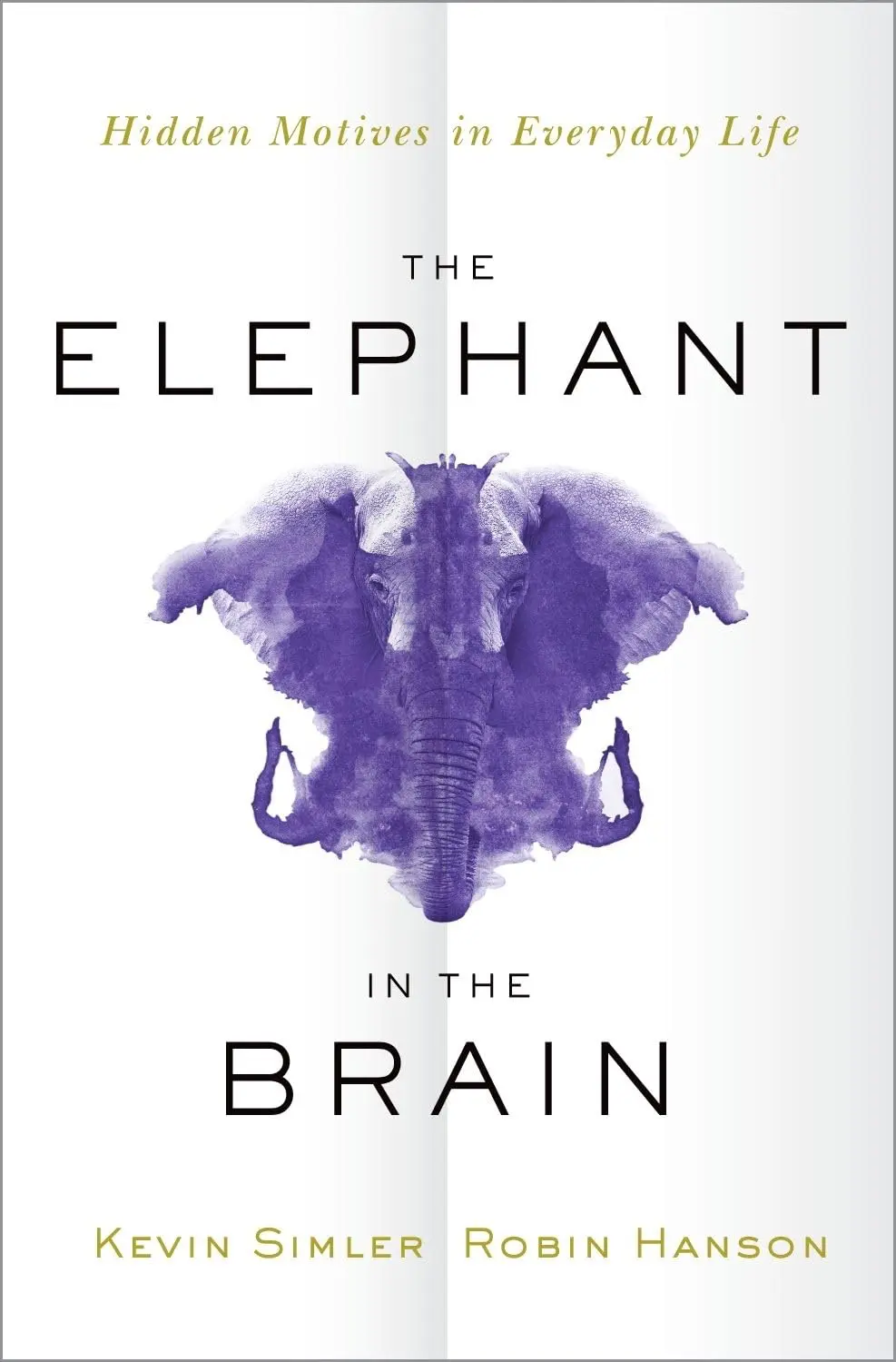
The central claim of this book is uncomfortable: most of the time, you do not know why you do what you do. And the not-knowing is not accidental. It is useful. Your brain hides your true motives from you because that makes it easier to deceive others, and deceiving others is a survival skill that natural selection has been refining for millions of years.
Robin Hanson is an economics professor at George Mason University. Kevin Simler is a software engineer and writer. Together they build a systematic case that human behavior is driven far more by signaling, status competition, and self-deception than by the reasons we consciously believe.
The first half of the book lays the theoretical foundation. Drawing from evolutionary psychology, primatology, and behavioral economics, Hanson and Simler explain why self-deception exists and how it works. The short version: if your conscious mind genuinely believes your motives are noble, you become a more convincing liar. A politician who sincerely believes he is serving the public is more persuasive than one who knows he is serving himself. So natural selection favored brains that could maintain plausible deniability about their own motivations.
The second half applies this framework to specific domains. Education, for instance, is not primarily about learning. If it were, we would care more about what students actually retain and less about where they went to school. The real function, the authors argue, is credentialing and socialization. Similarly, charity is not primarily about helping others. Much of it is about signaling generosity in ways that boost your social status. Medicine is not primarily about health. We consume far more medical care than actually improves outcomes, because receiving medical attention signals that we are valued and cared for.
None of this means education, charity, or medicine are worthless. The point is that their hidden functions explain patterns that the official story cannot. Why do employers care about prestige of the degree but not GPA? Why do people donate to causes with high visibility rather than high impact? Why does healthcare spending not correlate with health outcomes?
For founders, this book is useful in an unsettling way. If you are building a product, you are selling to humans whose stated reasons for buying may differ substantially from their actual reasons. Understanding the gap between what people say they want and what actually drives their behavior is the difference between a product that sounds good in a survey and one that people actually use.
