
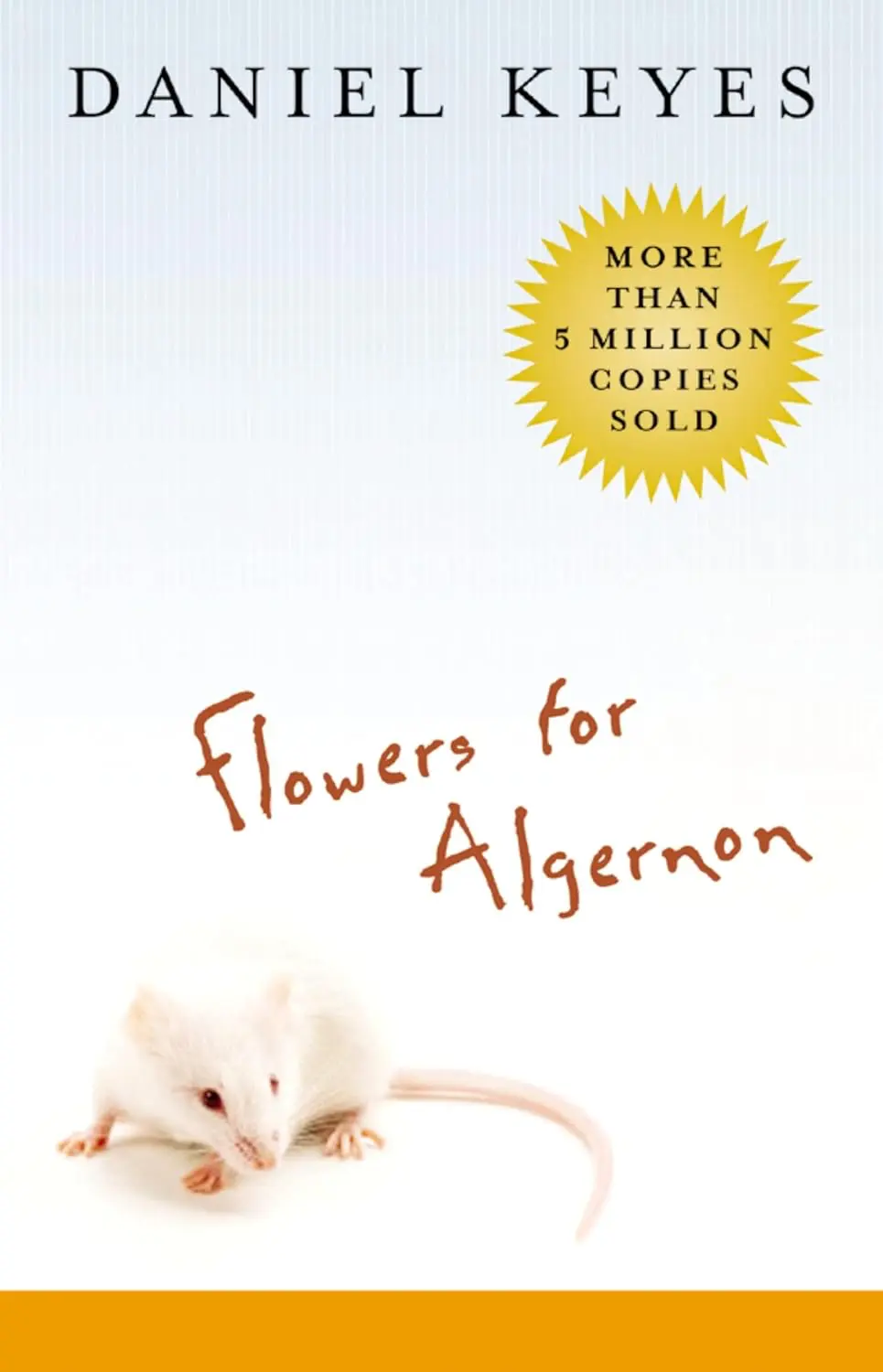
Flowers for Algernon is told entirely through the “progress reports” of Charlie Gordon, a 32-year-old man with an IQ of 68 who works as a janitor at a bakery and attends literacy classes at night. Charlie is selected for an experimental surgical procedure that has already tripled the intelligence of a laboratory mouse named Algernon. The procedure works: Charlie’s IQ climbs from 68 to beyond genius level in a matter of weeks.
The early progress reports are written in Charlie’s original voice: misspelled, grammatically simple, and heartbreakingly earnest. As the treatment takes effect, the writing becomes more sophisticated, and Charlie begins to see the world, and his own past, with painful clarity. He realizes that the coworkers he thought were his friends had been mocking him for years. He struggles with the emotional immaturity that his intellectual growth has outpaced. And he becomes increasingly aware that Algernon, who received the same treatment months earlier, is showing signs of regression.
The novel’s emotional power comes from the structure. Because you experience Charlie’s transformation through his own writing, you feel both the exhilaration of his intellectual awakening and the terror of its reversal. The late entries, as Charlie’s abilities deteriorate and his spelling and grammar break down again, are among the most affecting passages in American fiction.
Keyes raises questions about what intelligence actually means and whether it’s the same as worth. Charlie’s value as a person doesn’t change when his IQ changes, but the way the world treats him changes completely. The doctors who performed the experiment are interested in him as a data point, not as a person. The people who were kind to him when he was simple become uncomfortable when he’s brilliant and condescending when he regresses.
For founders, the book isn’t about business. It’s about what it means to be human in a world that values people based on their productivity and intelligence, which is a question worth considering for anyone building organizations that employ and affect real people.
The writing is the book’s greatest achievement. The first-person journal format creates an intimacy that a conventional narrative couldn’t match. The novel expanded from Keyes’s 1958 short story of the same name, and both versions are worth reading.
