
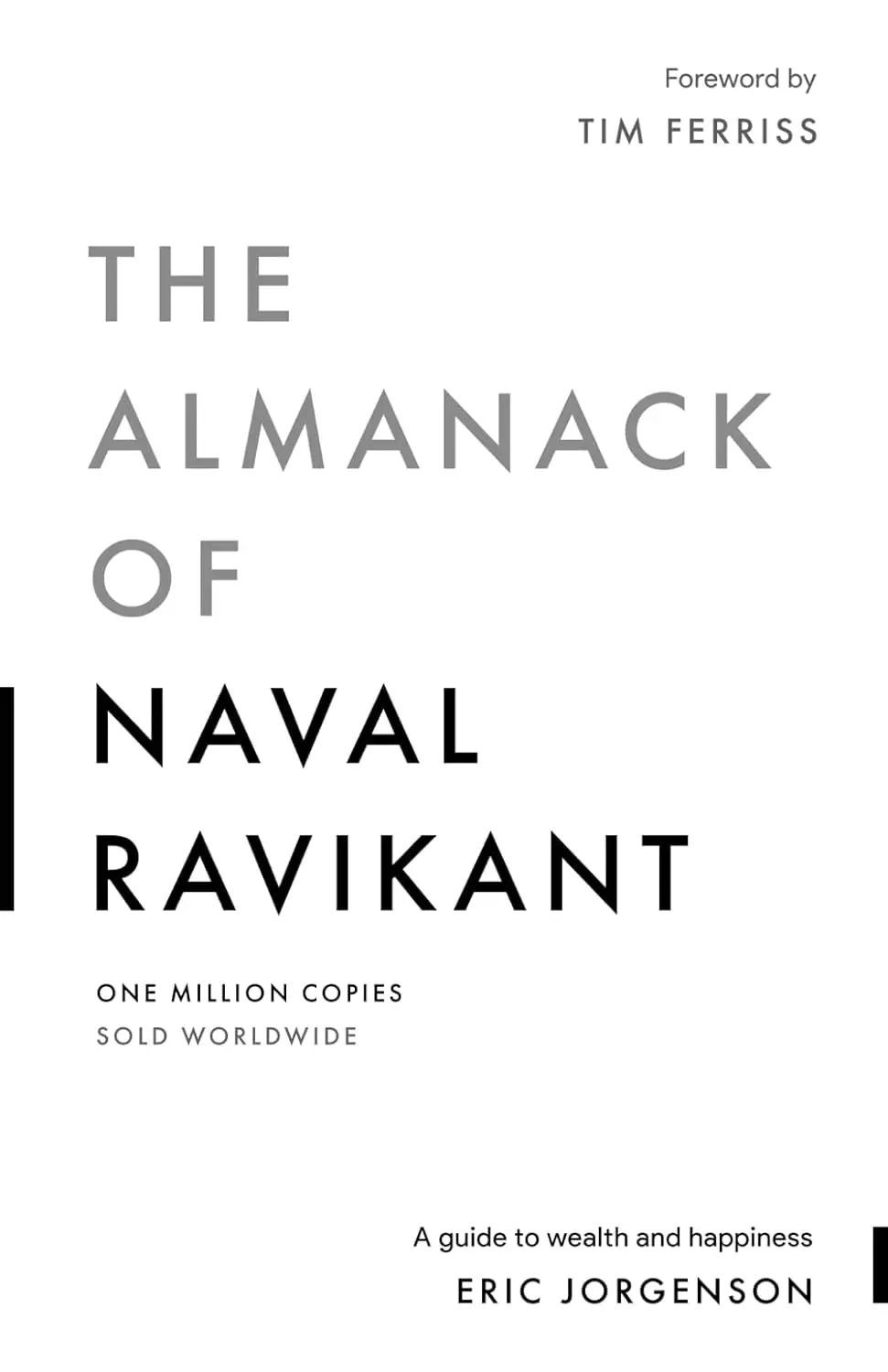
The Almanack of Naval Ravikant is Eric Jorgenson’s compilation of Naval Ravikant’s most influential ideas, drawn from years of tweets, podcast appearances, blog posts, and interviews. Naval, the co-founder of AngelList and one of Silicon Valley’s most followed thinkers, never wrote a book himself. Jorgenson organized his scattered public statements into a coherent guide split into two parts: wealth and happiness.
The wealth section covers Naval’s framework for building wealth through leverage and specific knowledge. Specific knowledge is the expertise you develop naturally because it feels like play to you but looks like work to everyone else. Leverage comes in three forms: labor (people working for you), capital (money working for you), and products with no marginal cost of replication (code and media). Naval argues that the new wealthy combine specific knowledge with code or media leverage, which allows one person to create output that reaches millions without needing anyone’s permission.
His distinction between “renting out your time” and “owning equity” is one of the book’s sharpest ideas. Working for a salary, no matter how high, is renting your time. Building or owning something that generates income whether you work or not is owning equity. Naval argues that you won’t get wealthy renting time, because there are only so many hours in a day. You get wealthy by owning a piece of a business that scales.
The happiness section is more philosophical. Naval describes happiness as a skill you can develop, not a destination you arrive at. His practice involves reducing desire, staying present, and recognizing that most suffering comes from the gap between expectations and reality. He draws from Stoicism, Buddhism, and his own experience, but the tone is personal rather than academic.
For founders, the wealth section is directly applicable. The framework for choosing what to build (specific knowledge + leverage), the emphasis on equity over salary, and the analysis of which types of leverage are available today (code and media are the most accessible) give you a clear mental model for thinking about where to invest your effort.
The writing is readable because Jorgenson organized Naval’s raw material well, but it retains the aphoristic quality of the original tweets and interview clips. Some ideas are developed over several pages; others are standalone sentences. The book is available for free online (which Naval encouraged), and the physical edition is well-designed for a book that you’ll probably flip through repeatedly rather than read once.
