
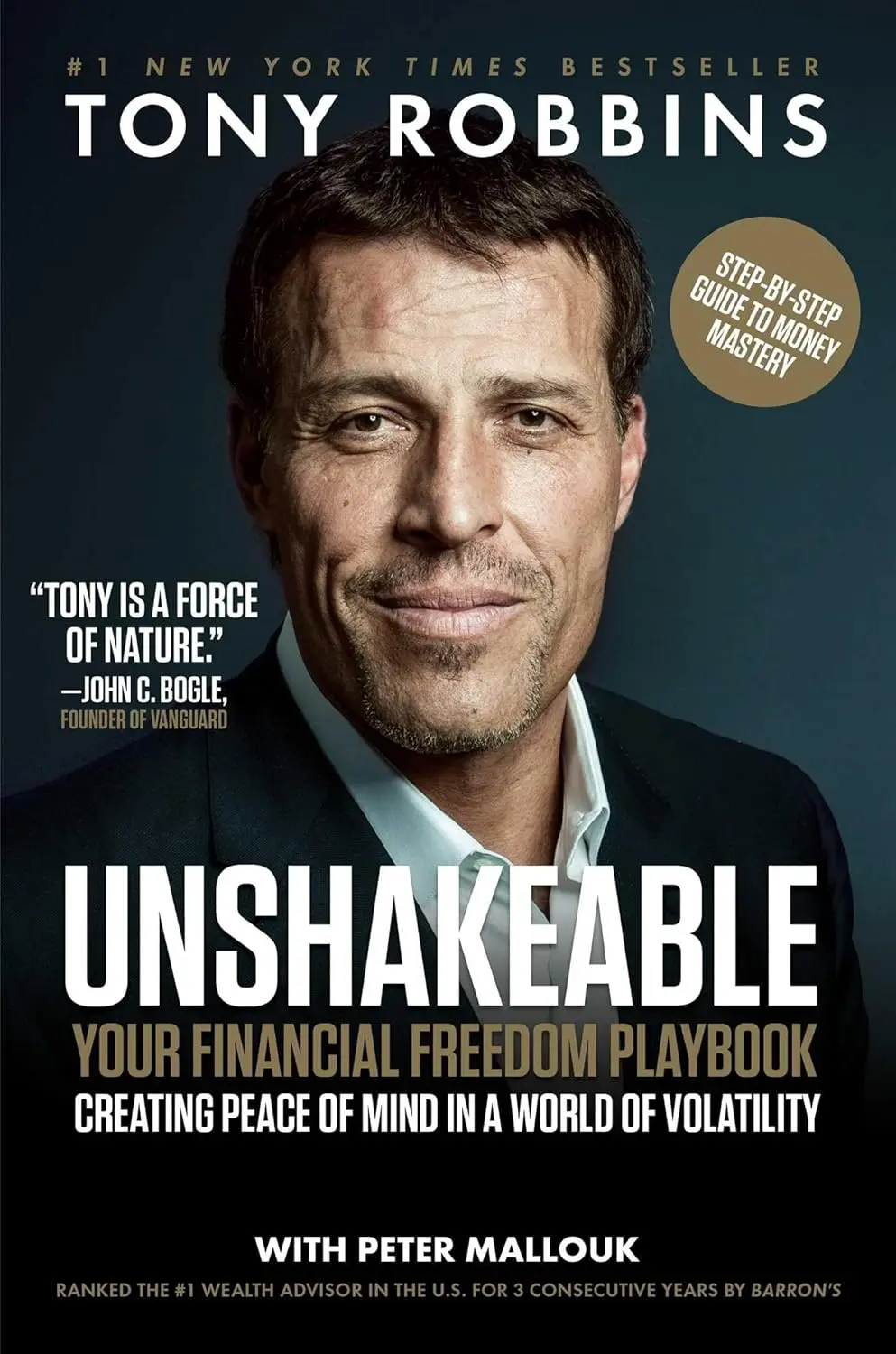
Unshakeable is Tony Robbins’s condensed guide to personal investing, distilled from his earlier 600-page book Money: Master the Game. Where the longer book covered financial planning comprehensively, Unshakeable focuses specifically on how to build and protect wealth through stock market investing, with particular attention to what to do during market crashes.
The core advice is familiar to anyone who follows index fund investing: keep fees low (because fees compound against you just as returns compound for you), diversify broadly, don’t try to time the market, and stay invested during downturns because historically every crash has been followed by a recovery. Robbins backs these principles with data on market history and with quotes from interviews he conducted with investors like Ray Dalio, Jack Bogle, and Warren Buffett for the earlier book.
The market downturn chapters are the most useful section. Robbins presents historical data showing that corrections (drops of 10% or more) happen roughly once a year, bear markets happen roughly every three to five years, and the average bear market lasts about a year. His argument is that if you know this in advance and accept it as normal, you’re less likely to panic and sell at the bottom, which is the single most destructive thing an investor can do.
The tax efficiency and fee chapters cover specific strategies: using index funds instead of actively managed funds (which charge higher fees and usually underperform), choosing tax-advantaged accounts, and watching for hidden fees in financial products. Robbins is particularly aggressive about fee transparency, arguing that the financial industry is designed to obscure the true cost of investing.
For founders, who are often too busy to actively manage investments and too risk-tolerant to leave money in savings accounts, the book provides a simple, low-maintenance approach. Set up automatic contributions to low-cost index funds, ignore short-term market movements, and let compounding do the work. This is not original advice, but Robbins presents it clearly and with enough data to make it stick.
The writing is classic Robbins: energetic, repetitive, and heavy on motivational language. Some readers will find the tone grating; others will appreciate the enthusiasm. The practical content is solid even if the delivery isn’t for everyone. At under 300 pages, it’s a much easier entry point than the longer book.
