
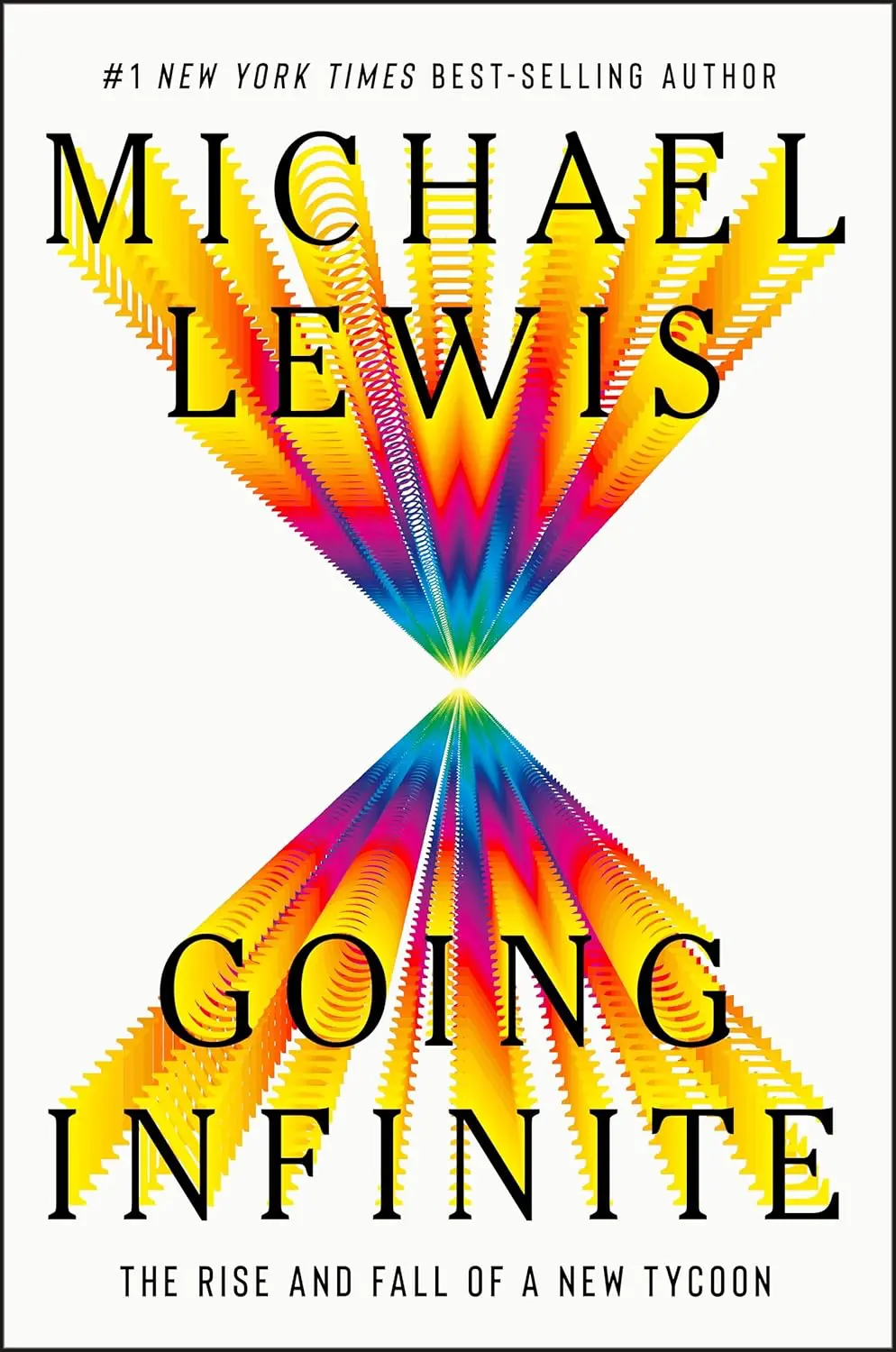
Going Infinite is Michael Lewis’s account of Sam Bankman-Fried (SBF) and the collapse of FTX, the cryptocurrency exchange that imploded in November 2022. Lewis had a unique vantage point: he had been following SBF for months before the collapse, spending time with him, observing his decision-making, and gathering material for what was originally going to be a profile of a brilliant young tycoon. Instead, Lewis watched his subject go from billionaire philanthropist to criminal defendant.
The book covers SBF’s background (MIT physics graduate, Jane Street trader), the founding of Alameda Research (his crypto trading firm) and FTX (the exchange), his rise to political influence through enormous donations, and the eventual revelation that customer funds from FTX had been used to cover Alameda’s trading losses. The collapse happened in about a week, triggered by a CoinDesk report about Alameda’s balance sheet and accelerated by a bank run on FTX.
Lewis’s challenge is that he genuinely liked SBF and was impressed by him during the reporting period, and the book reflects this ambivalence. Lewis portrays SBF as someone who was genuinely smart, genuinely interested in effective altruism, and genuinely bad at basic organizational functions like keeping track of money, managing people, and building systems. Whether this amounts to a defense, a character study, or a failure to reckon with fraud depends on the reader.
The book was controversial on release. Critics argued that Lewis was too sympathetic to a man who was convicted of stealing billions from customers. Defenders argued that Lewis was doing what he always does: telling a human story about the person at the center of a financial disaster, the same way he told the stories of the protagonists in The Big Short or Liar’s Poker.
For founders, the book is a case study in what happens when rapid growth, enormous capital, and weak internal controls combine. FTX had almost no compliance infrastructure, no proper accounting, and governance that amounted to whatever SBF decided in the moment. The story is an extreme version of problems that affect many fast-growing startups.
The writing is Lewis at his most readable: fast, funny, and built around character. The financial mechanics are explained clearly for non-experts.
