
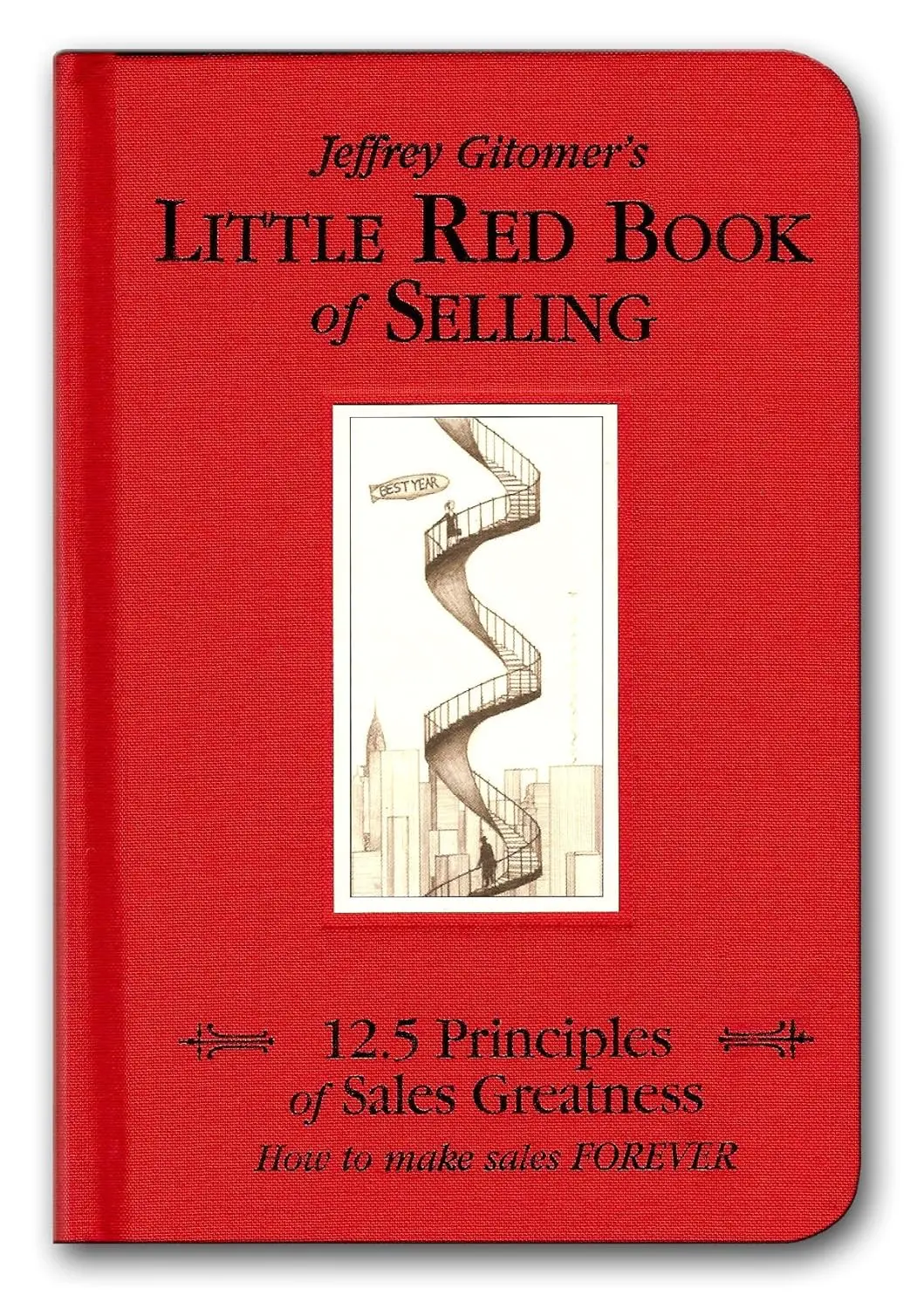
Little Red Book of Selling is Jeffrey Gitomer’s compact sales guide, organized around 12.5 principles that he argues separate great salespeople from mediocre ones. The half-principle (number 12.5) is “kick your own ass,” Gitomer’s way of saying that the biggest obstacle in sales is your own discipline and attitude, not your prospect’s objections.
The principles cover a mix of mindset and tactics. “People don’t like to be sold, but they love to buy” is the book’s central reframe: instead of pushing your product, create conditions where the customer pulls it toward them. “It’s not work, it’s network” covers relationship-building. “Deliver value first” argues that the best way to earn someone’s business is to give them something useful before you ask for anything. “Use humor” is self-explanatory and reflects Gitomer’s own style.
The book is designed to be dipped into rather than read cover to cover. Each principle gets a short chapter with Gitomer’s commentary, real-world examples, and action items. The formatting is unusual: red ink, boxed quotes, sidebars, and a deliberately punchy design that looks more like a magazine than a business book. This is intentional; Gitomer wants salespeople to carry it around and reference it before meetings.
The sales philosophy is relationship-first rather than technique-first. Gitomer argues that if people like you, trust you, and believe you can help them, the sale follows naturally. If they don’t, no closing technique will save you. This makes the book more about personal development and brand building than about specific selling scripts.
For founders, particularly those who find sales uncomfortable, Gitomer’s approach is less intimidating than the high-pressure methods found in other sales books. The focus on delivering value, building genuine relationships, and earning trust aligns well with how most founders naturally want to sell. The short format also makes it practical: you can read one principle before a call and immediately apply it.
The writing is informal and entertaining. Gitomer’s humor is corny but self-aware, and the brevity keeps the energy up. The book has sold millions of copies and is one of the most popular sales books ever published. Some readers find the style too casual or the advice too obvious, but obvious advice that you actually follow beats sophisticated advice that you forget.
