
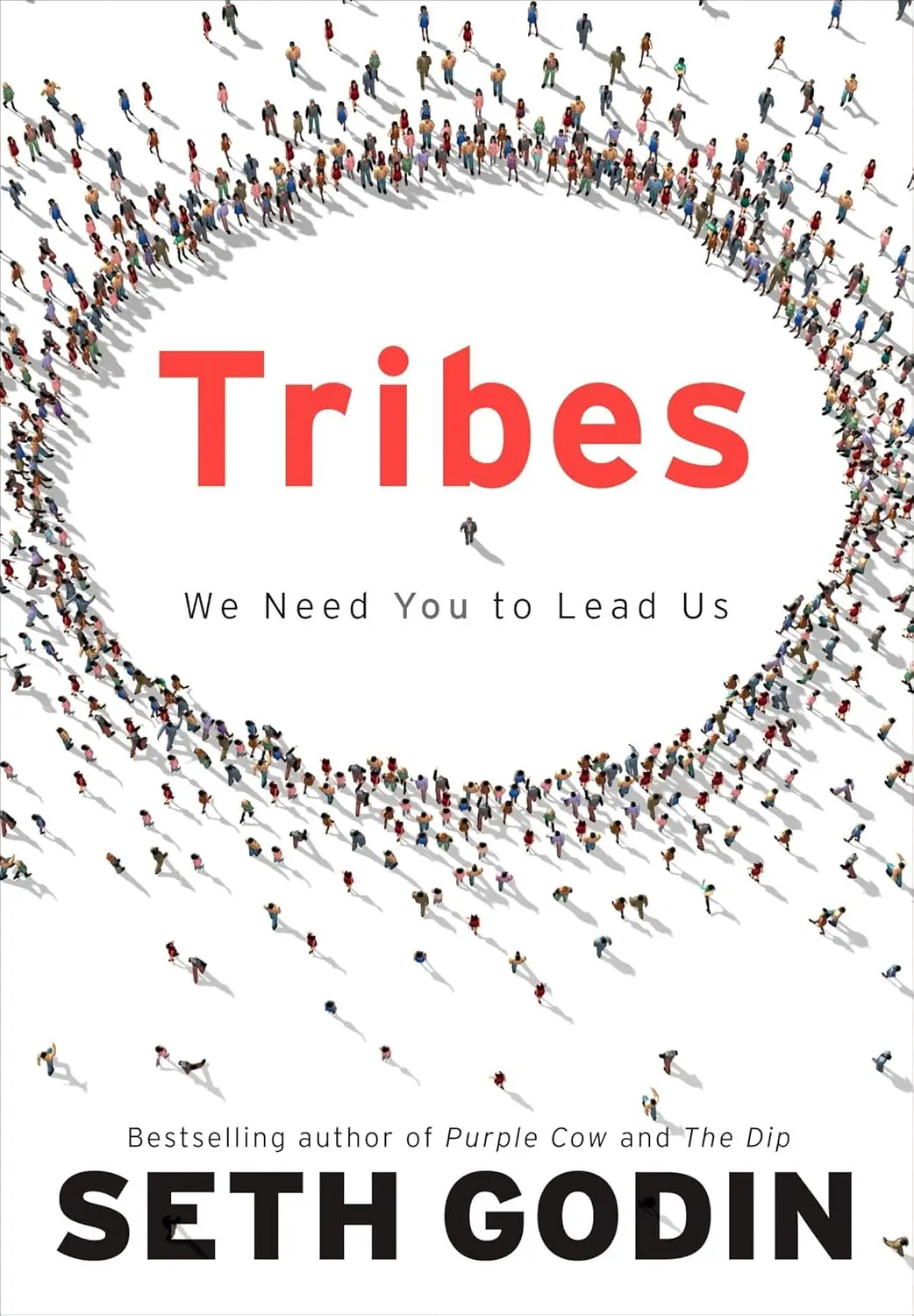
Tribes is Seth Godin’s book about leadership in a connected world. His argument is that human beings have always organized into tribes, groups of people connected by a shared idea, interest, or goal, and that the internet has removed the barriers that used to limit tribe formation to geography and personal networks. Now anyone can find their tribe, and anyone can lead one.
Godin defines a tribe as a group of people connected to one another, connected to a leader, and connected to an idea. The leader’s job is not to command but to connect: to articulate the shared idea clearly enough that people recognize it as their own, and to create the conditions for tribe members to connect with each other. He contrasts this with traditional management, which is about maintaining the status quo, and argues that what the world needs now is leaders willing to challenge the status quo and rally people around a new direction.
The book is short and moves quickly through dozens of examples. Godin profiles people who built tribes around everything from software to charity to music to politics. The examples range from well-known (Wikipedia, Obama’s 2008 campaign) to obscure (a guy who organized a worldwide Meetup group around board games). The point is that tribe-building is available to anyone, not just executives or celebrities.
For founders, the book reframes marketing and community building. Instead of trying to reach the largest possible audience with a generic message, Godin argues you should find the smallest viable audience that cares deeply about what you’re doing and lead them. This tribe becomes your early adopters, your evangelists, and eventually your growth engine. The approach is especially relevant for bootstrapped companies that can’t afford mass marketing.
The writing is classic Godin: short chapters, punchy sentences, lots of repetition of core ideas. Some readers love this style for its energy and clarity. Others find it frustratingly thin, since Godin rarely goes deep on any single example. At under 150 pages, the book is more manifesto than manual. If you want specific tactics for community building, you’ll need to look elsewhere. If you want to be convinced that building a tribe is worth doing and that you’re capable of doing it, this is effective.
