
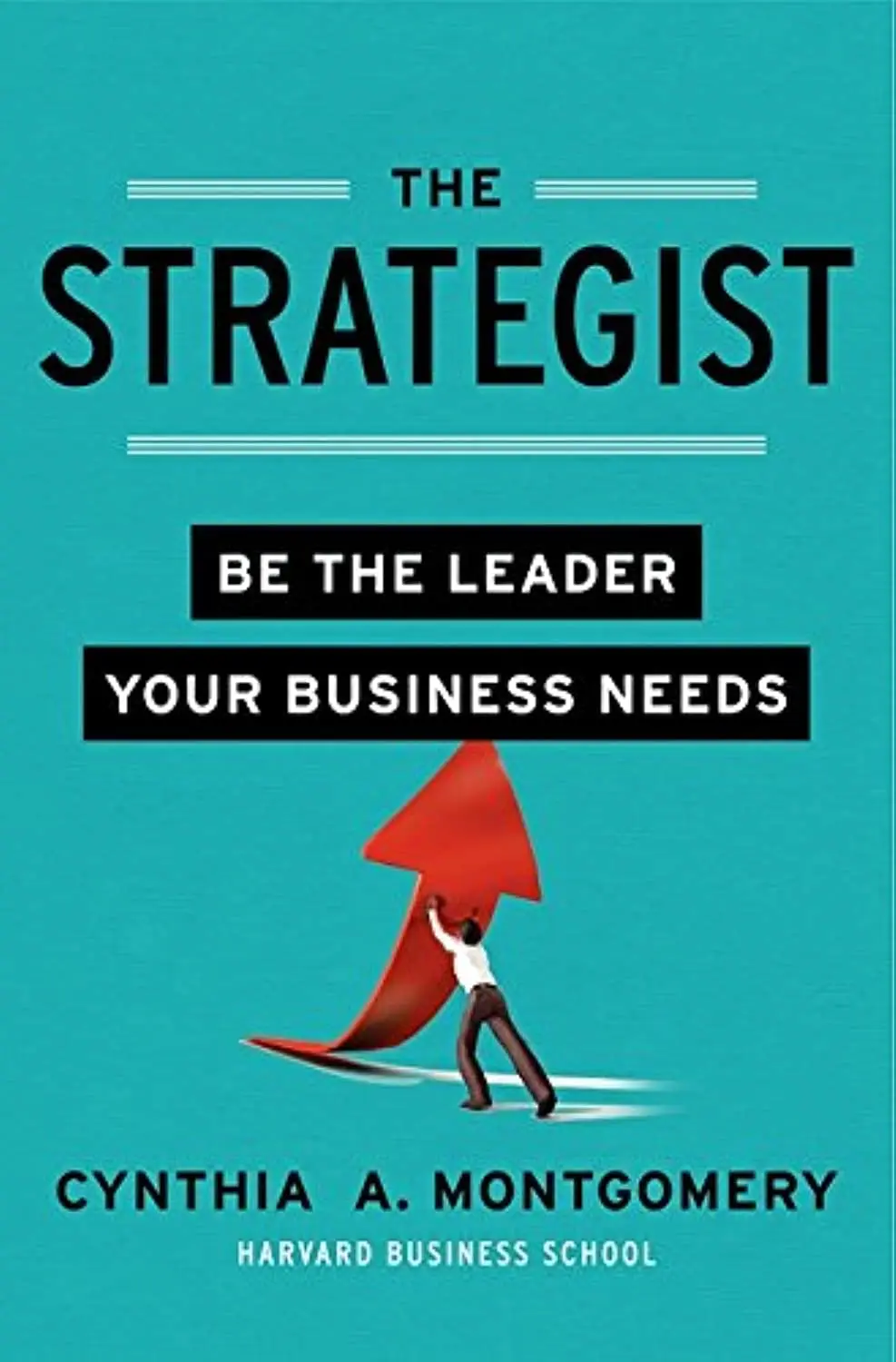
The Strategist grew out of Cynthia Montgomery’s executive education course at Harvard Business School, where she noticed that even experienced CEOs struggled with the most fundamental strategic question: why does your company exist, and what value does it create that no one else can? Montgomery’s argument is that strategy has become too abstract, too disconnected from leadership, and too often treated as a one-time planning exercise rather than the continuous, defining work of the person running the company.
The book works through a series of questions that Montgomery uses with her executive students. What is the purpose of your business? (Not your mission statement, but what you actually do that matters to customers.) What makes you different? (Not in your marketing materials, but in observable reality.) Can your competitive advantage last, or will it erode? Is your business model creating real value, or are you competing on price in a commodity market?
Montgomery draws from her academic work on industry analysis and competitive advantage, but the tone is personal and conversational rather than theoretical. She profiles specific companies that had strong strategies, lost them, and either recovered or didn’t. She is honest about the fact that strategy is uncomfortable work because it requires saying no to attractive opportunities that don’t fit, and because the answers to her questions often reveal uncomfortable truths about how differentiated a business really is.
For founders, the book’s most useful contribution is its insistence that strategy is not something you delegate to a consultant or handle in an annual off-site. It is the ongoing job of the leader. Montgomery argues that the strategist must be the person who holds the company’s purpose clearly enough to make daily decisions consistent with it, and who is willing to change the strategy when the world changes. This is founder work, and treating it as anything else leads to drift.
The writing is clear and the book is short, under 200 pages. It reads like a condensed version of her HBS course, with the directness that comes from having tested every idea on hundreds of experienced leaders. If you want a more detailed strategy framework, read Good Strategy Bad Strategy by Richard Rumelt. If you want to understand the strategist’s role as a leader, this is the better choice.
