
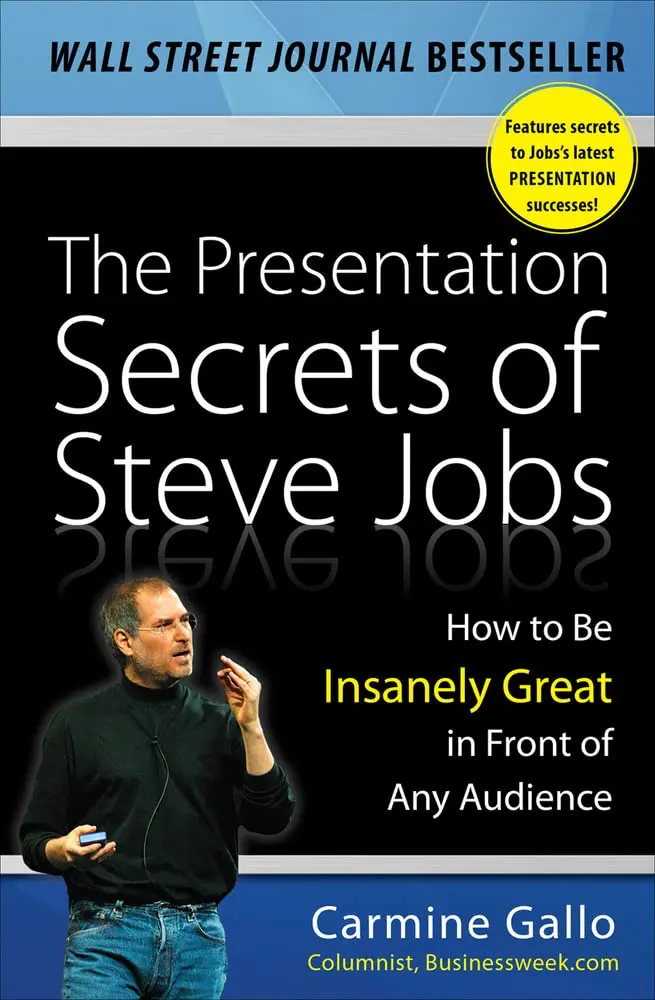
The Presentation Secrets of Steve Jobs is Carmine Gallo’s reverse engineering of the most famous product presentations of the early 21st century. Jobs’s keynotes at Apple events became cultural moments, and Gallo analyzes exactly how he built them: the planning, the story structure, the slide design, the rehearsal process, and the delivery.
Gallo organizes Jobs’s techniques into three acts, mirroring the structure of the presentations themselves. Act One: Create the Story. Jobs started every keynote by answering one question: why should the audience care? He would create a villain (an existing problem or an inferior competitor), introduce a hero (the new product), and establish what was at stake. He used headlines, not bullet points, and framed features in terms of benefits that the audience could immediately understand.
Act Two: Deliver the Experience. Jobs designed his slides with minimal text and maximum visual impact. A single image. A single number. A single sentence. He used live demonstrations to prove his claims rather than just asserting them. He incorporated surprise moments (like pulling the MacBook Air out of a manila envelope) that became the most-shared clips from his events.
Act Three: Refine and Rehearse. Jobs rehearsed his presentations for hours, sometimes days. He practiced every transition, every demo, and every slide change until the whole thing looked effortless. Gallo argues that this level of preparation is what made Jobs’s “natural” delivery possible: it wasn’t natural at all, it was the product of extreme rehearsal.
For founders, who frequently present to investors, customers, and employees, the specific techniques are directly applicable. The “one theme per slide” rule, the practice of leading with the audience’s problem before introducing your solution, and the emphasis on live demonstration over description are all transferable to any business presentation.
The writing is practical and built around before-and-after analysis of specific Apple keynotes. The book can feel somewhat repetitive if you read it straight through, since many of the techniques overlap. It works better as a reference you consult before an important presentation. Some readers will note that Jobs had advantages most presenters don’t (revolutionary products, a massive stage, a global audience), but the underlying techniques work at any scale.
