
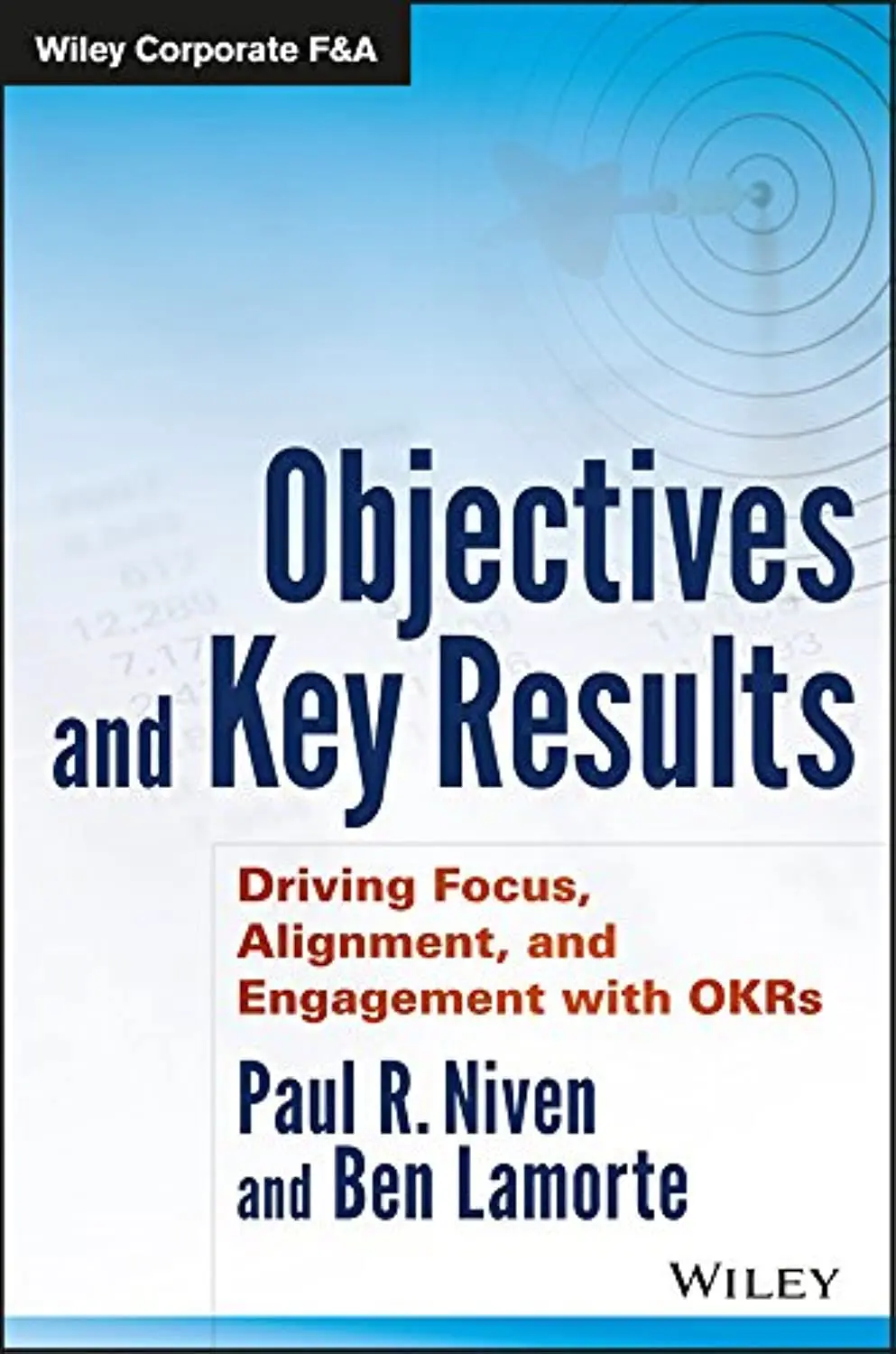
Objectives and Key Results is a practical implementation guide for OKRs, the goal-setting framework popularized by Intel and Google. Paul Niven and Ben Lamorte, both management consultants who have helped dozens of companies implement OKRs, wrote the book to fill the gap between the conceptual case for OKRs (which Measure What Matters by John Doerr covers well) and the operational reality of actually making them work inside a real organization.
The book covers the mechanics in detail. How to write an objective that is qualitative, inspiring, and time-bound. How to write key results that are quantitative, measurable, and difficult but achievable. How to connect OKRs across levels of the organization (company, team, and individual) without turning the process into a top-down cascade that removes all autonomy. How to run OKR check-ins and scoring sessions. And how to avoid the most common failure modes: setting too many OKRs, confusing key results with tasks, making OKRs too easy, or tying them directly to compensation (which distorts the goal-setting process).
The implementation chapters are the most useful part. Niven and Lamorte walk through the rollout process: how to get leadership buy-in, how to run the first cycle, how to coach teams through writing their first OKRs, and how to iterate the process over multiple quarters. They include real examples (anonymized) from companies they’ve worked with, showing both good and bad OKRs with explanations of what makes the difference.
For founders, OKRs are one of the more effective tools for maintaining focus as a company grows. When you have five people, everyone knows what matters. When you have fifty, alignment starts to break down. OKRs give you a lightweight structure for making sure everyone is working on the right things without requiring heavy process overhead. This book tells you how to set them up so they actually work.
The writing is clear and organized for reference. It is not a book you read for inspiration; it is a book you consult when you’re setting up your OKR process and want specific guidance on how to do it right. Some readers find it too process-oriented, but that level of detail is exactly what makes it useful for implementation rather than just conceptual understanding.
