
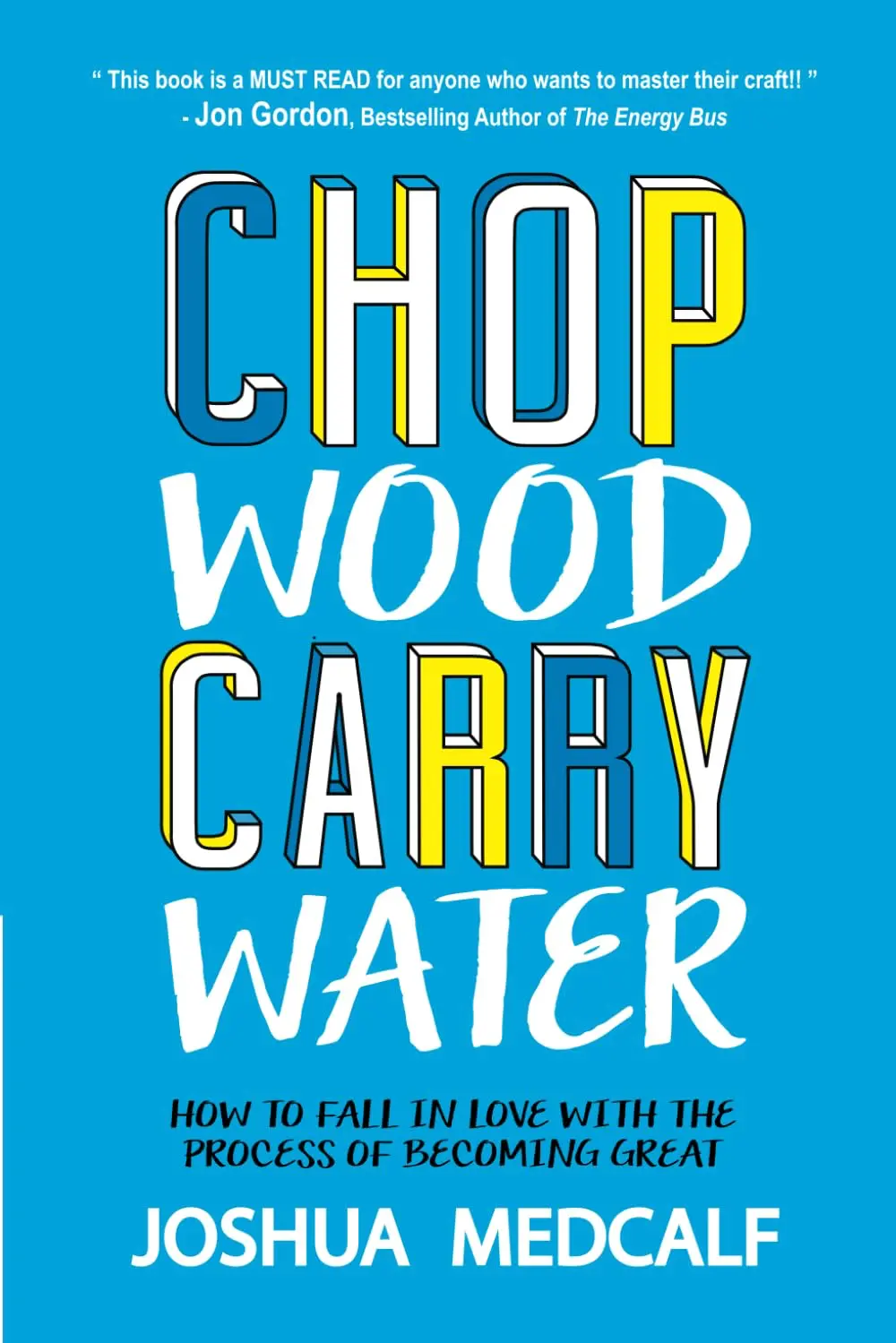
Chop Wood Carry Water tells the story of John, a young American who travels to Japan to study under a sensei and become a samurai archer. Instead of receiving archery instruction on his first day, he’s told to chop wood and carry water. Day after day, the mundane tasks continue while the archery lessons remain elusive. The parable uses this setup to explore a set of ideas about patience, process, humility, and the gap between what we expect greatness to look like and what it actually requires.
Each chapter is short, usually just a few pages, and introduces a lesson through the ongoing story. The sensei’s teaching method is indirect: he uses metaphors, questions, and tasks that seem unrelated to archery but turn out to be exactly the training John needs. The lessons cover topics like why comparison kills growth, why you should focus on what you can control and let go of the rest, why identity should be rooted in effort rather than results, and why the mundane daily work is the real path to mastery.
The writing is simple and the chapters are fast. This is not a dense, research-heavy book. It reads more like a modern fable than a self-help manual, closer to The Alchemist than to Atomic Habits. The language is accessible enough for a teenager and the stories are earnest rather than sophisticated.
For founders, the book’s message is a counterbalance to the startup culture that celebrates breakthroughs, launch days, and hockey-stick growth curves. Medcalf’s argument is that the people who achieve extraordinary things are the ones who show up every day for the ordinary work that nobody sees. Chopping wood and carrying water is not the preparation for the real work. It is the real work. The arrow flying straight is just the visible result of thousands of hours of invisible practice.
The book is short enough to finish in a single sitting. Some readers will find it too simple or too preachy. Others will find it exactly the reminder they need on a day when the daily grind feels pointless. It works best if you read it when you’re in the middle of a long, unglamorous stretch of work and need someone to tell you that the process is the point.
