
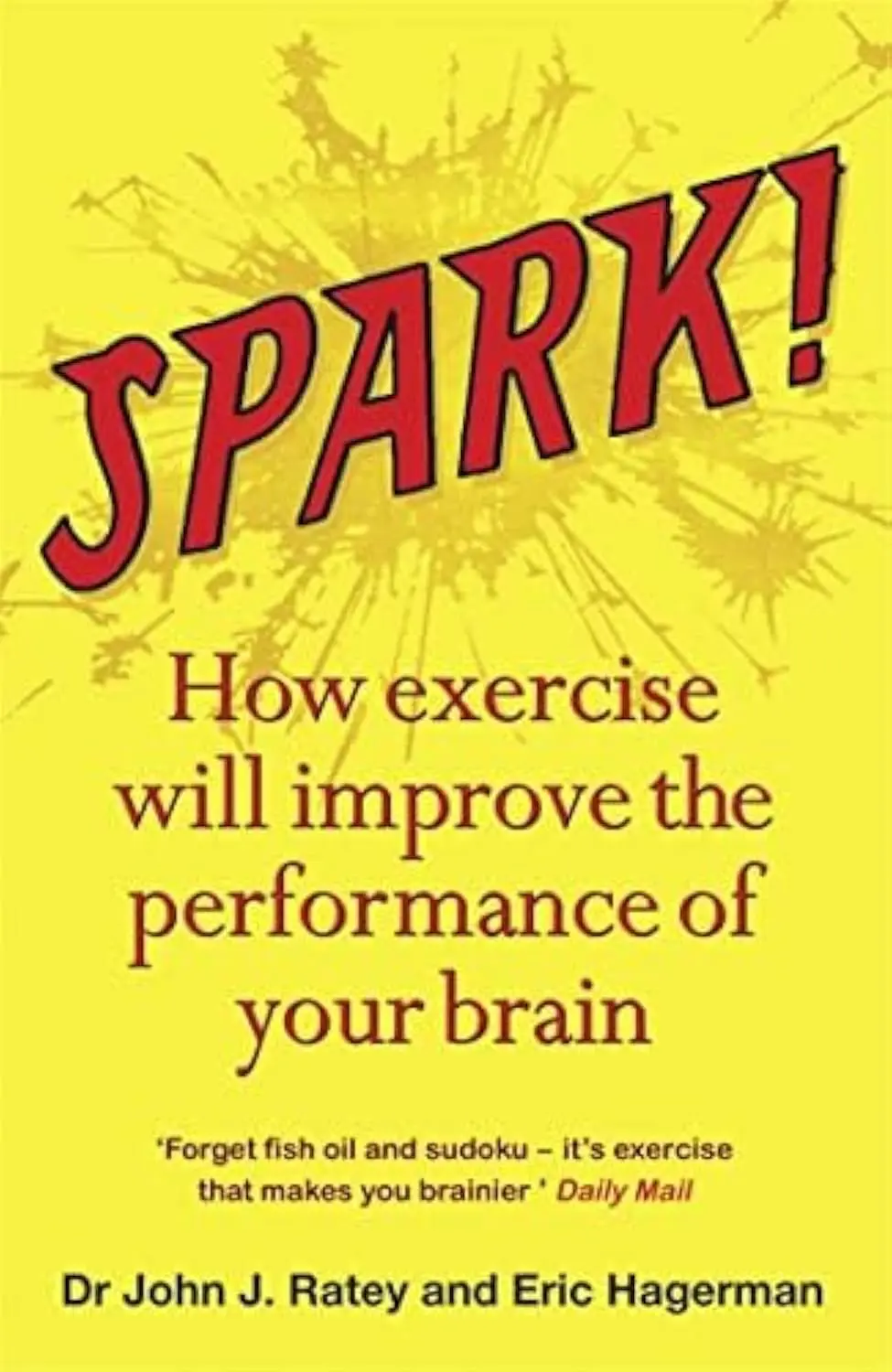
Spark is John Ratey’s review of the scientific evidence linking exercise to brain function. Ratey, a clinical psychiatrist at Harvard Medical School, argues that exercise is not just good for your body but is one of the most powerful tools available for improving learning, managing stress, treating depression and anxiety, sharpening focus, and slowing cognitive decline.
The book opens with the story of Naperville Central High School in Illinois, which implemented a daily exercise program tied to heart rate monitors rather than athletic ability. The results were striking: students who participated showed improvements in academic performance, with the school eventually ranking among the top in the world on international science tests. Ratey uses this as the launching point for a chapter-by-chapter review of how exercise affects specific brain functions.
Each chapter covers a different application. Exercise and learning (aerobic activity promotes neurogenesis and improves memory consolidation). Exercise and stress (physical activity burns off cortisol and adrenaline). Exercise and anxiety (regular movement reduces the baseline level of physiological arousal that feeds anxiety). Exercise and depression (some studies show exercise performing as well as SSRIs for moderate depression). Exercise and ADHD (physical activity increases the availability of dopamine and norepinephrine, the same neurotransmitters targeted by ADHD medications). Exercise and aging (aerobic fitness is one of the strongest predictors of cognitive health in later life).
For founders, who commonly deal with stress, anxiety, decision fatigue, and long sedentary hours, the book makes a specific case for treating exercise as a business decision rather than a personal luxury. The chapters on stress and focus are particularly relevant: Ratey shows that 30 minutes of aerobic exercise produces measurable improvements in cognitive function for several hours afterward. Scheduling a workout before your most demanding work of the day is, according to the research, one of the most effective performance optimizations available.
The writing is clear and accessible for a science book. Ratey explains the neuroscience in enough detail to be credible but not so much that non-scientists will get lost. The Naperville story is the most engaging narrative thread, though the clinical chapters covering depression and ADHD are the most practically useful for readers dealing with those specific issues.
