
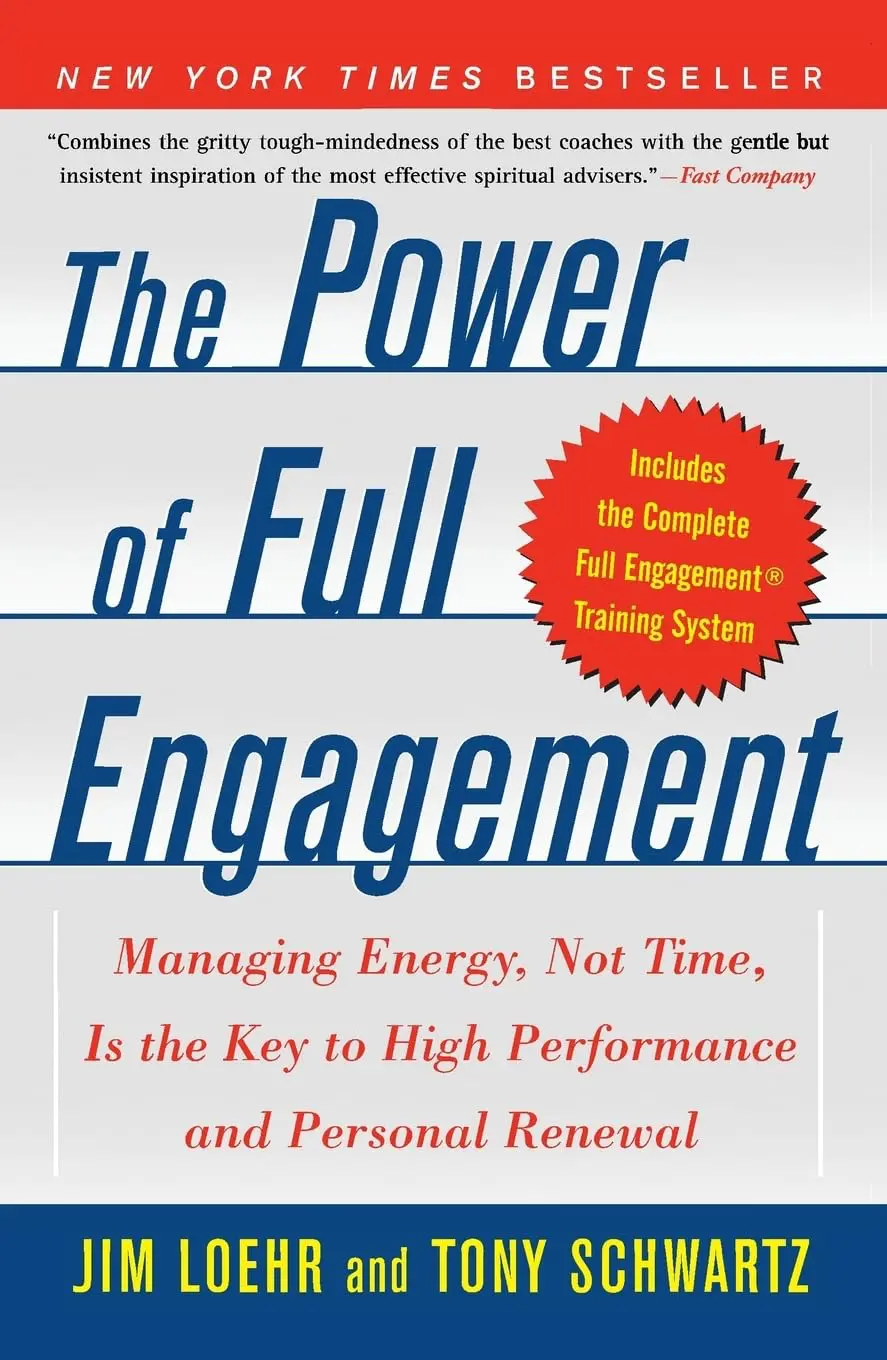
The Power of Full Engagement starts with an observation from sports: athletes perform in short bursts and then recover. A tennis player is fully engaged for a few seconds per point and then rests between points. A sprinter runs for ten seconds and then rests for hours. Peak performance in sports requires oscillation between stress and recovery, not sustained effort.
Loehr and Schwartz argue that most professionals have it backwards. They try to stay engaged all day, every day, without adequate recovery, and the result is chronic underperformance. The book proposes managing energy across four dimensions: physical (exercise, sleep, nutrition), emotional (connection, gratitude, managing negative emotions), mental (focus, creativity, time management), and spiritual (purpose, values, meaning). Each dimension requires both expenditure and renewal.
The practical framework centers on rituals, specific behaviors that you perform at set times to renew your energy. A morning exercise routine renews physical energy. A brief meditation or breathing exercise between meetings renews emotional energy. A walk outside renews mental energy. The key is that these aren’t optional nice-to-haves; they’re performance necessities, the same way rest between sets is a performance necessity for a weightlifter.
For founders, the book addresses a real problem. Most startup culture celebrates sustained intensity: long hours, skipped meals, no vacations. Loehr and Schwartz’s argument, backed by their work training professional athletes and corporate leaders, is that this approach degrades performance rather than improving it. The founders who perform best over time are the ones who build recovery into their schedule, not the ones who grind the hardest.
The writing is practical and built around case studies. Loehr and Schwartz profile specific professionals who transformed their performance by applying the energy management framework, and the before-and-after stories are persuasive. Some sections on spiritual energy may not resonate with all readers, and the book occasionally repeats its core points more than necessary. But the central insight, that performance comes from managing energy rather than managing time, has influenced many subsequent books on productivity and performance.
