
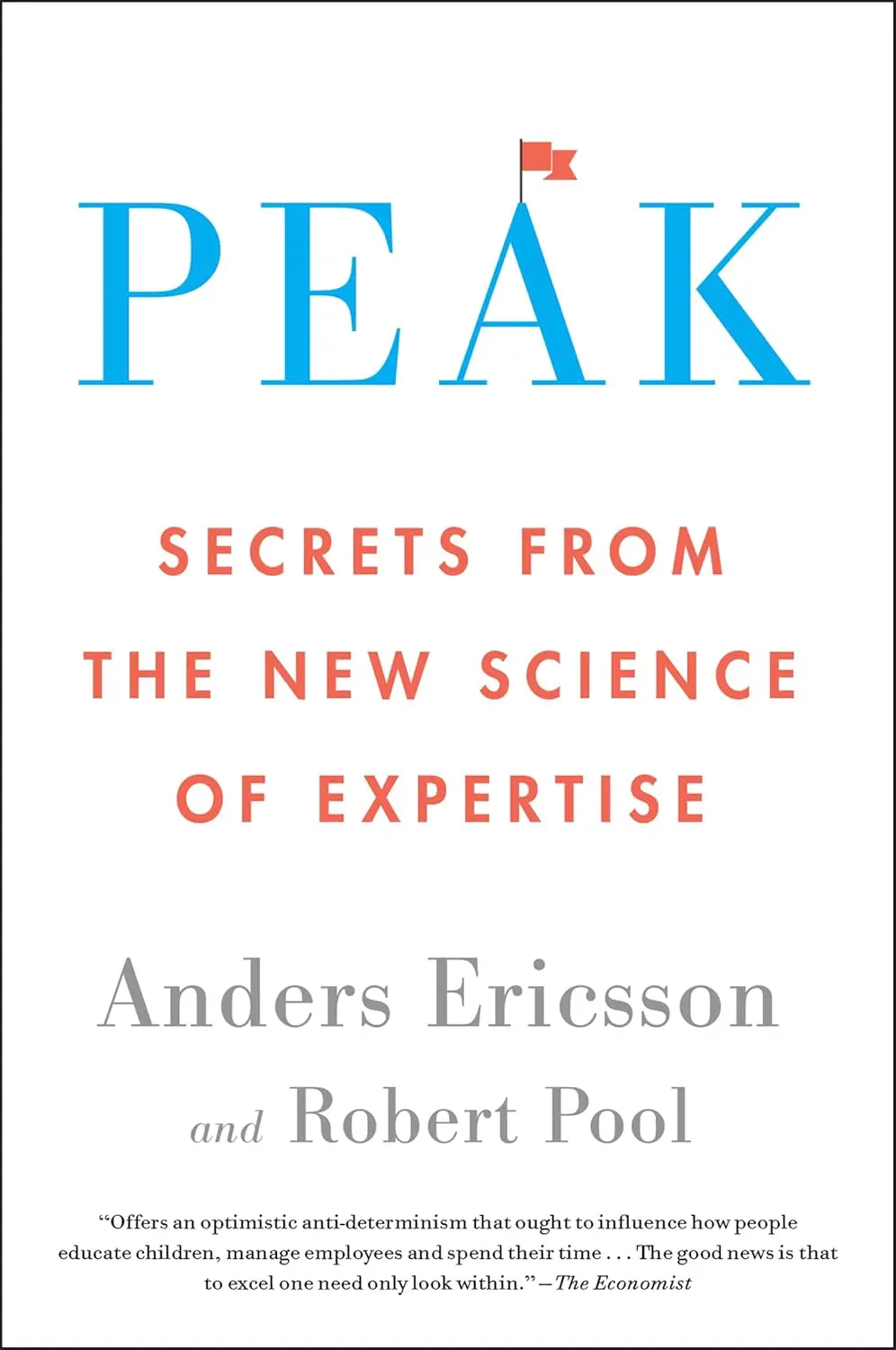
Peak is Anders Ericsson’s attempt to correct the record on his own research. Ericsson is the psychologist whose work on expert performance was popularized by Malcolm Gladwell in Outliers as the “10,000-hour rule.” But Ericsson argues that Gladwell got it wrong: the number of hours isn’t the point. What matters is how those hours are spent. Mindless repetition produces mediocrity. Deliberate practice, with specific goals, focused attention, immediate feedback, and constant adjustment, produces expertise.
The book walks through what deliberate practice looks like across different fields. In music, it means working on specific passages at the edge of your ability rather than playing through pieces you’ve already mastered. In chess, it means studying specific positions and testing your moves against grandmaster games rather than just playing casual matches. In medicine, it means getting systematic feedback on diagnostic accuracy rather than simply accumulating years of experience.
Ericsson’s most interesting finding is that experts don’t just know more than non-experts. They perceive differently. A chess grandmaster doesn’t calculate more moves ahead than a beginner; they see the board in larger meaningful chunks that they’ve built up through years of deliberate study. This “mental representation” concept, the idea that expertise is built on increasingly sophisticated internal models, is the book’s most original contribution.
For founders, the practical implication is that getting better at your job requires deliberate effort on specific skills, not just more years in the role. Running a company for ten years doesn’t automatically make you a better CEO if you’re not deliberately working on the specific areas where you’re weak. The feedback and adjustment components of deliberate practice are especially relevant: you need honest signals about your performance, not just confirmations that you’re doing fine.
The writing is accessible and well-paced. Ericsson, who passed away in 2020, collaborated with science writer Robert Pool, who keeps the prose engaging without dumbing down the research. The book is more rigorous than Gladwell’s account of the same research but less entertaining, which is a fair tradeoff if you want to actually apply the ideas.
