
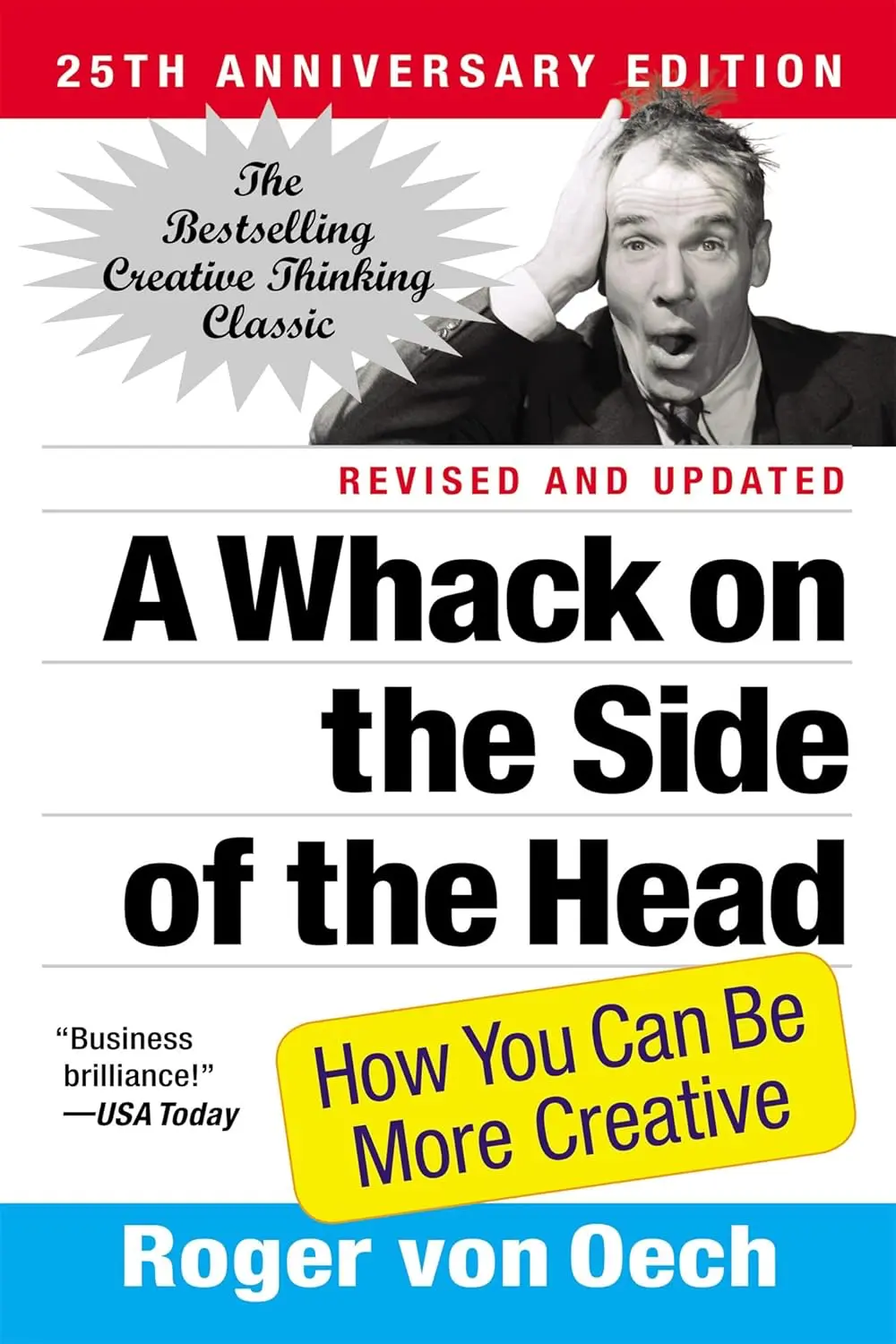
A Whack on the Side of the Head is Roger von Oech’s attempt to identify why smart people get stuck in uncreative thinking patterns and what to do about it. Von Oech, a creativity consultant who worked with companies like Apple and NASA, identifies ten “mental locks” that block creative thinking: beliefs like “there is one right answer,” “that’s not logical,” “follow the rules,” “be practical,” “don’t be foolish,” and so on.
Each mental lock gets its own chapter where von Oech explains how the belief forms, why it made sense in some context (usually school or early career), and why it becomes a trap when you need new ideas. He then provides exercises and thought experiments designed to break the lock. The exercises are deliberately playful: puzzles, riddles, reframing games, and challenges that force you to think in directions your habits would normally prevent.
The book’s central argument is that most people are more creative than they think, but their creativity has been trained out of them by an education system and a work culture that reward right answers and punish experimentation. Von Oech is not arguing against logic or analysis. He is arguing that there is a separate mode of thinking, an exploratory mode, that most people never activate because they don’t realize they’ve locked it away.
For founders, the mental locks are recognizable. “Be practical” stops you from considering ideas that sound crazy but might work. “Follow the rules” keeps you operating within industry conventions that might be worth breaking. “That’s not my area” prevents cross-disciplinary thinking that often produces the best innovations. Recognizing these locks in yourself is the first step to getting past them.
The writing is light and illustrated, with cartoons and puzzles throughout. The book was first published in 1983 and has been updated several times. The tone is more like a creative workshop than a traditional book, which makes it engaging but also means some readers don’t take it seriously enough. The exercises work best if you actually do them rather than just reading about them. It is one of those books that gives back more than you put in, but only if you treat it as a practice rather than a passive read.
