
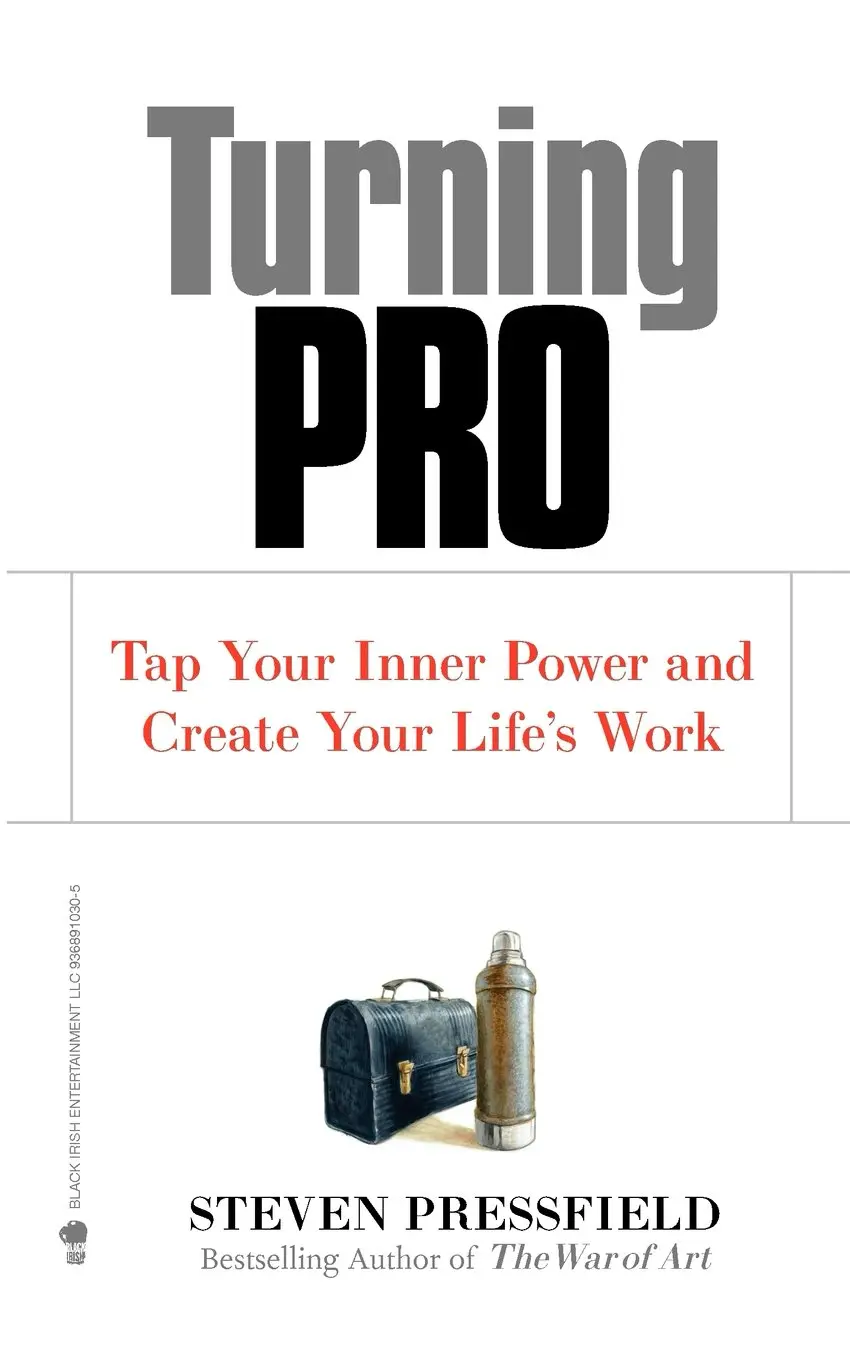
Turning Pro is the third book in Steven Pressfield’s trilogy about creative work, following The War of Art and Do the Work. Where The War of Art named the enemy (Resistance) and Do the Work mapped the battle, Turning Pro describes the internal shift that happens when you stop fighting Resistance on and off and commit to fighting it every day as a way of life.
Pressfield defines the amateur as someone who lives in the shadow of their own potential. The amateur knows what they should be doing but finds reasons not to do it: distraction, addiction, drama, fear, the comfort of staying where they are. The professional is not someone with more talent or luck. The professional is someone who has decided to show up every day and do the work regardless of how they feel about it.
The book is partly autobiographical. Pressfield describes his own years as an amateur, working odd jobs and struggling with addictions while avoiding the writing he knew he was supposed to do. He marks the exact moment he turned pro: sitting down and writing a full manuscript for the first time, even though it wasn’t very good. The quality didn’t matter. The commitment did.
The practical advice is simple: treat your work like a job. Show up at the same time every day. Don’t wait for inspiration. Don’t negotiate with Resistance. Accept that the work will often feel uncomfortable and do it anyway. Pressfield argues that this commitment, not talent or luck, is what separates the people who produce meaningful work from the people who don’t.
For founders, the amateur/professional distinction maps onto a common pattern. Many people play at building a business: they read about startups, they attend events, they have ideas, but they never commit to the daily grind of actually building something. Turning pro means accepting the discomfort and showing up anyway.
The book is short, under 150 pages, and reads in a sitting. The writing is sparse, almost aphoristic. Some readers find it repetitive or preachy. Others find it exactly the push they needed. Like Pressfield’s other books, it is best read when you’re on the edge of committing to something and need someone to tell you, plainly, to stop hesitating and start.
